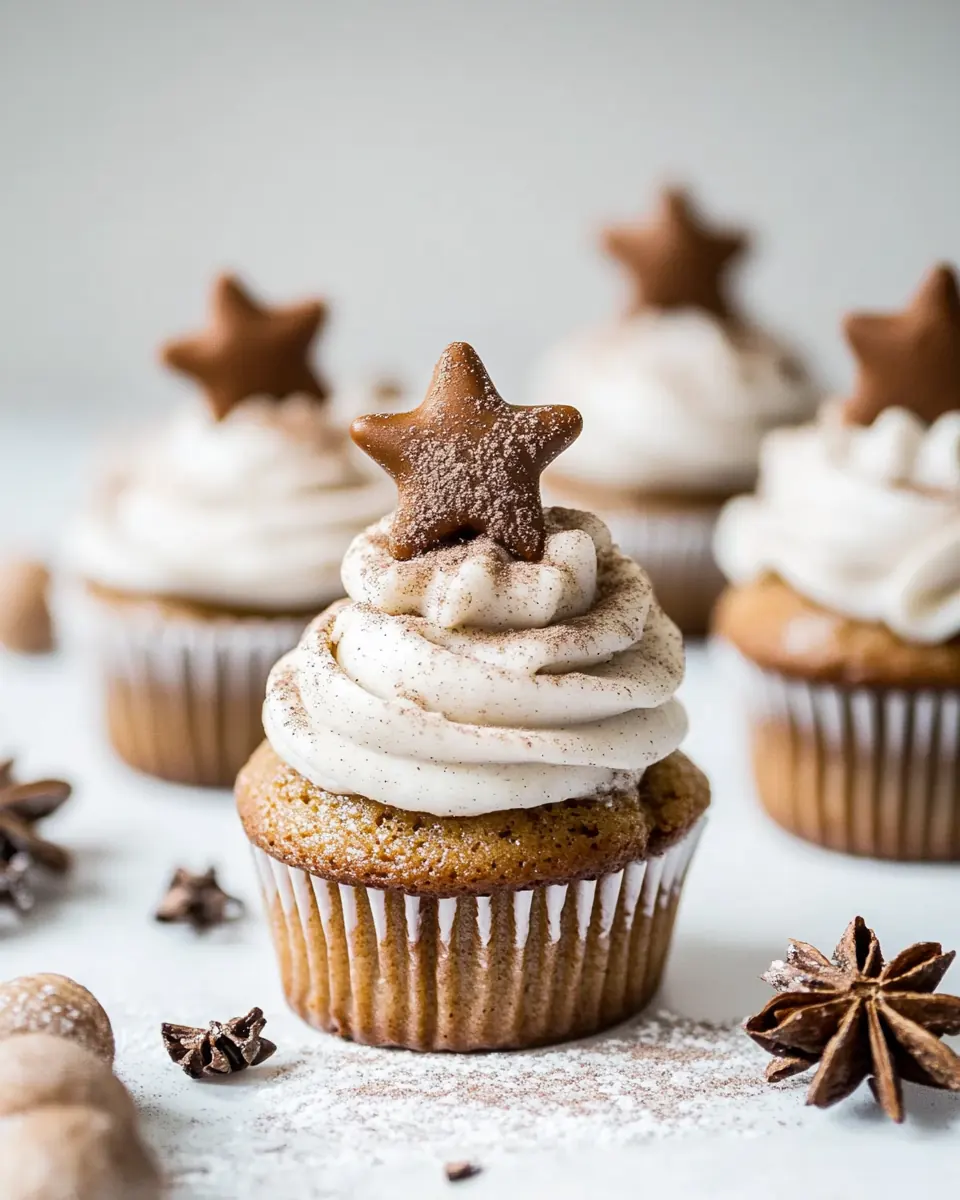
Preheat the oven to 350 degrees F. Line a 12-cup muffin pan with paper liners. In a medium bowl combine the flour, baking powder, baking soda, ginger, cinnamon, nutmeg, cloves and salt. Using an electric mixer, beat together the butter and brown sugar until light and fluffy. Beat in the vanilla, molasses and egg until combined. Add the milk, alternating with the flour mixture until everything is combined. Divide the batter evenly among the prepared muffin pan. Transfer to the oven and bake until a toothpick inserted into the center of each comes out with moist crumbs attached, 18-22 minutes. Let cool before frosting. To make the buttercream. Add 1 stick butter to a skillet set over medium heat. Allow the butter to brown lightly until it smells toasted, about 2-3 minutes. Stir often. Remove from the heat and transfer the butter to the mixing bowl, let cool until it’s room temp. Add the remaining stick of butter and 2 cups powdered sugar. Beat the butter and powdered sugar together until the butter is light and fluffy. Add the honey, vanilla, and cinnamon and beat until combined, adding more powdered sugar as needed until your desired consistency is reached. Frost and decorate cupcakes as desired. Enjoy!: The kitchen fills with warm anticipation as the oven warms and you can feel the difference when you open the door. A properly preheated oven ensures even rise and consistent texture. One common mistake is not waiting for a full preheat which can cause uneven doming, so always confirm the temperature with an oven thermometer if your oven runs hot or cold.
Line a 12-cup muffin pan with paper liners.: Lining the pan keeps cupcakes from sticking and makes cleanup easy, while the liners help the batter bake up with tidy sides. You should hear a faint rustle as you press them in, and the liners give a neat appearance after baking. Avoid overfilling the wells, which can lead to spillover and uneven baking.
In a medium bowl combine the flour, baking powder, baking soda, ginger, cinnamon, nutmeg, cloves and salt.: As you whisk these dry elements, the air lifts through the flour and the spice scent blooms. Even mixing is critical because it distributes the leaveners and spices evenly. If you skip proper mixing you can end up with pockets of baking soda or clumps of spice which will create uneven flavor or texture.
Using an electric mixer, beat together the butter and brown sugar until light and fluffy.: The creaming step introduces air into the butter and dissolves the brown sugar , creating a pale, billowy mixture. You will see the color brighten and hear the mixture become softer. A common pitfall is undercreaming, which yields dense cupcakes, so beat until the mixture looks aerated and slightly lighter in color.
Beat in the vanilla, molasses and egg until combined.: When you add the vanilla , molasses , and egg , the batter will darken and the aroma becomes deeper and richer. Incorporate each addition until smooth to avoid streaks. Overmixing at this stage can tighten the gluten, so mix just until combined to keep the crumb tender.
Add the milk, alternating with the flour mixture until everything is combined.: Alternating milk and the dry mix prevents the batter from becoming lumpy and helps maintain a tender crumb. You will notice the batter loosen and then thicken with each addition; aim for a smooth, ribbon like batter. A typical error is dumping the flour in at once, which can result in overworking the batter and a tougher cupcake.
Divide the batter evenly among the prepared muffin pan.: Even distribution ensures uniform baking so each cupcake finishes at the same time. I use an ice cream scoop for consistent portions, which yields matched domes and even bake times. Avoid filling more than two thirds full to prevent overflow and unequal browning.
Transfer to the oven and bake until a toothpick inserted into the center of each comes out with moist crumbs attached, 18 to 22 minutes.: As they bake, aromas of spice and molasses rise and the tops turn a deeper golden brown. The toothpick test should show moist crumbs not raw batter; underbaked centers will be gummy. Opening the oven too often can cause collapse, so resist checking until at least the lower end of the time range.
Let cool before frosting.: Cooling allows the crumb to set and prevents the frosting from melting into the cake, which preserves the frosting texture and appearance. You will notice the cupcakes stop steaming as they come to room temperature. If you frost while warm, the frosting will slide off or thin out, so be patient and let them cool fully.
To make the buttercream.: Browning the butter releases nutty, toasty aromas and gives the frosting a golden color and complex flavor. Heat until you smell toasted notes, remove promptly to avoid burning, and transfer to cool so it does not melt the rest of the butter when combined. Burning the butter is the main risk, so watch closely and stir often.
Add 1 stick butter to a skillet set over medium heat.: When the butter melts you will hear a gentle hiss and see it foam; that foam will subside as milk solids brown and the smell turns toasty. Remove from heat when amber specks form to prevent bitter burnt notes. A mistake here is leaving it unattended which leads to a scorched taste.
Allow the butter to brown lightly until it smells toasted, about 2 to 3 minutes.: The scent changes from creamy to nutty, and you will see tiny brown flecks at the bottom of the pan. This step deepens the flavor and mimics caramelization. If you exceed the timing, the butter can turn bitter, so transfer it out of the hot pan as soon as you see browning.
Stir often.: Stirring distributes heat and prevents uneven browning, and keeps the milk solids from sticking. You will see the butter foam, then the foam will subside as the browning occurs. Not stirring can create hot spots that burn the butter.
Remove from the heat and transfer the butter to the mixing bowl, let cool until it’s room temp.: Cooling stops the cooking and preserves the toasted notes without continuing to brown. The butter should be warm but not so hot it melts the rest of the frosting butter . Adding hot butter will yield a greasy frosting, so ensure it is at room temperature before combining with the other stick of butter .
Add the remaining stick of butter and 2 cups powdered sugar.: Combining the browned butter with room temp butter and powdered sugar creates a silky base for the buttercream. Start at low speed to prevent a sugar cloud, then increase speed until creamy. Too much speed too fast can make the frosting loose and overly aerated.
Beat the butter and powdered sugar together until the butter is light and fluffy.: The mixture should become airy and pale, and you will hear the mixer change timbre as it aerates the frosting. Proper whipping gives the buttercream structure and spreadability. Underbeating yields a dense frosting that is hard to pipe.
Add the honey, vanilla, and cinnamon and beat until combined, adding more powdered sugar as needed until your desired consistency is reached.: The honey and vanilla round out the frosting, while cinnamon ties it back to the cupcake spices. Adjusting with more powdered sugar tunes thickness for piping or spreading. A common misstep is over sweetening; add sugar gradually while testing texture.
Frost and decorate cupcakes as desired.: When you frost, the buttercream should glide smoothly and hold its shape. The contrast of the glossy frosting atop the tender crumb is pleasing both visually and texturally. If the frosting is too soft, chill briefly, and if too stiff, beat in a teaspoon of room temperature milk to loosen it gently.
Enjoy!: Take a moment to notice the balance of spice, the toasted butter notes, and the tender crumb as you bite in. These cupcakes are best within a day or two for freshness, and they pair well with a warm beverage. Storing improperly or leaving them exposed will dry out the cupcakes, so keep them in an airtight container.