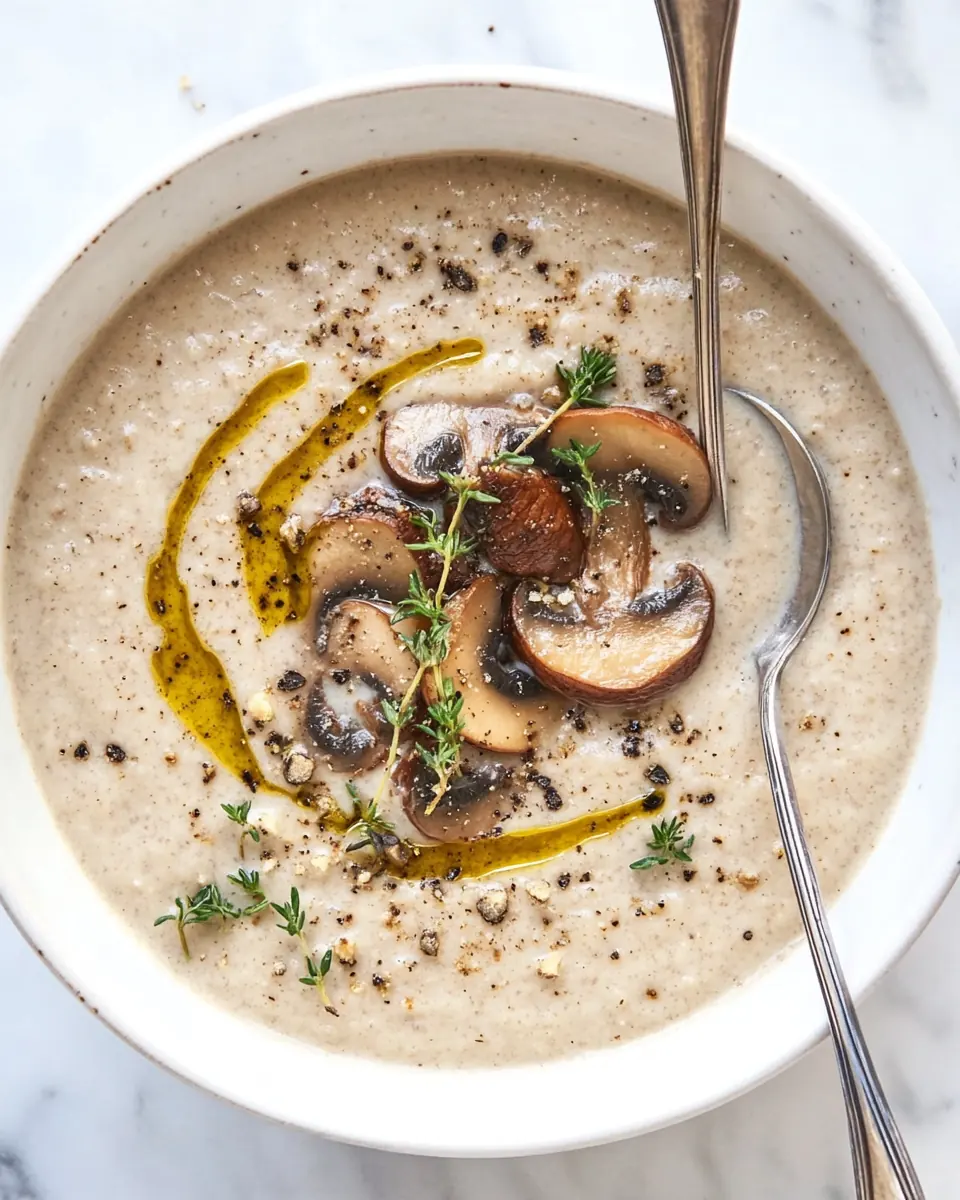
In a large saucepan, heat olive oil over medium heat. Add mushrooms and shallot, sauté until tender, about 5 minutes.: The pan will first smell faintly fruity as the olive oil warms, and you should see it shimmer when it reaches the right temperature. This gentle heat sets the stage for a proper sauté, allowing the mushrooms to release moisture then brown. If the oil smokes, the pan is too hot, which will char the shallot and create bitter notes. A common pitfall is starting cold and waiting too long to add aromatics, which leads to uneven cooking rather than the clean, sizzling sound that signals proper contact with the pan.
Add butter to the saucepan. Once melted, stir in gluten-free flour, salt, and pepper. Cook for 2 minutes until the mixture forms a paste.: As the mushrooms hit the pan you will hear a lively sizzle and smell an immediate earthy aroma. They will first exude liquid, then that liquid will evaporate and the mushrooms will begin to brown, developing nutty, caramelized edges. The shallot will soften and become translucent, contributing a sweet, rounded scent. Stir occasionally to encourage even browning, but avoid constant stirring which prevents proper color development. A common mistake is overcrowding the pan so the mushrooms steam instead of brown, which flattens flavor.
Gradually add vegetable broth to the roux, whisking continuously. Stir in evaporated milk and bring to a simmer. Cook until the soup reduces and thickens, about 15 minutes.: When you add the butter it will foam and then melt into a glossy pool, carrying the fond from the pan and enriching the aroma. This is the moment when the pan smells warmly savory. You want the butter melted but not browned, because too much color will change the roux’s flavor. If the butter starts to brown too quickly, lower the heat; burnt butter makes the soup taste off.
Use an immersion blender to blend the soup (or a portion of it if you want to leave some mushroom chunks). Add more broth or hot water to thin the soup to your desired thickness if needed.: The flour will absorb the melted butter and become a paste that clings to the mushrooms, creating the foundation for a silky body. You will want to cook this mixture for a short time until it loses its raw flour scent and becomes slightly glossy. During this brief cook, the aroma shifts from raw starch to a toasted, nutty note. Stir constantly to avoid lumps. A frequent error here is undercooking the roux which leaves a grainy texture, or overcooking it until it darkens, which alters flavor and may make the soup too thick.
Cook for 2 minutes until the mixture forms a paste: This short cook melds the gluten free flour and butter together, and you should notice the paste smooth out and firm slightly. The surface will take on a satin sheen, and the raw flour smell will evaporate, leaving a toasty undertone. This is crucial because it prevents a pasty aftertaste. If you smell any raw starch, continue to cook very briefly, but be mindful not to let the roux brown excessively.
Gradually add vegetable broth to the roux, whisking continuously: As you whisk in the warm vegetable broth , steam and a comforting, savory aroma will rise. The whisking binds the liquid to the roux, creating a smooth, glossy sauce rather than a lumpy one. Keep the broth at a warm temperature if possible, because cold liquid can shock the roux and create lumps. A common troubleshooting tip is to pour slowly and whisk vigorously at first, and if small lumps form, press them against the side of the pan with the whisk to break them up.
Stir in evaporated milk and bring to a simmer: When the evaporated milk joins the pot, the soup takes on a creamier scent and a silkier texture. Bring the mixture to a gentle simmer rather than a rolling boil to avoid curdling and to allow flavors to meld. You should see small bubbles forming along the edge and a gentle steam rising, signaling the right temperature. If the soup begins to bubble aggressively, reduce the heat, because too much agitation can make the texture uneven.
Cook until the soup reduces and thickens, about 15 minutes: During this simmer the aroma concentrates and the soup will thicken as water evaporates, leaving a richer mouthfeel. Stir occasionally to ensure even heat distribution and to prevent any sticking on the bottom. The visual cue is a coat on the back of a spoon that slowly slides off, and a taste will register deeper umami. One mistake to avoid is walking away; leaving it unattended can lead to over reduction and a concentration that becomes overly salty or viscous.
Use an immersion blender to blend the soup: As you blend, the soup will change texture and the sound will shift to a low, whispering roar. Blending smooths the mixture into a velvety body while keeping any reserved mushroom pieces if you prefer texture. The aroma becomes more unified, and the color lightens slightly as air incorporates. Be careful to keep the blender head submerged to avoid splatter, and pulse rather than run continuously to maintain control.
Or a portion of it if you want to leave some mushroom chunks: Reserving some unblended mushrooms adds contrast to each spoonful, offering tender bites against the creamy backdrop. The tactile difference enhances the eating experience, giving lively bursts of mushroom texture. A common misstep is blending everything when you wanted texture, so set aside the portion before you puree. If the soup seems too thick after blending, adjust with hot vegetable broth to reach your ideal consistency.
Add more broth or hot water to thin the soup to your desired thickness if needed: When you thin the soup you will notice it loosens and the aromas open up a bit, and the mouthfeel shifts from dense to more flowing. Add hot liquid gradually while stirring until the balance feels right. If you add cold liquid, it can momentarily shock the soup and create a slight separation, so use warm broth or hot water. A typical error is adding too much at once; add small amounts and taste as you go.