In a medium saucepan, add quinoa and broth, bring to a boil, cover, reduce heat to a simmer. Cook quinoa until most liquid has been absorbed, about 12 minutes. Quinoa will continue to cook when baking. Remove from heat and set aside.: As the pot warms you'll notice a gentle steam and a faint nutty aroma from the quinoa , and the surface may shimmer slightly as bubbles rise to the top before settling into a simmer. You want a lively but not aggressive boil initially, then an even, low simmer so the grains hydrate without breaking apart. The visual cue is that most of the liquid should be drawn in and the grains look translucent with a tiny white germ ring appearing, which indicates they are tender yet separate. The sound should be a quiet, methodical simmer rather than a hard rolling boil. The reason this matters is that over stirring or an overly high heat can make the grains release excess starch and become gluey, which affects the texture in the finished dressing. A common troubleshooting tip is if the pot looks dry before the 12 minute mark, add a tablespoon of broth and continue gently cooking, because undercooked quinoa will remain grainy after baking.
Tear or cut toast into small, bite-size pieces. Combine toast pieces, quinoa, pepper, salt, and poultry seasoning in a large mixing bowl.: The toasted gluten free bread should be cool enough to handle and slightly crisp, giving off a warm toasty scent as you tear it. When you combine the warm quinoa with the cubes, steam will rise and the grains will cling to crevices of the toast, creating contrast between fluffy and chewy textures. Take time to distribute the poultry seasoning and freshly ground black pepper evenly so each bite has a balanced herbal lift, and taste a small pinch to confirm salt levels before moving on. The reason for tossing now is to allow the grains to start absorbing flavors before you introduce the sautéed vegetables, which deepens integration. A frequent mistake is adding too much salt at this stage without accounting for later broth, resulting in an overly seasoned dish.
Preheat oven to 350 degrees.: As the oven warms, you might notice a faint warming smell from your kitchen that signals readiness for baking. Preheating ensures the casserole starts cooking immediately and the top crisps properly when uncovered, rather than slowly warming which can lead to a dense, soggy center. The temperature is deliberate for gentle browning rather than rapid top charring, and it helps the interior set while the exterior gets color. If you skip preheating, the timing will be off and you could end up with an unevenly baked casserole, which is a common oversight.
In a large skillet add butter and sauté celery and onion on medium-low heat until tender, about 8 to 10 minutes. Pour over cubed toast mixture. Add 2 cups broth and stir to combine. Add additional broth for a more moist dressing.: When the butter melts it should foam gently and release a warm dairy fragrance, then the diced onion and celery will sizzle softly as their moisture evaporates and natural sugars begin to soften, releasing a sweet and savory aroma. Watch for translucency in the onion and a softened, slightly glossy look in the celery , which indicates they are tender and aromatic but not browned. Pouring this mixture over the bread and quinoa produces a satisfying hiss as the warm vegetable mix meets the cool toast, and stirring should show the cubes beginning to absorb the melted butter and flavors. Start by adding 2 cups of the additional chicken broth , then assess moisture by pressing a handful of the mixture; it should hold together lightly without being soupy. The why here is that sautéing mellows the aromatics and brings out layered sweetness that complements the herbal seasoning. A usual mistake is using high heat which browns the vegetables too quickly, creating an overly caramelized flavor that distracts from the delicate quinoa .
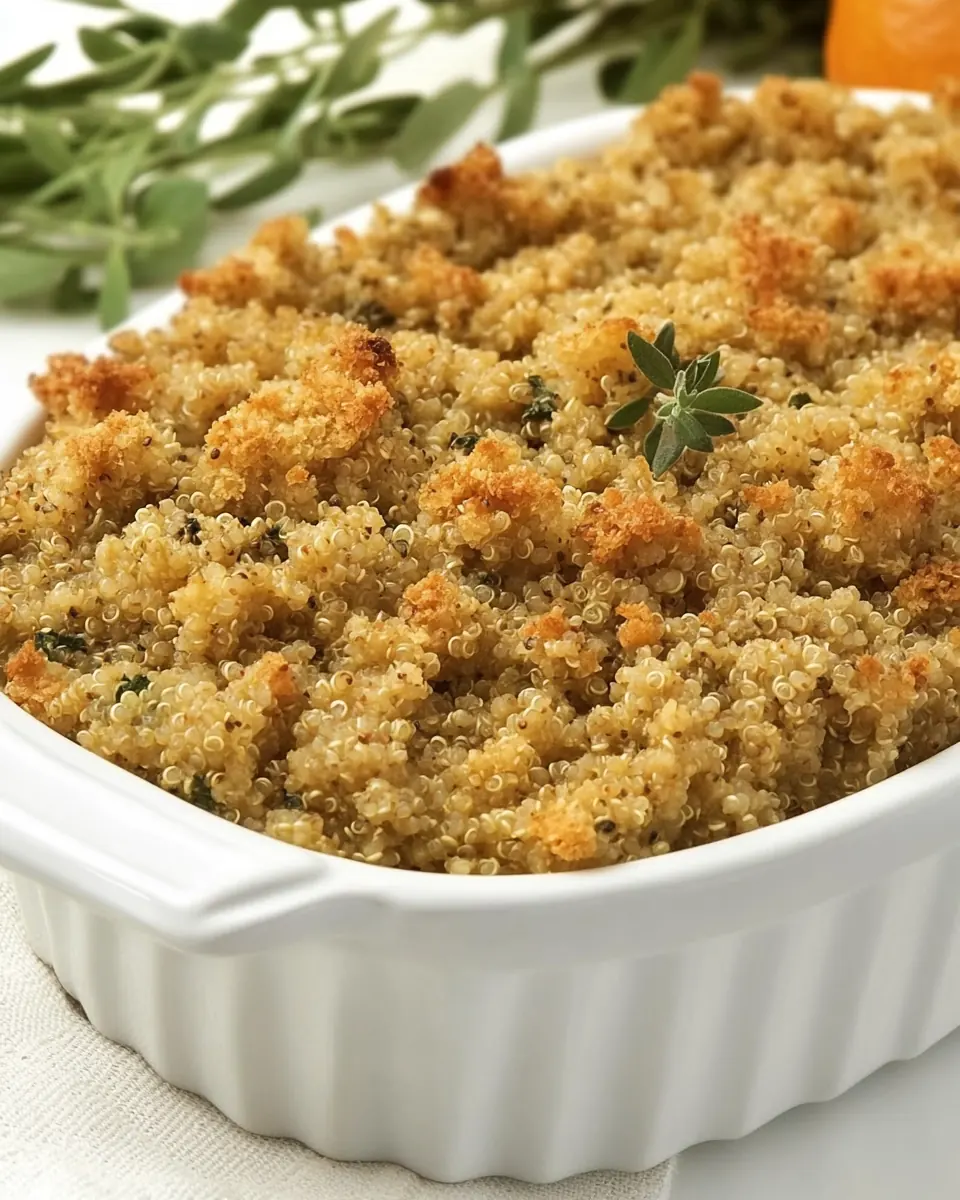
Lightly mist a large casserole dish with non-stick cooking spray and add the dressing. Bake covered for 20 minutes, remove lid or foil and bake uncovered an additional 10 minutes or until the desired color has been reached.: As the dish bakes covered, steam will gather and the interior will set while flavors continue to meld; you'll see gentle bubbling at the edges and the aroma will become rounded and full. After removing the cover for the final 10 minutes, the top should take on a golden color, and you may notice crisped edges where the toasted gluten free bread meets the casserole dish. The uncovered bake also allows excess moisture to evaporate, preserving the contrast between tender interior and lightly crisp top. Tap the surface; it should feel set but not rock hard. The reason for this two stage bake is to encourage even cooking without drying out, and to produce the visual cue of a warm, browned top. A common troubleshooting point is leaving it covered for too long which keeps the top soft and prevents that appealing browned finish.