Bring a large pot of slightly salted water to a boil.: The scent of rolling water and the faint minerality from sea salt tells you the pot is right for cooking the gnocchi . Using a large pot ensures the gnocchi move freely and do not clump, and the simmering water should produce steady bubbles before you add them. If the water is not vigorously moving, the gnocchi may stick together. A frequent misstep is undersalting the water, which results in bland gnocchi , so season it until it tastes like the sea.
In the meantime heat a small saucepan with the olive oil. When hot, carefully place a couple of sage leaves at the time, and fry for about 10 seconds. Remove the leaves and pat dry on kitchen paper. Crash with your hands half of the leaves and save for later.: Warm the olive oil over medium heat until it shimmers and gives off a faint peppery aroma. Carefully place a couple of sage leaves at a time into the oil, and listen for the gentle sputter that signals trapped moisture evaporating. Fry each set of leaves for about 10 seconds until they crisp and darken slightly, then remove them and pat dry on kitchen paper. Crushing half of the fried sage with your hands will release aromatic oils and create a leafy powder to scatter through the dish. The key mistake here is overheating the oil, which will burn the sage and make it bitter, so keep the temperature moderate and watch closely.
Heat a skillet over medium-low heat. Melt the butter and continue to cook until it turns slightly brown, about 1-2 min.: Bring the skillet to temperature so it can brown the butter without burning it. Add the butter and watch as it foams, then gently subsides into a glossy liquid and starts to take on a warm amber hue. That toasty aroma is the Maillard reaction happening, lending a nutty depth to the sauce. If the butter smokes or turns dark brown too quickly, the heat is too high and will impart a bitter note, so lower the flame at once.
Cook gnocchi in the pot with soft-boiling water, for 1-2 minutes until they rise on the surface.: When you drop the gnocchi into the water, they should bob and then sink, finally floating to the surface when cooked. The visual cue of rising indicates they are tender and core cooked. Remove them promptly with a slotted spoon to prevent them from turning gummy. Leaving them in the water too long is a common issue that yields dense or mushy pieces, so time them and rely on the surface cue instead of an exact clock.
Spoon them out with a slotted spoon, mix them in the skillet with the melted butter, and sprinkle the previously crushed sage.: The hot skillet and browned butter will sizzle when the surface moisture of the gnocchi meets it, creating little pops of steam and a caramelizing edge. Toss gently so the crushed sage weaves through the pasta, imparting herbal perfume with each turn. You should hear a delicate crisping and see tiny edges take on pale gold. A typical error is overcrowding the pan, which steams rather than sears the gnocchi , so give them space and tend them with a gentle hand.
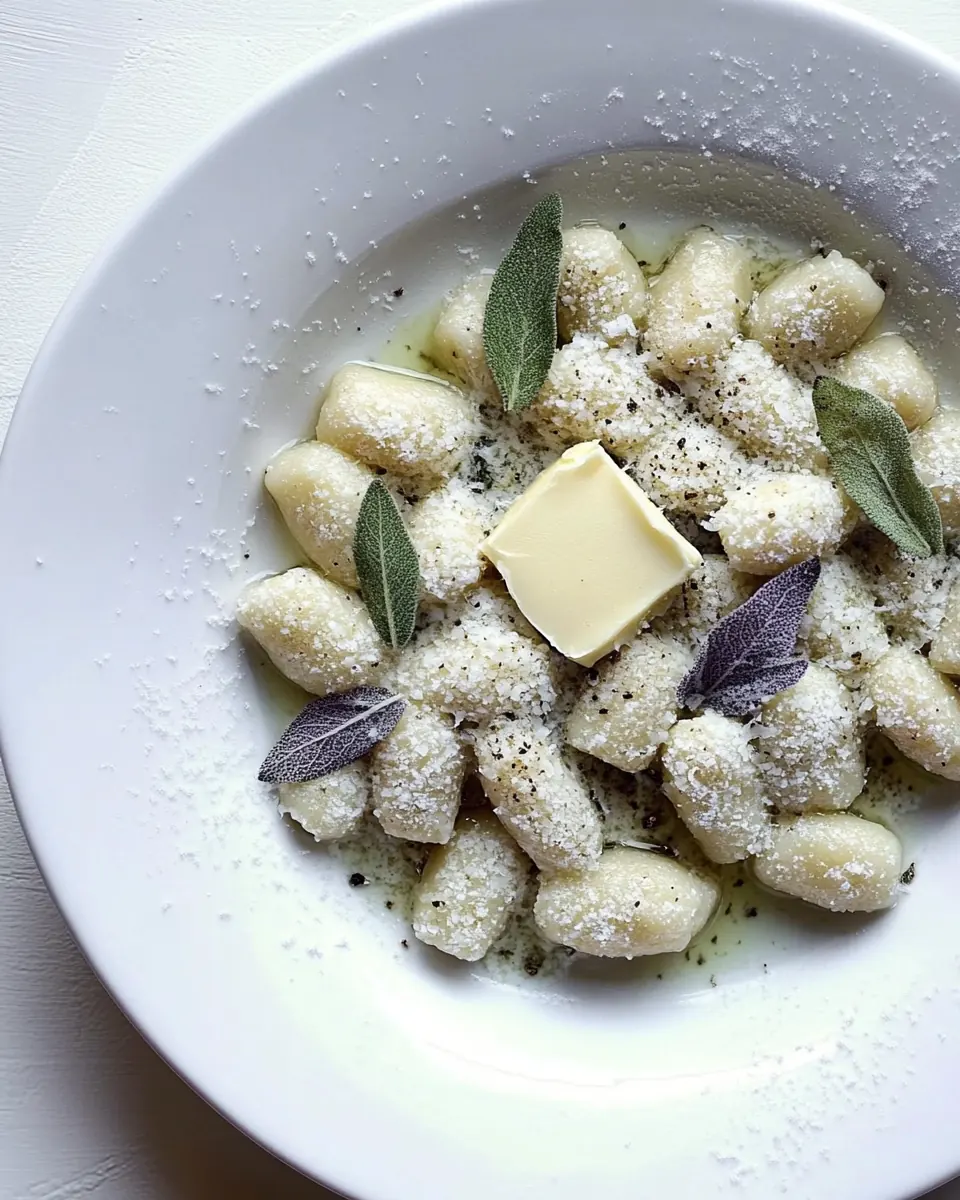
Top your gnocchi with black pepper, the remaining fried sage leaves and Parmesan shavings, and serve immediately.: The final assembly is sensory rich, with a flourish of sharp Parmesan and the crunch of whole fried sage leaves. Freshly cracked black pepper adds a bright snap on the finish, and the melting Parmesan binds a touch of creaminess to the browned butter . Serve right away while the aroma is strongest and the textures contrast. A common mistake is letting the dish sit, which cools the butter and makes the Parmesan congeal, so plate and serve without delay.