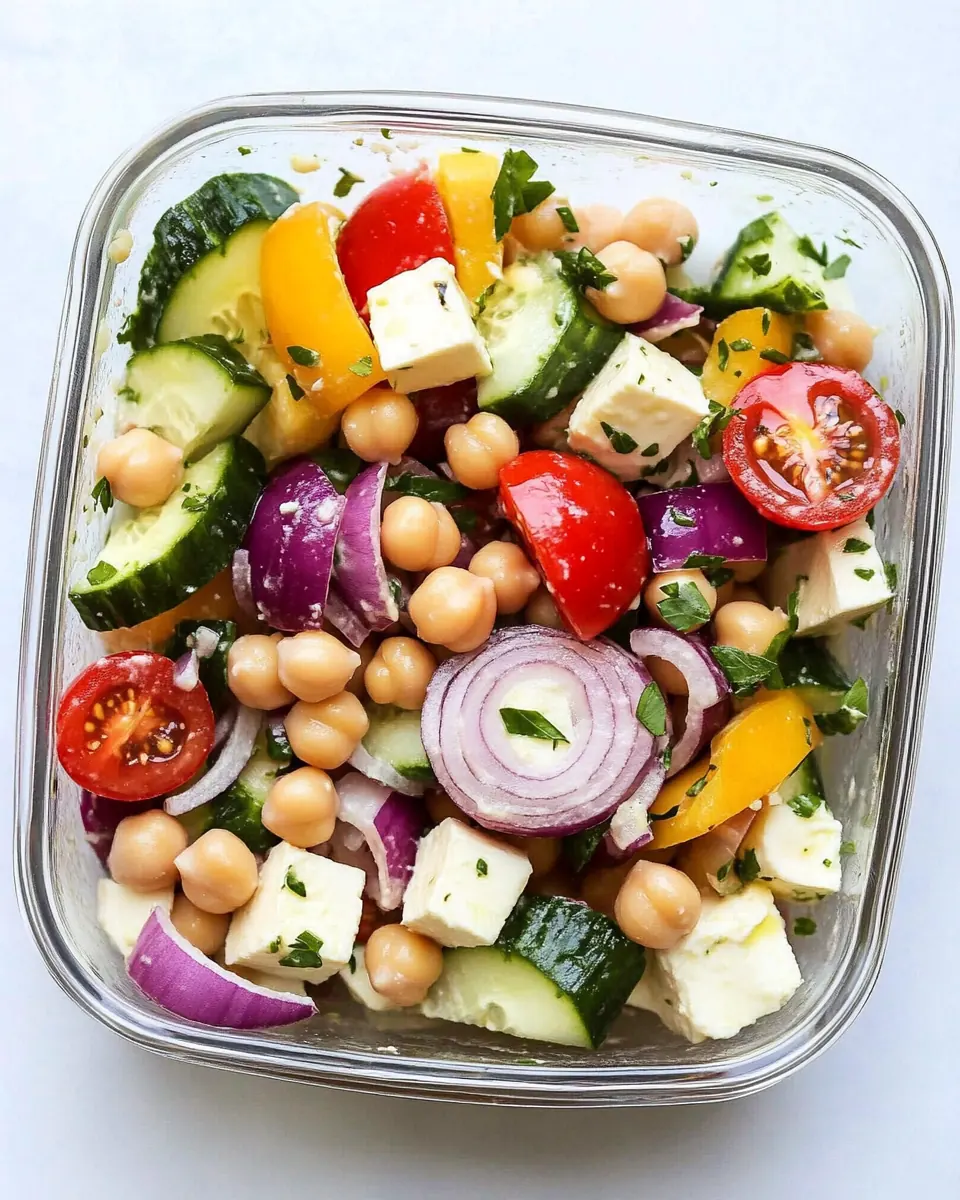
In each of 4 (4-cup) containers or bowls, arrange 1/3 cup chickpeas, 1/2 cup cucumber, 1/4 green pepper, 1/3 cup tomato, olives and red onion, top with Feta cheese.: When you assemble the salads, notice the contrasting colors and textures, the pale round chickpeas against the bright cucumber and deep purple olives . The aroma at this point is mostly fresh and vegetal, with a hint of salt from the feta . Arrange ingredients so each portion has an even distribution, this ensures every bite is balanced. If you skip even distribution you ll get bites that are too salty or too bland. A common mistake is crowding the bowls which crushes delicate ingredients, so give them space and handle the feta gently when placing it on top.
In a small bowl whisk the lemon juice, olive oil, oregano, salt and pepper.: As you whisk the dressing, inhale the citrus brightness from the freshly squeezed lemon and the fruity perfume of the extra virgin olive oil . The whisking creates a slightly emulsified vinaigrette that clings to the vegetables, giving a glossy sheen and carrying flavor to every piece. Whisk until small bubbles form and the ingredients look cohesive. If you do not whisk enough the dressing can separate and fail to coat evenly. A typical error is adding salt before tasting, so mix gently then adjust seasoning to taste.
Serve about 1 1/2 tablespoons dressing with each salad.: Spoon the measured dressing over each portion so it seasons but does not drown the salad, allowing the texture of the chickpeas and vegetables to remain distinct. The sound is a soft pour and the visual cue is a light gloss on the ingredients, not a pool of liquid. Let the salads sit for a few minutes if you like the flavors to meld, but do not let them sit too long or the vegetables will soften and lose their crispness. One common pitfall is overdressing, which makes the salad soggy, so start conservative and offer extra dressing at the table.