Greek Chickpea Salad
Greek Chickpea Salad is one of those dishes I reach for when I want something fresh, bright, and really satisfying without a lot of fuss. I first met this salad on a sunlit patio at a friend s dinner party where everyone helped themselves from a big bowl, the tang of lemon and the briny pop of olives cutting through the creamy tang of the cheese. From that moment on I kept a jar of canned chickpeas in the pantry so I could throw this together in a few minutes whenever company dropped by or I needed a quick, nourishing meal.
Over time I adjusted the balance of textures and colors, adding crisp diced Persian cucumber and halved grape tomatoes for sweetness, and a few thick slices of feta so each bite has a salty creamy finish. I love how the salad feels both rustic and refined, folding everyday pantry staples and a handful of fresh produce into something that always looks like effort but comes together easily. I also like serving it in individual bowls when guests arrive, it feels thoughtful and keeps flavors bright.
There are days when I make a double batch and tuck leftovers into containers for lunches, and other times I arrange it on a platter as a simple centerpiece for a light supper. It s the kind of recipe that invites improvisation, while still rewarding careful little touches like freshly minced oregano in the dressing or thinly sliced red onion for a slight bite. I always tell friends that a good salad is about harmony of flavor and contrast of texture, and this one hits both notes.
Recipe Snapshot
5 mins
5 mins
0 mins
Easy
250 kcal
Mediterranean
Vegan, Gluten-Free
Salads
Bowl, Whisk, Cutting board, Knife
Why This Greek Chickpea Salad Stands Out
Bright, Clean Flavors
I love how Greek Chickpea Salad reads like sunshine on a plate. The combination of fresh lemon juice and extra virgin olive oil lifts the earthy chickpeas and makes every bite lively. I find that the citrus cuts the richness of the feta, so you get a balanced mouthfeel rather than something heavy.
Fast and Reliable
This salad is one of my go to weeknight heroes, because it takes almost no time and needs no stove. I can pull a satisfying meal together in the time it takes to slice vegetables, which means it’s perfect for anyone juggling work, errands, or kids. I often portion it into bowls for easy grab and go lunches.
Texture and Color Play
I always pay attention to texture, and this salad delivers. The creamy bite of the chickpeas, the crisp snap of cucumber, the juicy pop of grape tomatoes, and the firm saltiness of sliced feta all work together. Visually it s vibrant, and I find plating it in shallow bowls shows off the colors and tempts people to dig in.
Pantry Friendly
Most of the time I have everything I need on hand. A can of chickpeas plus a few fresh vegetables and simple pantry dressing ingredients mean you can make this spontaneously. That convenience makes it a reliable choice for last minute guests, picnics, or a simple family supper.
Customizable Without Losing Identity
What I appreciate is how small swaps keep the soul of the salad intact. You can tweak olive variety, make the feta thicker or thinner, or adjust lemon and salt levels to suit your taste, and it remains unmistakably the same satisfying dish. I like recipes that are forgiving, and this one is exactly that.
Shopping List for Greek Chickpea Salad
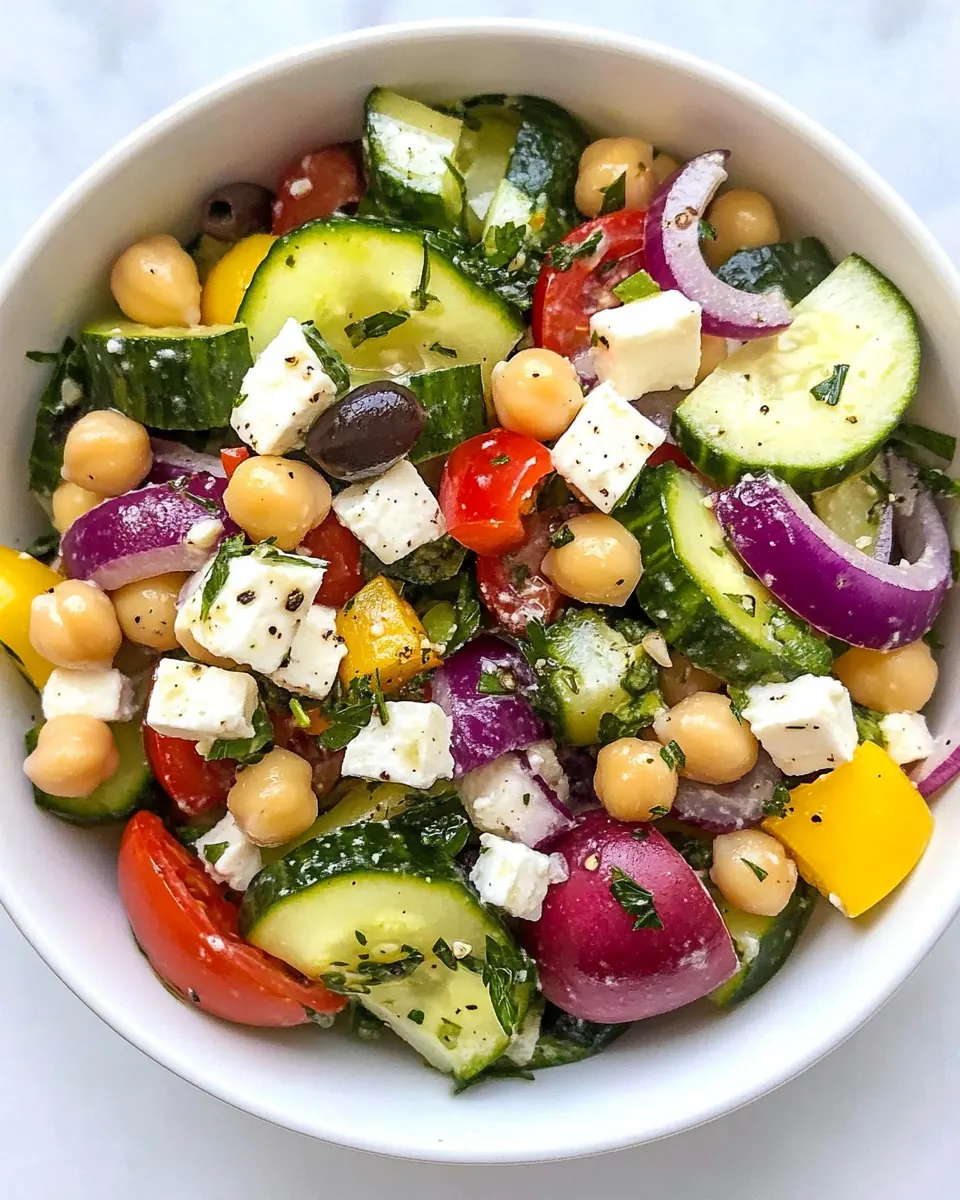
These ingredients were chosen to create a bright, Mediterranean style salad where each element contributes texture and flavor. The key players are the protein rich chickpeas, crisp cooling Persian cucumber, and vibrant grape tomatoes. Briny olives and tangy feta provide savory depth while a simple lemon and olive oil dressing ties everything together.
- 15 ounce can chickpeas, rinsed and drained: Provide a creamy, protein-rich base and add a hearty texture that soaks up the dressing while keeping the salad satisfying; rinsed and drained to remove canning liquid and reduce sodium for a cleaner flavor profile.
- 2 cups diced Persian cucumber: Add a crisp, cool crunch and mild, refreshing flavor that contrasts with softer elements; diced small to distribute moisture and maintain bite throughout the salad.
- 1 green bell pepper, sliced: Contribute a sweet, slightly grassy crunch and vibrant color that adds structural interest; sliced to create easy-to-eat pieces that mingle well with other vegetables.
- 1 1/3 cups grape tomatoes, halved: Bring juicy, tangy bursts of acidity and natural sweetness that brighten the overall salad; halved to expose seeds and juices so the dressing can penetrate each piece.
- 20 kalamata or gaeta olives: Provide briny, savory pops of intense olive flavor that complement feta and balance acidity; kept whole to offer occasional bursts of concentrated taste and texture.
- 1/4 cup red onion, sliced lengthwise: Offer a sharp, pungent bite and a subtle crunch that cuts through richer components; sliced lengthwise to create long slivers that distribute onion flavor without overpowering any single bite.
- 4 ounces fresh feta, sliced thick: Introduce a creamy, tangy richness and a salty counterpoint that ties Mediterranean flavors together; sliced thick to provide substantial, flavorful chunks throughout the salad.
- Dressing: Segregate the dressing components from solids and signal the transition from ingredients to flavoring; labeled to clarify preparation steps and ensure the dressing is mixed separately.
- juice of 2 fresh lemons: Deliver bright acidity and citrus aroma that brightens flavors and balances oil and salt; freshly squeezed to provide lively, natural brightness and avoid bitterness from stored juice.
- 2 tablespoons extra virgin olive oil: Add a silky mouthfeel and fruity richness that helps emulsify the dressing and carry flavors across the salad; measured to create a balanced oil-to-acid ratio for proper coating.
- 2 teaspoons fresh oregano leaves, minced: Provide herbaceous, aromatic depth with a classic Mediterranean character that complements lemon and olives; minced to release essential oils and evenly distribute flavor in the dressing.
- 1/4 teaspoon kosher salt: Bring a baseline seasoning and gentle mineral taste that enhances other ingredients without overpowering them; measured sparingly to control overall saltiness and avoid masking fresh flavors.
- freshly ground black pepper, to taste: Offer adjustable heat and aromatic complexity to taste, enabling personal seasoning; freshly ground to deliver the most vibrant pepper aroma and customizable spice level.
How to Cook Greek Chickpea Salad
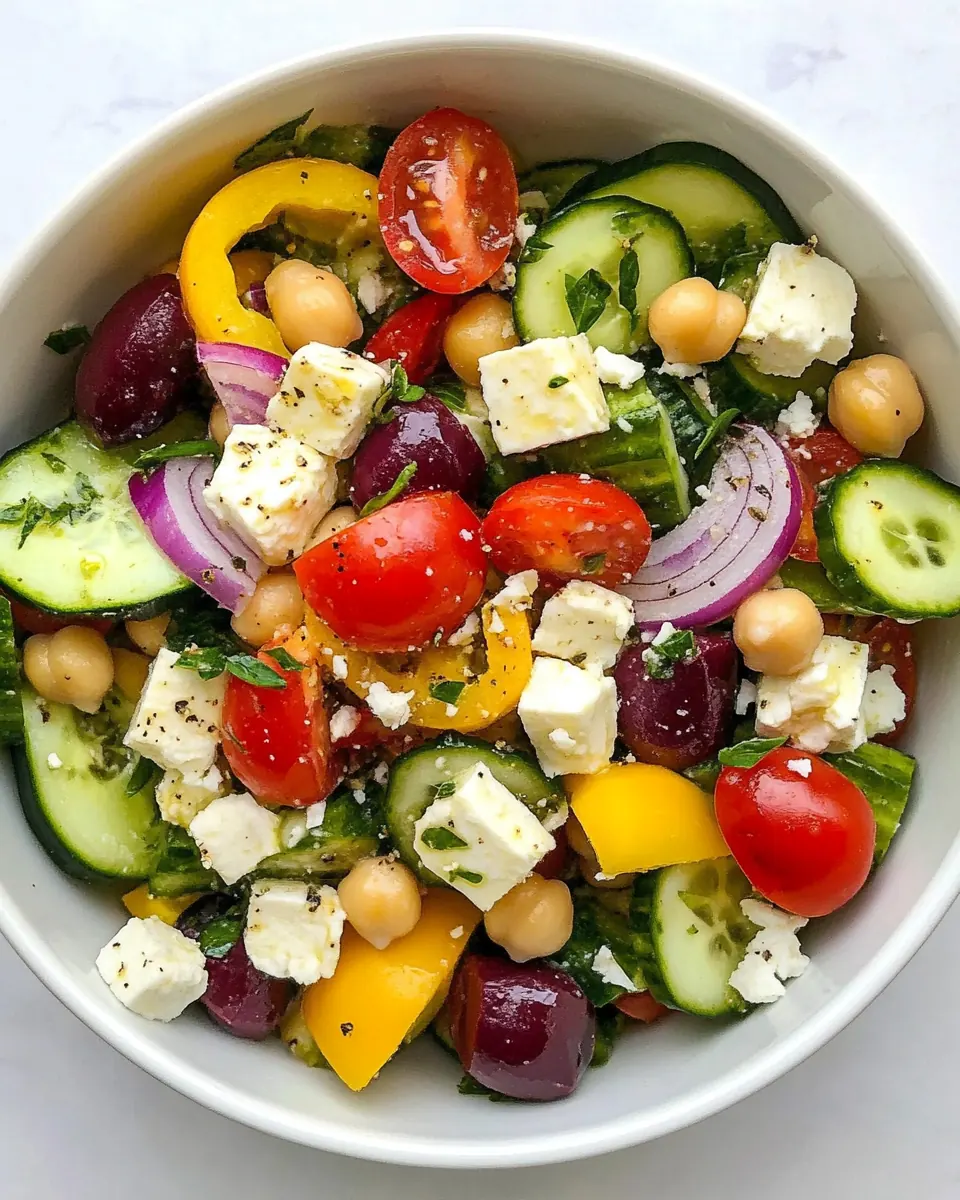
This recipe is wonderfully straightforward and meant to be approachable, yet each action matters for the final texture and balance. The instructions below translate the original directions into more sensory detail and practical guidance so you can replicate the exact result I like to serve.
- In each of 4 (4-cup) containers or bowls, arrange 1/3 cup chickpeas, 1/2 cup cucumber, 1/4 green pepper, 1/3 cup tomato, olives and red onion, top with Feta cheese.: When you assemble the salads, notice the contrasting colors and textures, the pale round chickpeas against the bright cucumber and deep purple olives . The aroma at this point is mostly fresh and vegetal, with a hint of salt from the feta . Arrange ingredients so each portion has an even distribution, this ensures every bite is balanced. If you skip even distribution you ll get bites that are too salty or too bland. A common mistake is crowding the bowls which crushes delicate ingredients, so give them space and handle the feta gently when placing it on top.
- In a small bowl whisk the lemon juice, olive oil, oregano, salt and pepper.: As you whisk the dressing, inhale the citrus brightness from the freshly squeezed lemon and the fruity perfume of the extra virgin olive oil . The whisking creates a slightly emulsified vinaigrette that clings to the vegetables, giving a glossy sheen and carrying flavor to every piece. Whisk until small bubbles form and the ingredients look cohesive. If you do not whisk enough the dressing can separate and fail to coat evenly. A typical error is adding salt before tasting, so mix gently then adjust seasoning to taste.
- Serve about 1 1/2 tablespoons dressing with each salad.: Spoon the measured dressing over each portion so it seasons but does not drown the salad, allowing the texture of the chickpeas and vegetables to remain distinct. The sound is a soft pour and the visual cue is a light gloss on the ingredients, not a pool of liquid. Let the salads sit for a few minutes if you like the flavors to meld, but do not let them sit too long or the vegetables will soften and lose their crispness. One common pitfall is overdressing, which makes the salad soggy, so start conservative and offer extra dressing at the table.
Recipe Notes about Greek Chickpea Salad
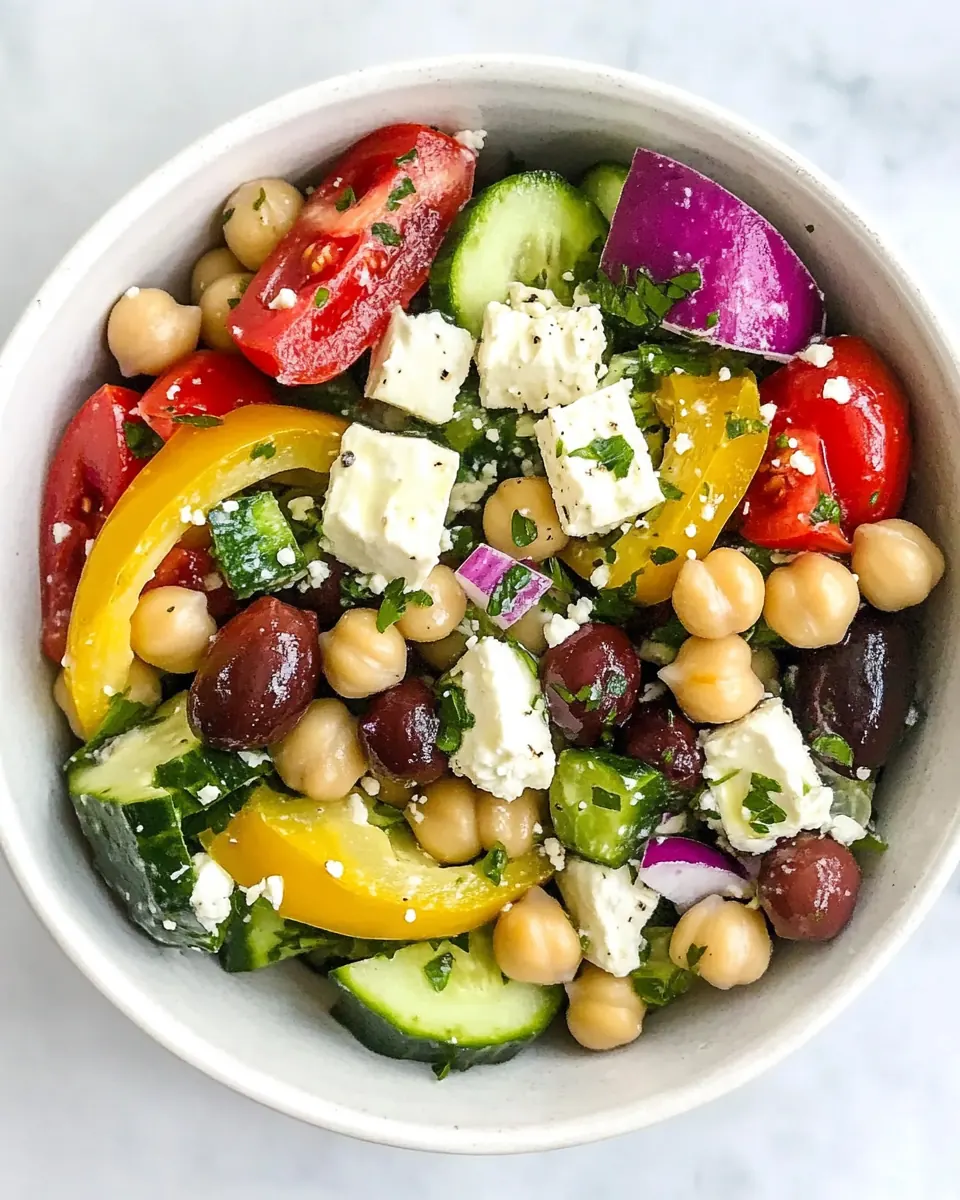
I like to share a handful of practical notes that help you get consistent results. These expand on the simple steps above and cover seasoning, texture, and storage so your salad is bright and balanced every time.
- Measure the dressing: Start with about 1 1/2 tablespoons per serving and adjust, since overdressing makes the salad soggy and underdressing leaves it bland.
- Rinse and dry chickpeas: Rinse canned chickpeas well and pat dry to help the dressing cling and to avoid dilute flavor.
- Fresh herbs matter: Use fresh oregano if possible, it brings far brighter aroma than dried and lifts the overall flavor.
- Cut uniformly: Dice the cucumber and halve the grape tomatoes to similar sizes for even bites and a pleasing mouthfeel.
- Serve soon after tossing: For best texture keep the salad refrigerated and only dress just before serving to preserve crispness.
How to Enjoy Greek Chickpea Salad
This salad is flexible in how it s enjoyed. It works equally well as a light lunch, a side for a casual dinner, or part of a spread for an outdoor gathering. Below are serving ideas and scenarios to make the most of this dish.
- As a lunch: Pack in individual containers for an easy midweek meal, adding the dressing just before eating to keep the vegetables crisp.
- As a side: Serve alongside grilled vegetables or simply crusty bread to balance textures and make a fuller plate.
- For gatherings: Present in a wide shallow bowl with extra dressing on the side so guests can help themselves and customize seasoning.
- Storage tips: Keep the undressed salad refrigerated and store dressing separately for up to two days to maintain texture and brightness.
- Seasonal pairing: This feels especially right in summer when cucumbers and tomatoes are at their peak, though it s fresh enough for other seasons too.
FAQ
Conclusion
Greek Chickpea Salad shines because it blends pantry convenience with bright Mediterranean flavors and satisfying textures. It s easy to assemble, adaptable to different occasions, and delivers a fresh, balanced plate each time. Give it a try the next time you want a quick lunch or a light dinner that still feels thoughtfully composed. Let it become one of the recipes you reach for when you need something wholesome, flavorful, and hassle free.
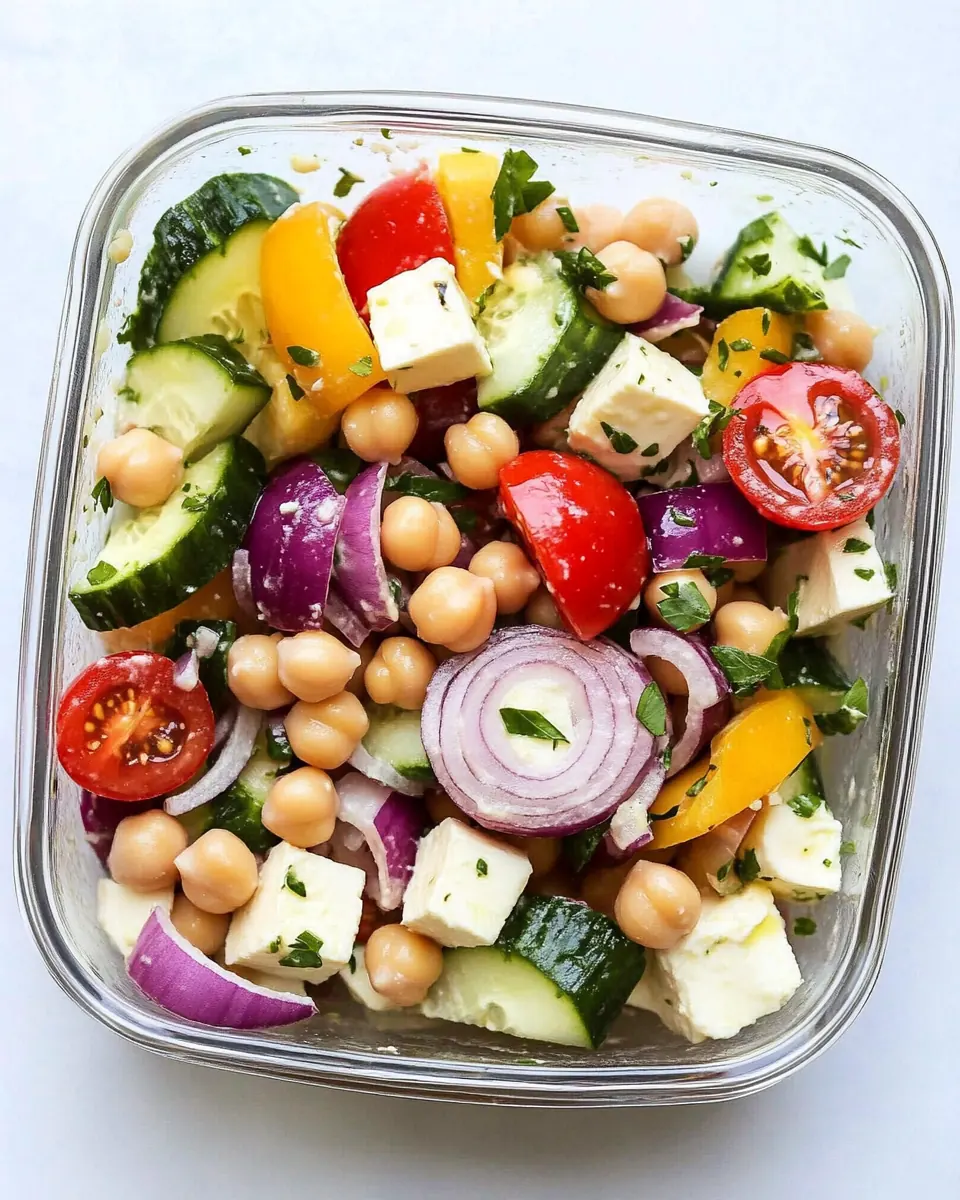
Greek Chickpea Salad
Ingredients
Equipment
Method
- In each of 4 (4-cup) containers or bowls, arrange 1/3 cup chickpeas, 1/2 cup cucumber, 1/4 green pepper, 1/3 cup tomato, olives and red onion, top with Feta cheese.: When you assemble the salads, notice the contrasting colors and textures, the pale round chickpeas against the bright cucumber and deep purple olives . The aroma at this point is mostly fresh and vegetal, with a hint of salt from the feta . Arrange ingredients so each portion has an even distribution, this ensures every bite is balanced. If you skip even distribution you ll get bites that are too salty or too bland. A common mistake is crowding the bowls which crushes delicate ingredients, so give them space and handle the feta gently when placing it on top.
- In a small bowl whisk the lemon juice, olive oil, oregano, salt and pepper.: As you whisk the dressing, inhale the citrus brightness from the freshly squeezed lemon and the fruity perfume of the extra virgin olive oil . The whisking creates a slightly emulsified vinaigrette that clings to the vegetables, giving a glossy sheen and carrying flavor to every piece. Whisk until small bubbles form and the ingredients look cohesive. If you do not whisk enough the dressing can separate and fail to coat evenly. A typical error is adding salt before tasting, so mix gently then adjust seasoning to taste.
- Serve about 1 1/2 tablespoons dressing with each salad.: Spoon the measured dressing over each portion so it seasons but does not drown the salad, allowing the texture of the chickpeas and vegetables to remain distinct. The sound is a soft pour and the visual cue is a light gloss on the ingredients, not a pool of liquid. Let the salads sit for a few minutes if you like the flavors to meld, but do not let them sit too long or the vegetables will soften and lose their crispness. One common pitfall is overdressing, which makes the salad soggy, so start conservative and offer extra dressing at the table.
Notes
- Measure the dressing: Start with about 1 1/2 tablespoons per serving and adjust, since overdressing makes the salad soggy and underdressing leaves it bland.
- Rinse and dry chickpeas: Rinse canned chickpeas well and pat dry to help the dressing cling and to avoid dilute flavor.
- Fresh herbs matter: Use fresh oregano if possible, it brings far brighter aroma than dried and lifts the overall flavor.
- Cut uniformly: Dice the cucumber and halve the grape tomatoes to similar sizes for even bites and a pleasing mouthfeel.
- Serve soon after tossing: For best texture keep the salad refrigerated and only dress just before serving to preserve crispness.