Preheat the oven to 450°F and line a baking sheet with parchment paper.: The warmth from a properly heated oven ensures the tomatillos and onion blister and caramelize rather than steam. You will smell a toasty, slightly sweet scent as the vegetables brown, an important signal that depth is forming. If the oven is not preheated enough the vegetables will cook unevenly and remain pale, so wait until the temperature is reached. A common mistake is crowding the pan, which traps steam and prevents browning.
Remove the husks from the tomatillos and rinse to remove the stickiness. Pat dry and place on the baking sheet with the onion wedges and one of the jalapeños. Drizzle with avocado oil and sprinkle with salt. Rub with your hands to coat and spread evenly on the baking sheet. Roast for 25 to 35 minutes, or until the tomatillos are soft and bursty.: When you rinse and dry the tomatillos , you will notice their surface becomes glossy and tacky once dried, which helps the oil adhere. Rubbing the oil and salt across the surface promotes even browning and encourages the sugars to caramelize, producing richer aromas and a deeper flavor. Visually, you want each piece to be separated on the sheet so hot air circulates and the edges char slightly. If you skip drying the tomatillos, the extra moisture will cause steaming and dilute the final flavor.
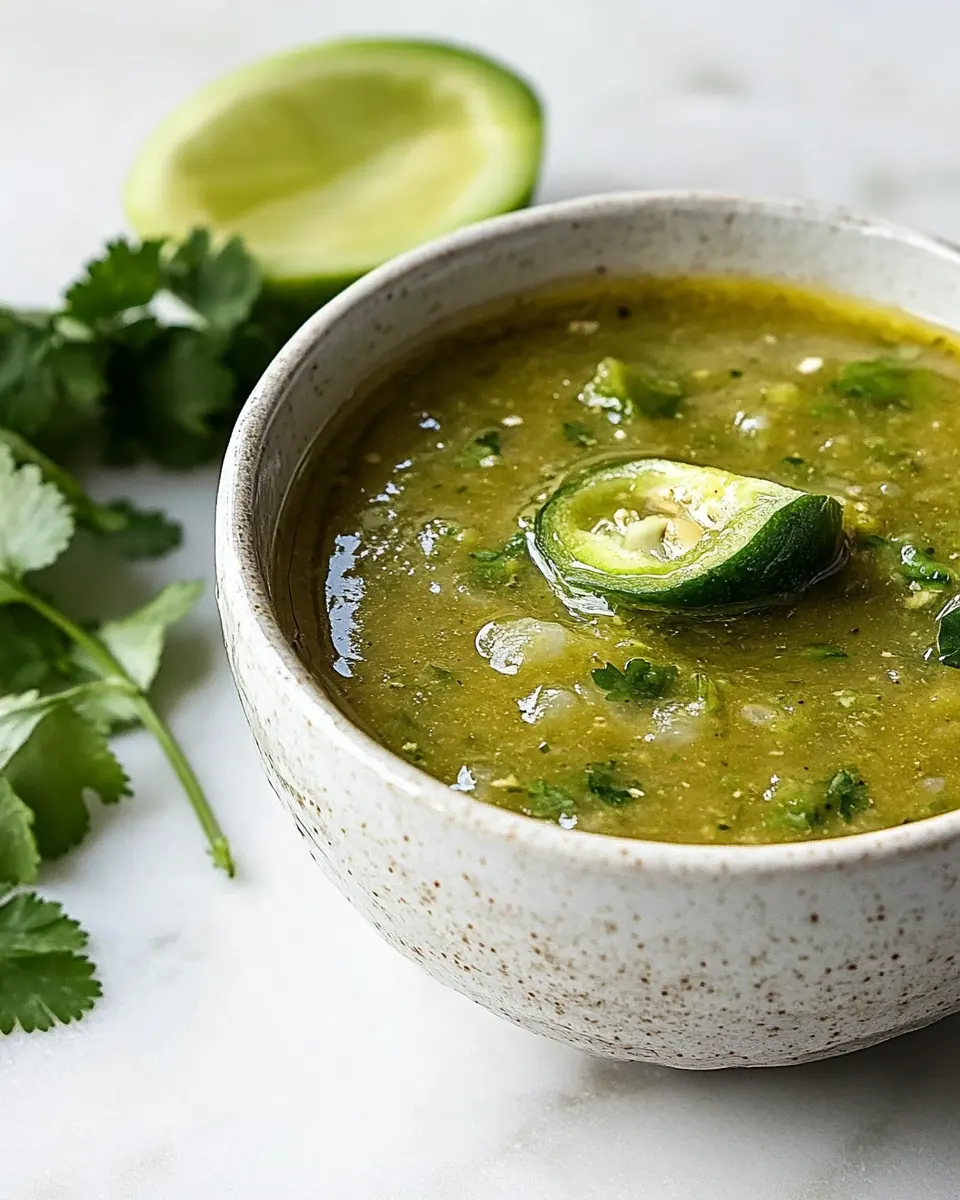
Blend the sauce. Transfer the roasted tomatillos, onion, and jalapeño to a blender and add the remaining raw jalapeño, garlic, avocado oil, salt, and onion powder. Blend until smooth, then add the cilantro and blend again.: As the vegetables roast, the kitchen will begin to fill with a savory, slightly sweet scent, and you will see bubbling juices and blistered skins. The tomatillos should become soft and their skins may split or blacken in places, which is a cue they are ready. This roasting concentrates flavors and reduces raw acidity, creating a rounded base for the sauce. Check at the 25 minute mark and rotate the pan if one side is browning faster. Leaving them in too long risks the vegetables drying out and tasting bitter.
Use on these enchiladas verdes or your favorite enchilada recipe. Leftover sauce keeps well in an airtight container in the refrigerator for up to 4 days.: Once the roasted tomatillos , onion , and roasted jalapeño are in the blender with the remaining raw jalapeño , garlic , avocado oil, salt, and onion powder, you will notice the mixture starts with a chunky texture that smooths quickly. The immediate smell is brighter and fresher than the roasted scent alone, because the raw jalapeño and cilantro add lift. Blending emulsifies the oil with the vegetable juices, giving the sauce a silky mouthfeel that coats the tongue. One trap is over-processing and heating the sauce in the blender, which can dull herbaceous notes; pulse and then blend briefly for the desired consistency.
Transfer the roasted tomatillos, onion, and jalapeño to a blender and add the remaining raw jalapeño, garlic, avocado oil, salt, and onion powder: This order matters because the roasted elements provide the cooked, sweet base and the raw additions maintain brightness and spice. When you combine them, you will smell a complex mix of roasted depth and fresh green heat. The oil aids in smoothing and carrying flavors; without it the sauce can taste thin. If you add too much oil at once you may end up with an overly slick sauce, so start with the measured amount and adjust after tasting.
Blend until smooth, then add the cilantro and blend again: After the first blending, the sauce will look emulsified but may lack that final herbal note. Adding the cilantro last preserves its vibrant color and aromatic lift, which brightens the taste immediately. Blend just enough to incorporate the herb, watching the color deepen but not turn dull. Overblending the herbs can create a muddied flavor and darker color, so pulse carefully. If the sauce seems too watery, a few more seconds of blending with a bit more roasted vegetable can thicken it.
Use on these enchiladas verdes or your favorite enchilada recipe: Spoon the sauce generously over filled tortillas and bake, or toss with cooked fillings for saucy casseroles. You will notice the sauce melds with cheeses and proteins, transforming simple ingredients into a cohesive dish. When baking, the sauce will bubble around the edges and develop a pleasing sheen, signaling it is heated through. A frequent mistake is skimping on sauce, which leaves the dish dry rather than unified.
Leftover sauce keeps well in an airtight container in the refrigerator for up to 4 days: As it chills, flavors meld and the sauce can taste even better the next day, with the heat settling and the herb notes integrating further. Store in a sealed jar to preserve brightness and prevent the sauce from absorbing other fridge odors. Bring it to room temperature or briefly warm before using, because cold sauce can mute flavors. Avoid leaving it out at room temperature for prolonged periods to prevent spoilage.