Place the sliced eggplant on a kitchen towel or paper towel. Sprinkle the kosher salt over the surface. Let the eggplant rest for at least 30 minutes, or up to one hour. The salt will draw the liquid out of the eggplant and prevent the grilled eggplant from being soggy.: When you set the slices on a towel and salt them, you will soon notice beads of moisture forming on the surface, a clear sign that the salt is doing its work. The scent at this stage is lightly vegetal, and the texture will firm up as water is drawn out, which is crucial for achieving a meaty interior later on. This step helps the eggplant brown instead of steaming, and that golden sear is what creates deeper flavor on the grill. A common mistake is rushing this stage, which leads to limp slices and uneven caramelization, so be patient and let the salt work for the full recommended time.
After the eggplant has rested. Use a paper towel to wipe off the salt and water. Place the eggplant onto a plate.: You will see the slices appear slightly translucent where moisture collected, and when you blot them the surface should feel less wet and more tacky. Removing excess salt avoids over seasoning while keeping the concentrated taste. The action of patting helps the surface become ready to accept oil and develop color quickly. One trap to avoid is pressing too hard and tearing the flesh; gentle blotting preserves the structure for grilling.
Preheat the grill over medium heat until hot.: A properly preheated grill will hiss when a test droplet of water sizzles and evaporates instantly, and the grates should be warm to the touch from a safe distance. Medium heat promotes steady caramelization without burning the outside before the interior cooks through. I find that consistent heat yields even grill marks across all slices, and that makes plating look intentional. If the grill is not hot enough, the eggplant will absorb oil and become greasy, so avoid starting too cool.
Brush 1 tablespoon of the olive oil onto the top sides of the eggplant slices.: After wiping the surface, a light brush of olive oil on the cut sides prevents sticking and encourages immediate browning upon contact with the grates. You should see the oil sheen catching the light, and when the slice hits the grill it should sizzle gently. This thin coat keeps the flesh moist and helps the seasoning adhere. Over oiling, however, can cause flare ups or excessive smoke, so apply just enough for an even glaze.
Add the remaining 2 tablespoons of olive oil, minced garlic, and Aleppo pepper to a small bowl. Stir well to combine.: Mixing these ingredients produces a seasoned oil that will infuse the eggplant with aromatics as it warms. The aroma of crushed garlic in oil is sharp at first, and once spread on the warm slices it mellows and becomes fragrant in the background. Stir until the paprika or Aleppo pepper is fully distributed to prevent concentrated hot spots. A frequent slip is adding raw garlic and not letting it mingle with oil, which can leave sharp bites; mixing well prevents that.
Place the eggplant slices, olive oil side down, onto the grill. Grill for 5 minutes.: As the slices hit the grates you will hear a steady sizzle, and the surface will change from matte to glossy and take on dark grill marks. During this time you should smell nutty, caramel notes rising as sugars in the eggplant brown. The surface will firm and the edges may blister slightly, signaling it is time to prepare for the next move. One error to avoid is moving the slices too soon, which prevents formation of those clean marks and makes them tear when flipped.
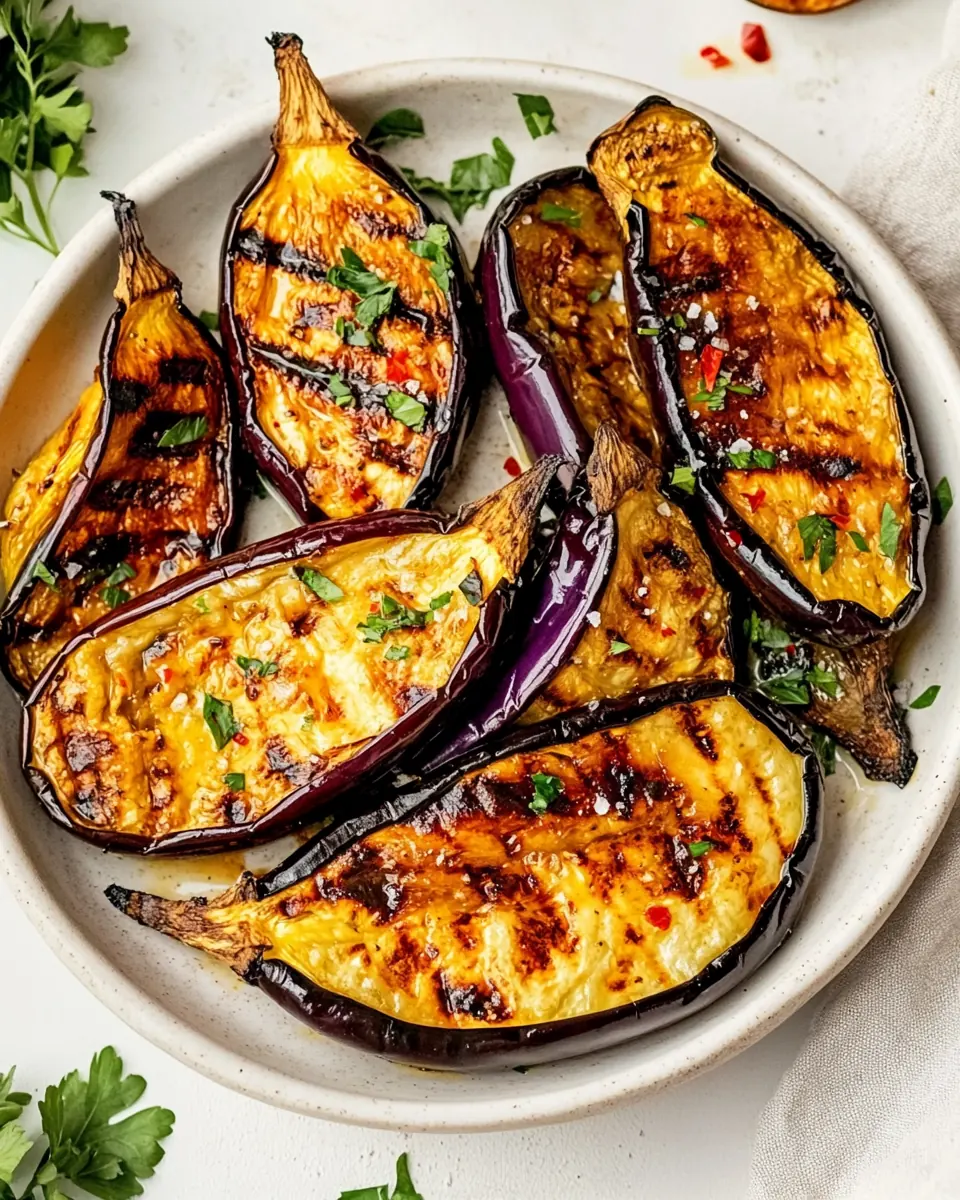
Brush the tops with the olive oil and Aleppo pepper mixture, and flip. Brush the newly exposed tops with more olive oil and Aleppo pepper mixture. Grill another 5 minutes until the eggplant is tender throughout and has grill marks on both sides.: After flipping you should see steaming from the exposed interiors and a deeper, more complex aroma. The second side will brown faster because the flesh has already begun to soften. Brushing the seasoned oil now layers flavor and helps keep the slices glossy and tender. Test for doneness by inserting a fork, it should meet little resistance and the flesh should feel silky. Avoid overcooking, as the eggplant can become mushy and lose its pleasant bite.
Transfer the eggplant to a plate.: Once off the heat the grilled slices continue to relax and redistribute juices, so let them rest briefly before finishing. The aroma will be a mix of smoky notes, olive oil, and gentle garlic, and the texture should be tender yet intact. Transfer carefully to avoid tearing, and choose a shallow platter that shows off the grill marks. Leaving them stacked while piping hot can trap steam and soften the exterior, so spread them out if you want to preserve crispness at the edges.
Garnish the grilled eggplant with a squeeze of fresh lemon juice, chopped mint, and parsley. Serve hot.: The final squeeze of lemon juice adds bright acidity that balances the oil and smoky flavors, while chopped mint and parsley bring herbaceous freshness. When you sprinkle the herbs the scent lifts immediately, and the dish looks more vibrant on the plate. Serve while warm so the contrast between the tender interior and the slightly crisped edges is most pronounced. A common oversight is adding herbs too early, which causes them to wilt, so reserve them for the last moment.