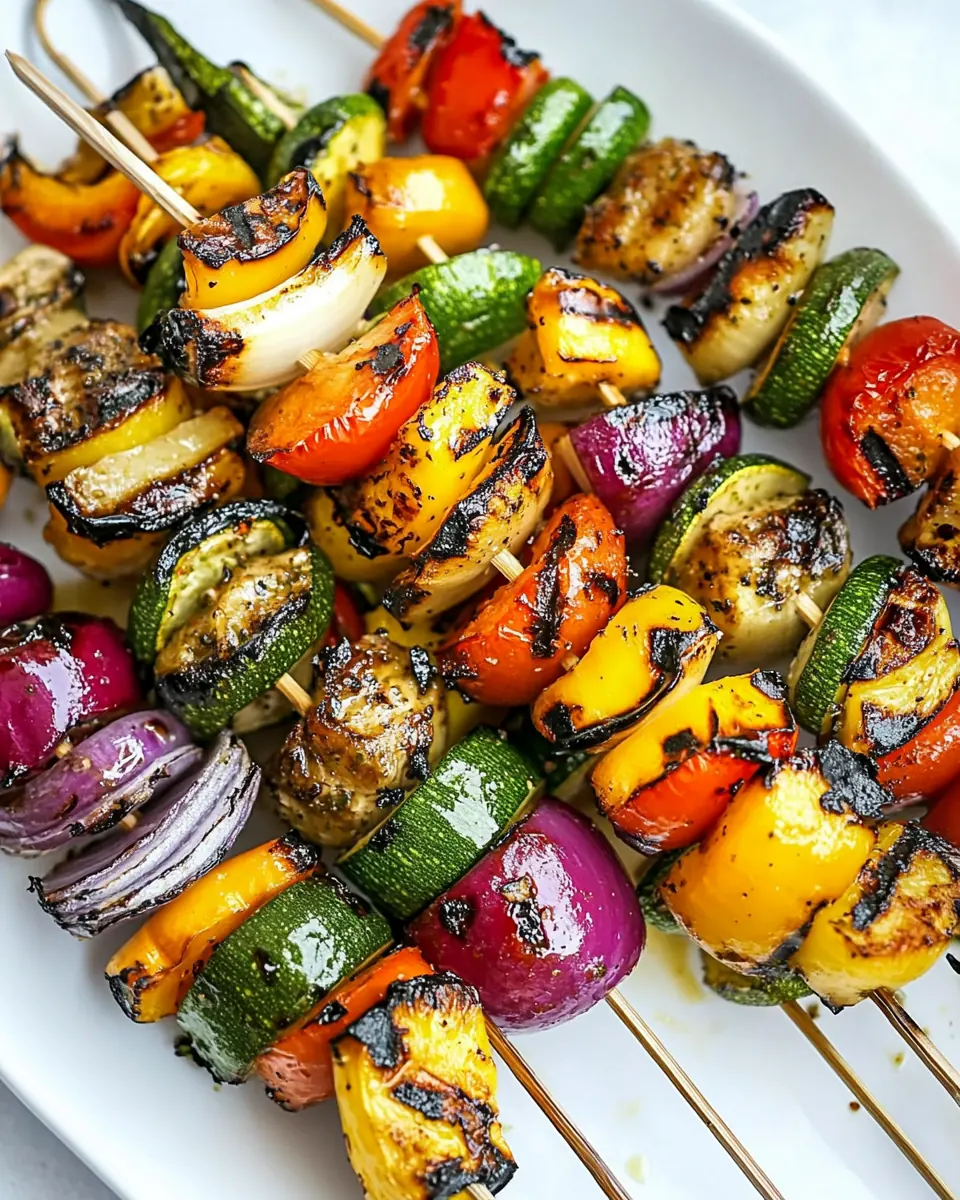
Prepare the grill with clean grates and preheat to medium heat, 350°F to 450°F. If using wooden skewers, prepare them by soaking in water for 10 minutes. If using metal skewers, no prep is necessary.: The air warms and a hint of smoke rises, signaling the grill is ready. Heat in this range helps vegetables cook through while achieving char, and cleaning the grates first prevents sticking and ghost flavors. Expect a faint metallic smell as the grates warm. One common mistake is rushing and grilling on a low heat, which yields limp, pale vegetables rather than those with caramelized edges; avoid that by waiting for the grill to stabilize. For safety and texture consistency use a thermometer or the hand test to judge heat, and keep a spray bottle nearby for flare ups.
Cut the vegetables into 1/2" slices or chunks. Thread the vegetables on the skewers alternating the veggies, until you've reached the end of the skewer. Drizzle the vegetables with olive oil and sprinkle evenly with salt and pepper.: When the skewers are submerged, you can hear a soft slosh and see tiny air bubbles escape as they saturate. Soaking prevents splintering and reduces the chance of skewers burning during cooking. People sometimes skip this and the skewers char too quickly or even catch fire, so I never omit soaking for wooden sticks. Metal skewers are an alternative and stay cool faster, but remember they conduct heat through the skewer, which can continue to cook the center slightly after you remove them from the grill.
Grill the vegetables with the lid closed until tender and lightly charred, turning every 3-5 minutes. Serve warm or at room temperature.: The scent of fresh produce is bright and green as you slice, and the cutting board starts to look festive. Uniform pieces allow even cooking and consistent texture across the skewer. A typical error is cutting pieces too thin, which leads to overcooked mush, or too large, which leaves raw centers; aim for roughly half inch thickness. Use a sharp knife for clean edges, and try to balance density by pairing firmer items like corn and mushrooms with softer slices.
Thread the vegetables on the skewers alternating the veggies, until you've reached the end of the skewer: While threading you feel the give of each piece and the skewer becomes heavier and colorful. Alternating creates visual appeal and distributes flavors, since juices mingle between pieces when they touch. One slip is crowding the skewer too tightly, which traps steam and prevents charring; leave a little space so hot air circulates. Arrange a pattern that mixes color and texture so each bite offers variety.
Drizzle the vegetables with olive oil and sprinkle evenly with salt and pepper: The oil brings a glossy sheen and the seasoning rises slightly on the surface, smelling of toasted pepper and mineral salt. The oil helps conduct heat for even browning and prevents sticking, while salt draws out moisture for better caramelization. Avoid over-oiling which causes flare ups and greasy results; a light coating is ideal. Toss or brush to coat each piece uniformly so no zit remains dry on the grill.
Grill the vegetables with the lid closed until tender and lightly charred, turning every 3 to 5 minutes: Close the lid and listen for the soft sizzle and occasional pop, that is the vegetables releasing steam and sugars caramelizing. The visual cue is small blistered spots and edges turning golden to deep brown, while tender centers yield when pierced with a fork. A frequent mistake is leaving the skewers unturned, which causes uneven charring and hot spots; rotate for balanced color. Cooking times vary slightly with grill temperature and vegetable size, so rely on touch and sight rather than the clock alone.
Serve warm or at room temperature: The first aroma as you lift the skewers is smoky and sweet, and the textures are most noticeable while still warm. Serving at room temperature is forgiving for gatherings and allows flavors to settle. One pitfall is letting the skewers sit too long which can cool them and reduce the bright grilled notes; plan to serve within thirty minutes for best results. I often transfer them to a warm platter and arrange them so guests can pick at a mix of pieces, enjoying both hot and room temperature variations.