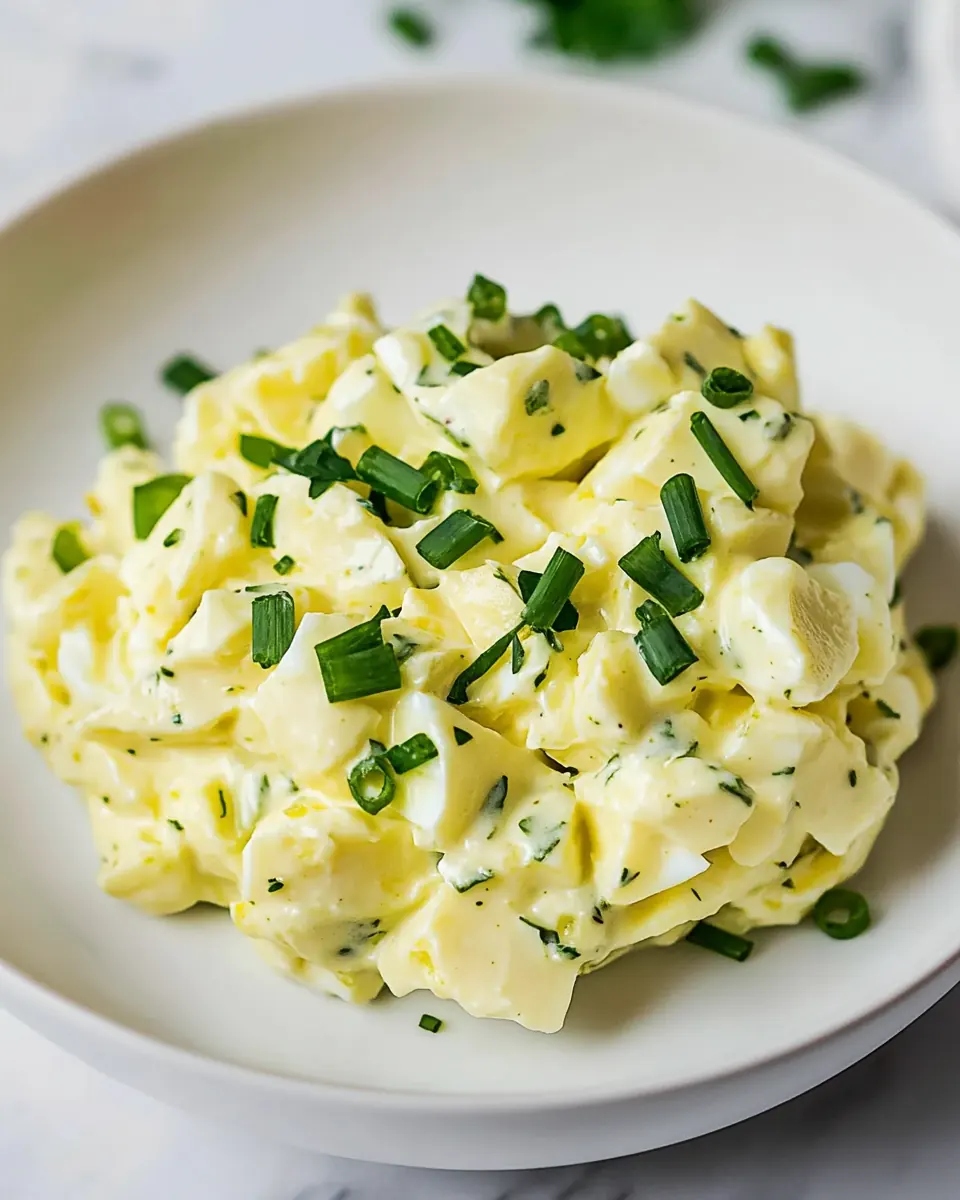
Chop the hard-boiled eggs into small pieces and place them in a large mixing bowl.: As you chop, notice the tactile change from firm white to crumbly yolk and the subtle aroma of cooked eggs . Aim for small, irregular pieces so the salad has both creamy pockets and bite sized chunks, which improves mouthfeel. Use a sharp knife or an egg slicer then a quick chop to avoid smashing the yolks into paste. A common mistake is overmashing, which creates a uniform paste instead of contrasting textures. If the pieces look too large, pulse them lightly with a fork on a cutting board until you reach the desired balance of chunk and creaminess. Visual cues: distinct white fragments and golden yolk bits, not a single uniform color. The sound is muted, a soft chopping rhythm, and the aroma is clean and savory. Taking time here sets the foundation for even mixing and prevents the salad from becoming gluey once the yogurt is added.
Add Greek yogurt, Dijon mustard, chopped celery, chives, salt, and pepper to the bowl with the eggs.: When you add the Greek yogurt and Dijon mustard , watch how the creamy yogurt coats the egg pieces while the mustard streaks in with its sharper tang. Fold in the chopped celery and chives , which introduce fresh, green notes and crisp texture. Sprinkle the measured salt and black pepper evenly to avoid pockets of oversalting. If your yogurt seems thin, spoon it in gradually so the mixture absorbs without becoming watery. A typical pitfall is dumping all ingredients at once and overmixing; instead, layer and fold to preserve texture. The sound at this stage is soft scraping as the spoon moves through the bowl, and you should smell a faint tang from the yogurt and mustard. Visually, the salad will look cohesive but still show flecks of green and yellow.
Mix all the ingredients together until well combined. Adjust seasoning to taste.: As you mix, pay attention to how the texture comes together, noticing pockets of creamy yolk and the shimmer of yogurt. Use a gentle folding motion rather than vigorous stirring to keep some chunkiness. The why here is that gentle mixing preserves the contrast between the soft yolk and the firm white, so each bite has variety. A common error is overworking the mixture until it becomes uniformly smooth, losing the pleasant bite. If the salad looks too dry, add a touch more Greek yogurt , but add sparingly to maintain the balance. Smell the bowl for an even blend of tang and savory notes, and visually ensure the seasoning appears distributed without clumps.
Serve the egg salad on whole-grain bread, in lettuce wraps, or as a side with your favorite greens.: This is where your palate personalizes the dish. Taste a small spoonful and consider whether it needs more salt for depth, more Dijon mustard for brightness, or extra black pepper for heat. Adjustments should be minor, because the flavors concentrate as the salad chills. A pitfall is overseasoning, so add in increments and taste between additions. The sensory check: flavor should be balanced with a gentle tang, savory egg richness, and a light herbal kick. Visually, a well seasoned salad looks lively and not dull. If you make a big adjustment, stir gently to re distribute everything evenly.
Serve the egg salad on whole-grain bread, in lettuce wraps, or as a side with your favorite greens: When plating, think about texture contrasts and temperature. For a sandwich, the toast should be slightly warm or room temperature so the salad stays cool; with lettuce wraps, crisp leaves provide a refreshing counterpoint. Spoon a generous helping and, if desired, garnish with extra chopped chives for color and aroma. A common mistake is packing too much salad between soft bread, which makes the sandwich soggy. The sound is the soft rustle of bread or the crisp snap of lettuce, and the final visual should show defined chunks and speckled herbs. Serving method affects perception, so choose based on whether you want crispness, heartiness, or lightness.