Cook the sweet potato using your preferred method. The fastest way is to microwave it. To do so, poke holes in your sweet potato using a fork and wrap it in a wet paper towel. Place it on a large plate. Microwave it for 5 minutes per side, or until very tender (about 10-15 minutes total). Allow the sweet potato to cool to room temperature. To expedite this process, refrigerate the potato after cooking it. You can cook the sweet potato up to 4 days ahead of time.: The cooked sweet potato should smell earthy and sweet, and when pierced with a fork the flesh will slide apart easily, indicating tenderness. Microwaving in a damp paper towel steams the potato quickly, trapping moisture so the mash is creamy rather than dry. A common misstep is undercooking which leaves firm strands and a gritty texture, so test by squeezing gently with tongs before cooling; if it still resists, microwave in 1 to 2 minute increments. Cooling slightly will let the interior settle so it mixes smoothly with the other wet ingredients. If you prefer oven roasting you will notice caramelized edges and a deeper sweetness, which is lovely but takes more time.
Remove the peel from the sweet potato and mash the flesh using a fork or a potato masher. We need 1 cup of mashed sweet potato.: The mash should be velvety and free of large lumps, with a vivid orange hue and a sweet aroma. Use a fork or masher and press through gently until smooth; a small amount of texture is fine, but large chunks will interrupt the loaf's crumb. If your mash seems watery, drain excess moisture by letting it sit in a fine sieve briefly, because too much liquid can turn the batter runny and extend the bake time. One mistake is measuring before mashing; always measure the mash after peeling and mashing to ensure accurate moisture balance.
Preheat the oven to 350 degrees Fahrenheit and line a 9” x 5” loaf pan with parchment paper.: As the oven warms you will sense a rising heat and the oven light will glow warmly, signaling readiness. Lining the pan ensures easy removal and preserves the loaf's crust. Make sure the oven has reached temperature before baking, as placing the loaf in a cooler oven can cause uneven rise and dense center. Avoid skipping the parchment as sticking can tear the loaf when you try to lift it out.
Transfer the oats, cocoa powder, pumpkin pie spice, baking powder, and sea salt (the dry ingredients) to a high-powered blender and blend at a low speed until the oats form a flour, about 60 seconds.: The blender will hum and the aroma of cocoa and spice will rise as the quick oats turn into a fine, pale powder. A smooth oat flour ensures a consistent crumb and prevents gritty bits in the loaf. Pulse at low speed first to break down larger pieces, then increase briefly to finish. A common error is overblending, which can heat the oats slightly; keep bursts short to avoid warming that might affect the texture of the batter when combined with the wet ingredients.
Mix the mashed sweet potato, avocado oil, pure maple syrup, and vanilla extract in a large bowl.: As you whisk, the mixture will take on a glossy sheen and a fragrant maple aroma, while the avocado oil creates a silkier texture. The mixture should be homogenous, with no streaks of oil separating. If you see separation, whisk energetically to emulsify before adding dry ingredients. A pitfall here is using overly cold eggs with the wet mix which can cause slight curdling when combined; bringing eggs to room temperature helps with integration.
Transfer the flour mixture into the large mixing bowl with the wet ingredients and stir well until all of the ingredients are combined. Mix in the chocolate chips.: When you fold in the blended oat flour and cocoa powder , the batter will thicken and darken to a rich chocolate color, and you will hear the soft scrape of the spoon against the bowl as the ingredients come together. Stir until no dry streaks remain, then fold in the chocolate chips so they are evenly distributed. Over mixing can develop the oats and make the loaf tough, so stop once combined. If the batter looks unusually stiff, a tablespoon of milk or water can smooth it, but this is rarely necessary.
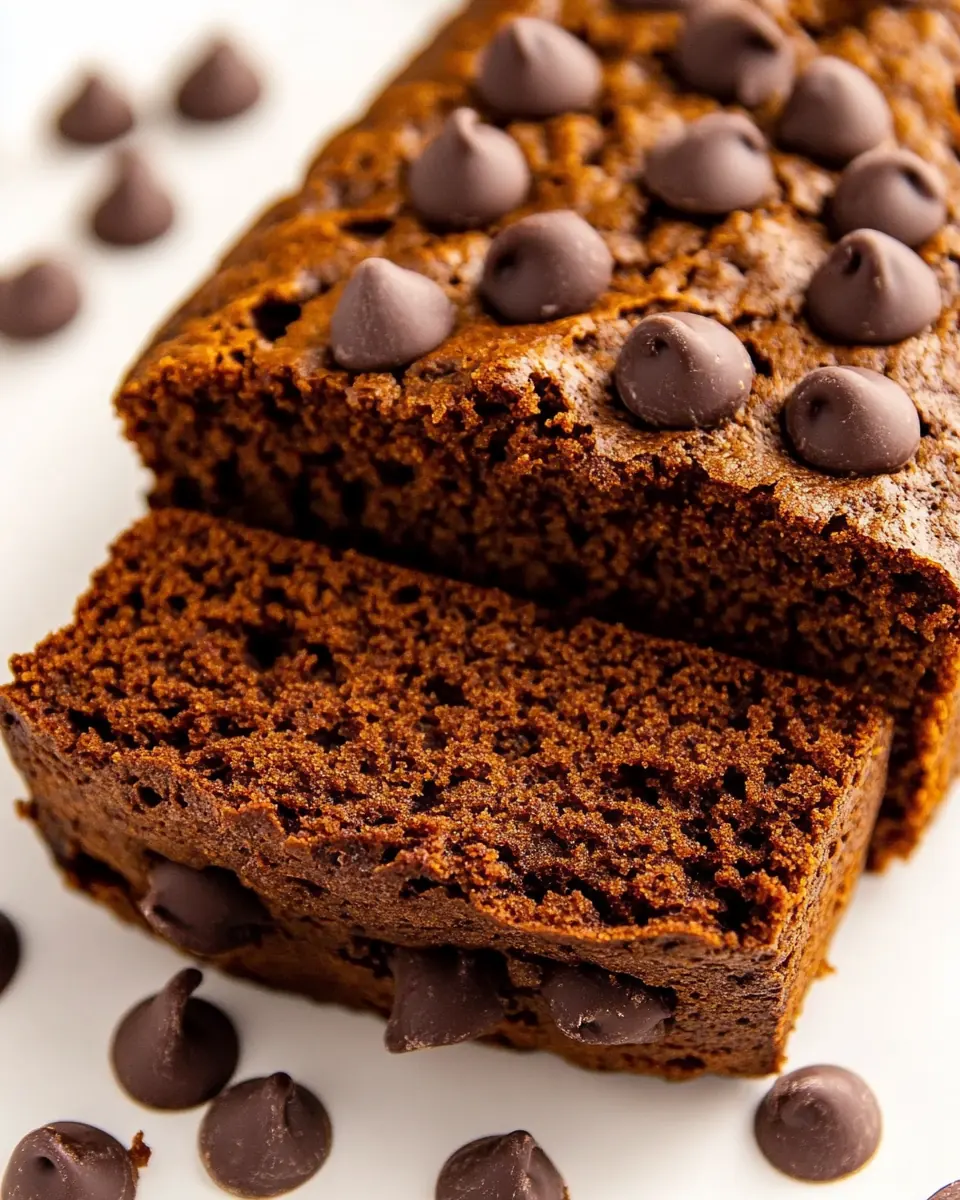
Pour batter into the prepared loaf pan and spread it into an even layer. If you’d like, top the batter with extra chocolate chips. Cover the bread pan with aluminum foil and bake on the center rack of the preheated oven for 50-60 minutes, or until the bread is cooked through. Insert a digital thermometer into the center of the bread to check its internal temperature. It is fully baked if it is 190 degrees Fahrenheit or higher.: As the loaf bakes, the kitchen will fill with chocolate and spice fragrances, and the top will set with occasional glossy pools where chips have melted. Covering with foil prevents the top from browning too quickly while the center finishes baking. Start checking toward the lower end of the time window to avoid overbaking which dries the crumb; insert a digital thermometer to confirm is 190 degrees Fahrenheit or higher in the center. A frequent mistake is removing the foil too early which can lead to a crust that cracks dramatically, so keep it covered until the majority of the bake is complete.
Allow the bread to cool to room temperature before slicing and serving. I like warming up a slice with butter on top for the ultimate treat.: The probe will slide smoothly and the reading should remain steady; when it registers 190 degrees Fahrenheit the interior will be set and not jiggly. This temperature target avoids an underbaked, gummy center. If the thermometer reads lower, return the loaf to the oven in five minute increments and recheck. Avoid relying solely on skewer tests for dense, flourless loaves; a skewer can come out with moist crumbs yet the center remains underdone.
Allow the bread to cool to room temperature before slicing and serving.: Cooling lets the crumb stabilize and the melted chocolate chips set slightly, creating clean slices with an even texture. The loaf will emit a warm, chocolatey aroma as it cools, and pressing the top gently should yield a slight spring back. Cutting too soon can cause the loaf to crumble and lose moisture, so patience pays off. For the most appealing presentation, let it cool on a wire rack; this prevents a soggy bottom from residual steam trapped under the pan.