Preheat your oven to 425℉.: You will notice the kitchen begin to warm and that dry, warm air primes the oven for quick caramelization on the fruit surface, which helps the filling thicken properly. A properly preheated oven ensures the initial burst of heat sets the topping edges and promotes bubbling. A common mistake is putting the cobbler into a cold oven, which can lead to a soggy topping and longer bake times.
In a large bowl, combine the peaches, coconut sugar, cinnamon, nutmeg, and lemon juice until well combined. Stir in the tapioca starch.: When you mix these ingredients you should see the fruit begin to glisten as the sugar draws out juices. The aroma of cinnamon and nutmeg will become more prominent, and the lemon juice will lift the fruit scent. The starch will bind those juices so the filling thickens rather than running. Avoid overmixing which can bruise the slices and create a mushier filling.
Pour into a large baking pan (I used a 10-inch cast-iron skillet) and bake for 10 minutes.: As the pan heats in the oven, the peaches will start to release more juices and the edges will bubble slightly. This quick bake concentrates the flavors and gives the filling a head start so the topping does not become waterlogged. A common misstep is skipping this step, which often results in a wetter final cobbler.
Meanwhile, mix 1/2 cup + 1 tablespoon of the coconut sugar (reserving the rest for later), the coconut flour, tapioca starch, baking powder, and salt in a separate large bowl. Blend in the butter with your fingers until the mixture looks like coarse crumbs. Stir in the boiling water until just combined.: The dry mix should smell gently sweet and toasty from the coconut flour . As you rub in the butter your fingertips will feel small pea sized bits, which is the ideal texture for a tender topping. Adding the hot water hydrates the flour and starch fast, creating a dough that holds together but remains soft. The biggest error here is overworking the dough, which can make it dense instead of crumbly.
Remove the peaches from the oven. In a small bowl, stir together the cinnamon and remaining 2 tablespoons of coconut sugar. Sprinkle over the peaches.: When you pull the pan out you should see steam rising and the fruit juices bubbling, with a sweet, toffee like scent. The cinnamon sugar sprinkled over the surface will begin to melt slightly and form tiny caramelized beads which add texture contrast. Be careful not to let the pan sit too long or the juices will cool and thicken unevenly.
Drop the cobbler topping by spoonfuls over the peaches, spreading out the mixture slightly.: The topping should be placed in uneven mounds so exposed edges can brown and crisp, while interior pockets stay tender. Pressing the topping too flat will prevent those crisp edges from forming, and over dispersing it will leave large bare spots of fruit uncovered, which can overbubble and lose structure.
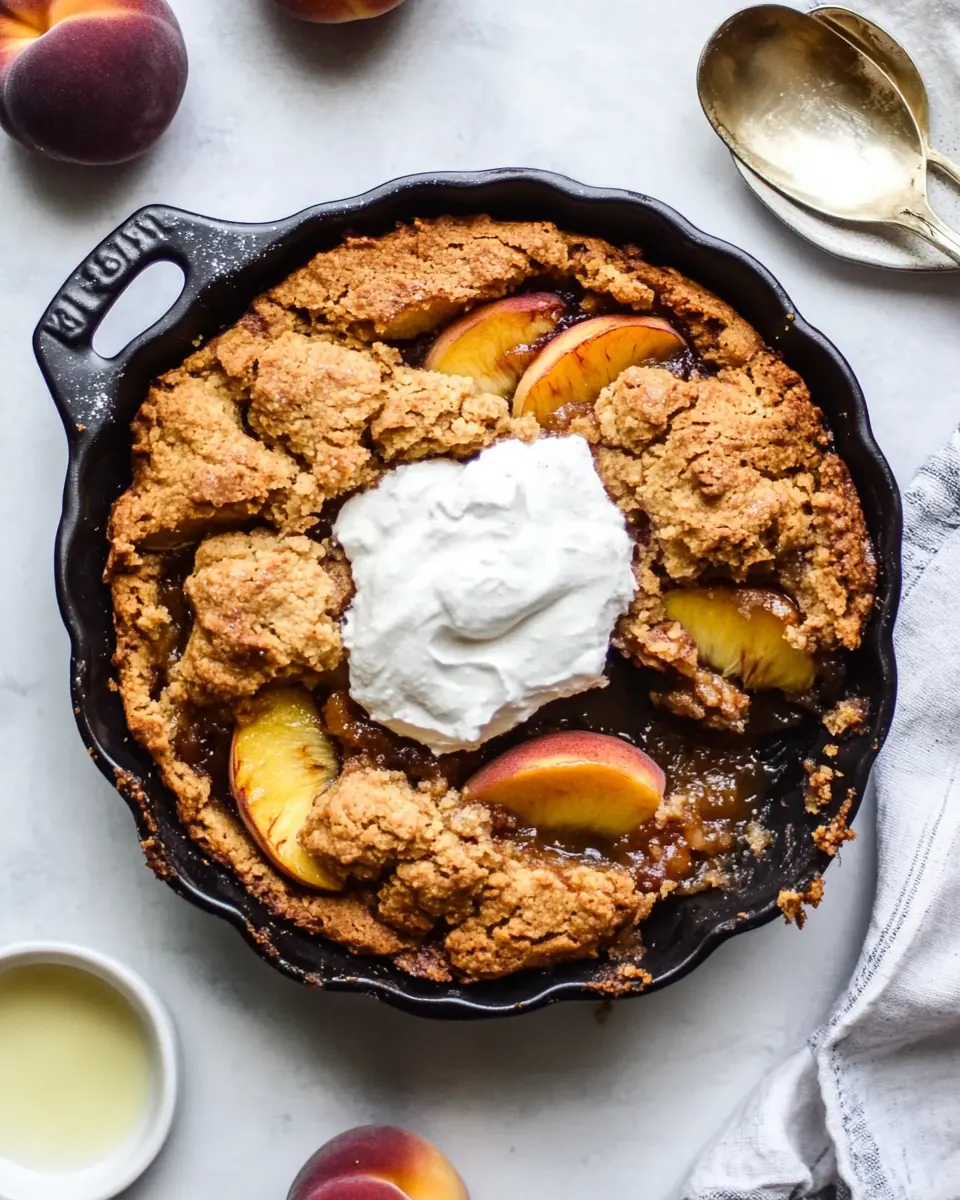
Bake until the top is golden brown and the peaches are bubbly, about 25-30 minutes. Let stand for at least 30 minutes.: As it bakes you will hear soft crackling and see the juices rise and thicken into a glossy syrup around the fruit. The topping should transform into a warm, golden color, and aroma will move from fruity to richly oven roasted with caramel notes. Letting it rest allows the filling to set, so slices hold their shape when served. A typical error is cutting too soon which yields a runny serving.
DEVOUR!: The first forkful should combine the warm, slightly sticky peaches with tender, buttery topping, where the contrast of textures and the layered spices create a satisfying mouthfeel. If you prefer, allow the cobbler to cool a bit longer to avoid overly loose portions. One trap is reheating too aggressively later, which can dry the topping.