Set a medium-sized pot with water over high heat.: The kettle of water should roar gently when it reaches a rolling boil, and you will see big bubbles breaking the surface. Use a pot large enough that the orzo has room to move, which helps prevent sticking and clumping. Why this matters, I find, is that crowded pasta cooks unevenly and can become gluey, which ruins the intended light texture of the salad. A misstep here is using too small a pot, which leads to uneven cooking and more frequent stirring that can break the pasta.
Bring to a boil, lightly salt the water and add the pasta. Cook according to box directions until the pasta is al dente.: As the water boils, add a generous pinch of kosher salt , so the orzo absorbs seasoning from the start. The cooking time on the box is your guide, but start checking the pasta a minute or two before the lower end to achieve that perfect al dente bite. You want a slight firmness at the center, not chalky or raw, and certainly not mushy. Overcooking is the most common error in this step, which results in a limp texture that will not hold up once dressed.
Drain the pasta and add to a large bowl.: When you drain the orzo , shake off excess water and transfer it immediately to a roomy bowl so it has space to cool slightly and absorb dressing. The steam should still rise, but the orzo should not be steaming relentlessly, which could wilt the herbs later. Using a large bowl prevents crowding and makes tossing easier, which helps distribute the dressing evenly. A pitfall here is letting the pasta sit too long in the colander and cool completely, which makes it harder for the oil and lemon to evenly coat the grains.
While the pasta is still hot pour over 1/2 cup of olive oil and lemon juice.: The heat from the orzo helps the olive oil and lemon juice meld into a silky coating that penetrates each grain. You will notice a faint sheen forming as the oil warms and loosens around the pasta, carrying the citrus aroma. This step is crucial because it ensures the dressing is absorbed rather than pooling at the bottom, which balances every bite. A common mistake is adding all the oil at once later, which can make the salad feel separated and oily.
Give it a gentle stir and set aside while you prepare the remaining ingredients. (Note: Yes, this will look like A LOT of olive oil but this is going to thin out once you add in all your ingredients): A gentle fold ensures the dressing cloaks the orzo without crushing the grains. As the bowl cools, the flavors begin to marry, and the pasta takes on a lightly glossy texture. Avoid aggressive mixing, which can break the orzo and produce a pasty mouthfeel. Many cooks overwork the pasta here, which reduces the salad's delicate structure.
In a large skillet add the remaining 1/4 cup olive oil and set over medium-high heat.: Heat the skillet until the oil shimmers but is not smoking, which gives you an even, responsive pan temperature for cooking shrimp . You should hear a faint sizzle when ingredients hit the pan, signaling good contact. Proper pan temperature ensures quick sear and juiciness; if the pan is too cool the shrimp will stew and become rubbery. The typical error is overheating so the oil smokes and imparts a bitter taste.
Once the oil is hot add in the shrimp and cook until they just start to turn pink.: Lay the shrimp in a single layer and listen for the gentle sizzle as their edges begin to color. At this point you will see the translucent raw flesh become opaque at the edges, and the bodies will curl slightly. That first change is a cue to watch closely because shrimp cook very fast. The reason this quick sear matters is it locks in juices and gives texture contrast with the orzo . A common mistake is crowding the pan, which lowers the temperature and produces steamed, rather than seared, shrimp.
Add in the grated garlic and continue cooking until the shrimp are firm and pink.: Adding grated garlic toward the end avoids burning and allows its aromatic oils to bloom into the hot olive oil . You will smell a warm, fragrant note almost immediately, and the garlic will become slightly translucent without browning. Keep the heat moderate because browned garlic turns bitter and will taint the dish. Overcooking the shrimp at this stage is the most common error, yielding tough texture instead of tender bite.
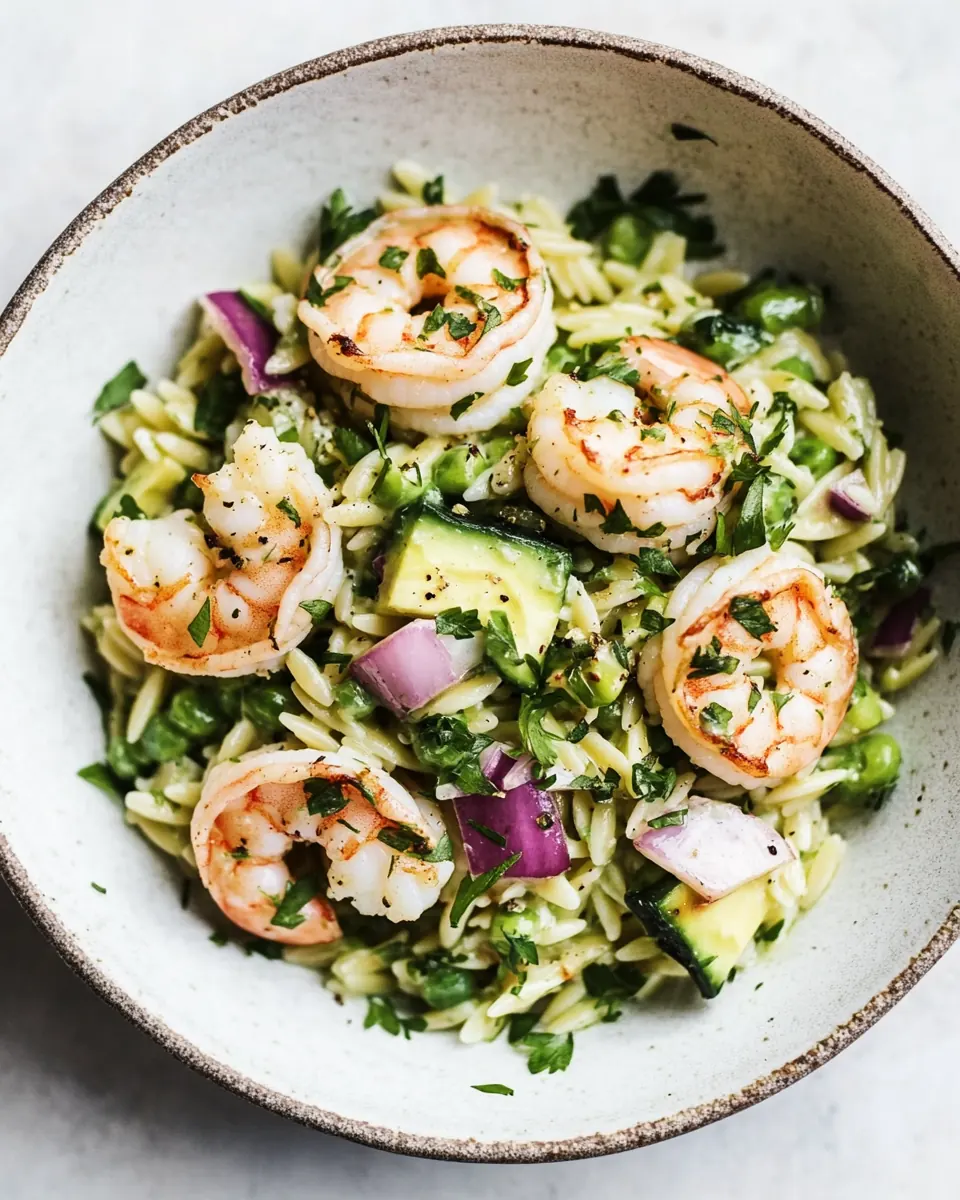
Remove from the heat and add the shrimp with any remaining oil and garlic into the bowl with the pasta. Stir to combine.: Transfer the shrimp and pan juices into the bowl so every component benefits from the flavored oil. The sizzling juices will perfume the orzo , and you will notice a glossy sheen and an aromatic garlic note spreading through the bowl. Toss gently to distribute solids and liquid evenly. A misstep here is leaving pan juices behind, which wastes flavor and results in a less cohesive salad.
To the pasta mixture add all remaining ingredients and stir to combine.: Now fold in the diced English cucumber , minced red onion , minced parsley , minced dill , minced mint , and small cubes of feta . As you stir, textures disperse and colors pop, giving a vivid mosaic in the bowl. The coolness of the cucumber and herbs contrasts with the warm pasta and shrimp, and the feta adds creamy pockets of salt. The aim is uniform distribution; avoid overmixing, which can bruise herbs and break feta into indistinct crumbs.
Taste and season with the desired amount of kosher salt and pepper. Chill and serve.: Finish by tasting and adjusting with kosher salt and pepper , remembering that the feta already contributes saltiness. Chill the salad for a short while so flavors settle and meld. Serve slightly chilled or at cool room temperature for best texture. A common oversight is over salting before considering the feta, so always taste before the final seasoning step.