Cut fish into 8 even 'sticks' and set aside. Whisk together eggs and pepper in a shallow dish. In a separate shallow dish, combine the flaxseed, Old Bay Seasoning, salt, breadcrumbs, and Parmesan cheese; blend well.: As you separate the fillet into sticks, notice the smooth, slightly translucent surface of the raw white fish and the clean, briny scent it gives off. Cutting into even pieces ensures uniform cooking so every stick finishes at the same moment, preventing dry edges or undercooked centers. Use a sharp knife and steady hand to avoid ragged edges that can cause uneven batter adhesion. A common error is cutting pieces with wildly different thicknesses, which leads to uneven doneness and a mix of soft and overcooked textures.
Coat fish sticks in egg mixture, allowing excess to fall off fish; then, dip in breadcrumb mixture, coating both sides. Place onto a clean dish until ready to cook. Continue until all fish sticks have been coated.: When you whisk the two large eggs with the ground black pepper , you will see a glossy yellow mixture that catches the light, the pepper speckled through it. The egg mixture clings to the fish, giving the crumb mix something to adhere to and creating a thin protective layer that helps lock moisture in the fish while frying. If you whip the eggs too frothy or dilute them with water, the coating may not cling uniformly and can flake off during cooking.
Heat a few tablespoons of oil in a large skillet over medium-high heat.: As you mix these dry elements, inhale the warm, herbaceous aroma of Old Bay Seasoning and the nutty scent from the ground flaxseed . A homogenous blend ensures each bite is flavorful and texturally consistent. The Parmesan cheese will begin to stick to the crumbs, creating potential golden pockets as it browns. Avoid leaving clumps in the dry mix because uneven distribution will make some pieces too salty or too bland.
Place half the fish (or less if you are using a smaller skillet) into skillet in a single layer. Cook on each side for 4 minutes, allowing to brown evenly. Set aside and cover to keep warm. Add more oil to the skillet as needed, allowing to reheat before cooking remaining fish sticks. Serve warm with your favorite tartar sauce. Enjoy!: When you dip each stick, feel the smooth coating of egg first, then see how the crumbs cling and form a textured shell. Letting excess egg drip prevents sogginess, and a light, even dusting from the crumbs will crisp properly in the skillet. Pressing too hard will result in a thick, glue like crust that can remain undercooked inside the crumbs, so be gentle and deliberate.
Place onto a clean dish until ready to cook. Continue until all fish sticks have been coated: Lining up the coated sticks on a clean plate helps them rest and set, giving the egg time to bond to the crumb shell so it does not fall off when you flip them. You will notice the crumb surface feels slightly tacky but stable. Crowding your resting plate or stacking sticks will ruin the coating, so keep them single layer until you move to the skillet.
Heat a few tablespoons of oil in a large skillet over medium-high heat: As the avocado oil warms, it will spread and shimmer, releasing a faint neutral scent and a slight ripple on the surface. The right temperature gives you a satisfying sizzle when the fish hits the pan, which signals the crust is searing and forming. If the oil is not hot enough, the coating soaks up oil and becomes greasy instead of crisp; if it is too hot, the outside will burn before the inside cooks. Watch for a steady shimmer but no smoke.
Place half the fish into skillet in a single layer: Lay each piece gently so you hear a soft sizzle, and keep them spaced enough for air to circulate and the heat to evenly brown each side. The skillet's surface should provide direct contact so you see the crumb turn from pale to golden brown along the edges first. Overcrowding the pan traps steam and prevents crisping, creating limp breading rather than a crunchy crust.
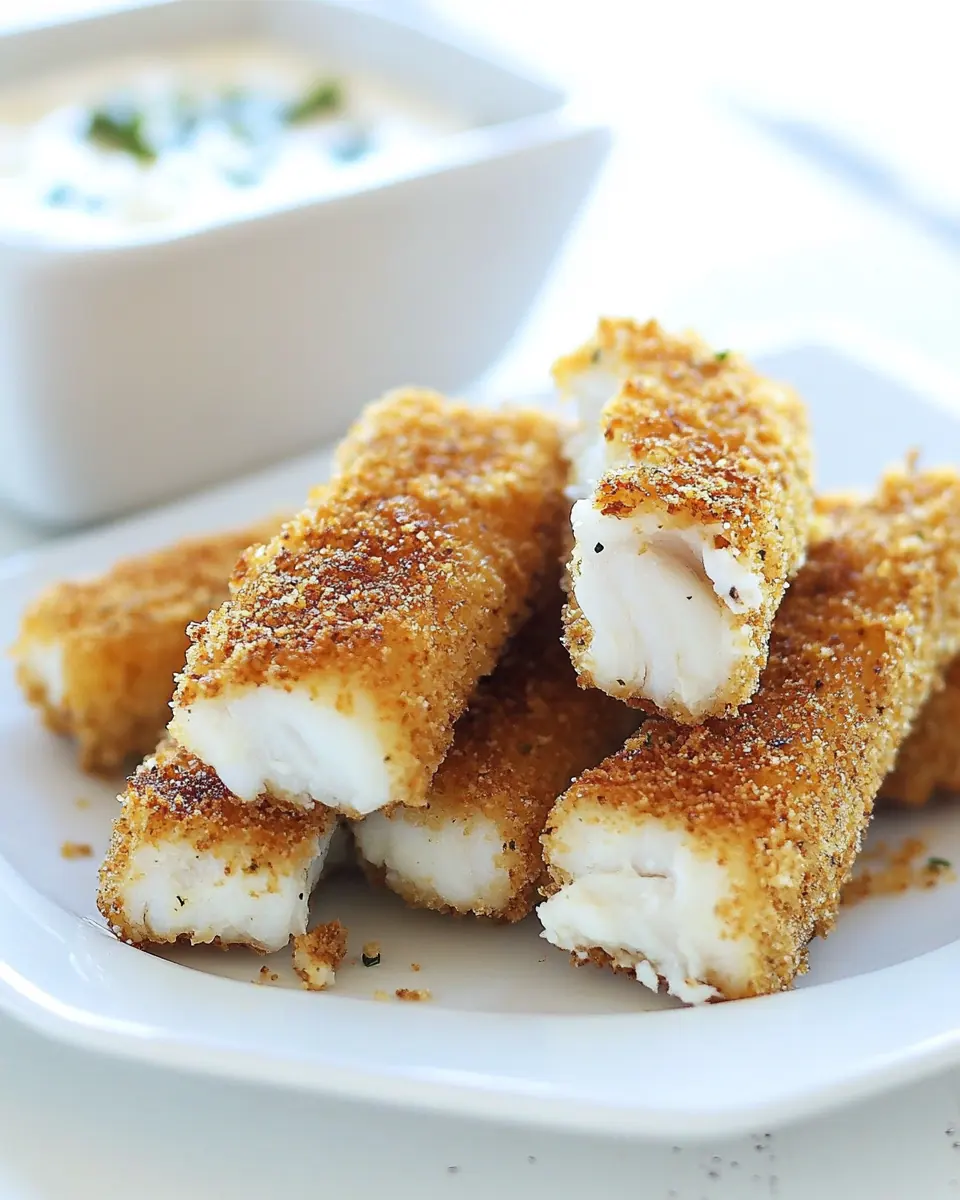
Cook on each side for 4 minutes, allowing to brown evenly: During these minutes, notice a steady sizzling sound and the scent evolve into a toasty, savory perfume as the Parmesan cheese and crumbs caramelize. The fish will turn from translucent to opaque and flaky, and the exterior should be a consistent golden brown. Use a spatula to check pockets for even color. Flipping too often stops browning, while flipping too late can char the exterior before the inside finishes.
Set aside and cover to keep warm: After the first batch, transfer the sticks to a warm plate and tent loosely with foil to retain heat without steaming the crust. You will notice the residual warmth continues to cook the interior slightly, so resting briefly helps settle juices and maintain a tender center. Stacking them or covering tightly will trap moisture and soften the crust, so avoid both mistakes.
Add more oil to the skillet as needed, allowing to reheat before cooking remaining fish sticks: Replenishing the oil between batches restores surface temperature and prevents the pan from cooling down, which helps preserve crispness. Let the oil shimmer again before adding more fish so you get that immediate sizzle that sets the crust. Adding fish to oil that has not reheated will lead to soggy, underbrowned breading.
Serve warm with your favorite tartar sauce: When you plate, the first bite should give you a crunchy shell, a tender flake of white fish , and a warm, savory finish. Serving immediately preserves the contrast between crisp coating and moist interior. Waiting too long to serve allows steam to soften the crust, so aim to serve at once.