Combine the milk, yeast, and 1 teaspoon of granulated sugar in a small bowl. Let sit 5 minutes.: When you whisk these together you will notice tiny foam forming on the surface within minutes, which smells faintly yeasty and sweet, an encouraging sign that your active dry yeast is alive. The warm temperature of the whole milk should feel like a warm bath on your wrist, not hot, because overly hot liquid will kill the yeast. If no foam appears after 10 minutes, that likely means the yeast is inactive, and you should start again with fresh yeast. Keep the bowl in a warm draft free spot, and avoid stirring aggressively, as you want gentle activation not dispersal.
Place yeast mixture in the bowl of a stand mixer. Add brown sugar, butter, vanilla, eggs, salt, cinnamon, nutmeg, allspice, and 1 cup flour. Beat on LOW speed for 30 seconds. Scrape down the sides of the bowl.: As the mixer starts, you will hear a soft whir and begin to smell the spice perfume rising from the bowl, a comforting sign that aromas are melding. The initial low speed helps hydrate the dry ingredients and starts gluten formation without overworking. Scraping the bowl is crucial to ensure no pockets of dry flour remain, which would yield an uneven dough. A common mistake here is rushing to high speed too soon, which can overdevelop gluten and make the buns tough, so keep it gentle and patient.
Add the rest of the flour and raisins. Beat on Medium speed for 2 minutes. Dough should be sticky, but it should pull away from the sides of the bowl. If it doesn't add more flour 1 tablespoon at a time.: As you increase speed, the dough will become more cohesive and you will hear a change in texture from slappy to smooth. The raisins will disperse and tuck into the dough, visible as dark specks against the pale mix. The dough should remain slightly tacky, which means it will yield tender buns after baking. If it clings heavily to your fingers, add flour sparingly. Avoid adding too much flour at once, because dry dough leads to dense buns rather than soft, airy ones.
Knead the dough by hand on a lightly floured surface for 2 minutes. OR you can beat it at medium speed in the electric mixer for 2 more minutes.: During kneading you will feel the dough transform, becoming smoother and more elastic, and it should spring back slightly when poked. The sound changes to a subtle stretch and the surface takes on a satiny sheen, which is the gluten aligning. If you knead too vigorously, especially by hand, you risk warming the dough excessively, which can speed fermentation unpredictably. A common error is underkneading, which results in a weak structure and flat buns, so aim for that elastic feel.
Lightly grease a large bowl with oil. Place the dough in the bowl and turn to coat it with oil. Cover and let rise for 1 to 2 hours or until doubled in size.: As the dough rests, you will notice it puff up and the surface smooth out, with tiny air pockets forming beneath. The aroma will shift to a yeasty, sweet scent with spice notes, a pleasant signal that fermentation is progressing. Ensure the bowl is in a warm spot away from drafts, because uneven temperatures can cause a slow or inconsistent rise. Overproofing here will flatten the dough, so keep an eye on visual doubling rather than only the clock.
Grease a 9 x 13-inch pan. Divide the dough into 15 equal pieces and shape each one into a ball. Place in the prepared pan. Cover and let rise until doubled, about 1 hour.: As you shape each piece, the surface should be smooth and taut, producing a soft dome when rolled in your palms. Placing them close together helps them support each other while baking, yielding pillowy sides. During the second rise the buns will almost touch, and the airy feel is a good sign. A frequent slip is making uneven portions, which bakes unevenly, so I use a scale or careful measurement to keep sizes uniform.
Preheat oven to 350 degrees. Bake rolls for 20 to 25 minutes.: In the oven the buns will bloom and develop a golden top, filling the kitchen with spiced fragrance. You will hear a gentle crackle as the crust sets and see steam briefly escape from the pan when you open it. Bake until the tops are golden and a skewer comes out clean, because underbaked centers can feel gummy. Avoid opening the oven frequently, because temperature fluctuations can impede even rise and color.
Bring the water and granulated sugar to a boil in a small saucepan. Let boil for a few minutes to thicken. Brush the tops of the rolls with syrup.: The syrup will bubble and smell sweet as the sugar dissolves, and brushing while the buns are hot helps the glaze soak in slightly, creating that glossy finish. The liquid should be slightly thickened but still pourable, otherwise it will set too firmly. A common error is waiting too long to glaze, which reduces shine and adhesion, so brush immediately after baking for the best sheen.
In a medium bowl, whisk together the powdered sugar, cream cheese, butter, and vanilla. Whisk in enough milk to get it a good piping consistency.: The texture should be smooth and viscous enough to hold a shape when piped, with a cool, creamy aroma from the cream cheese . If the glaze feels too stiff add milk sparingly, and if it is too loose, add a touch more confectioners' sugar. Overwhisking can incorporate too much air, making the glaze less stable for piping, so aim for a creamy, lump free texture.
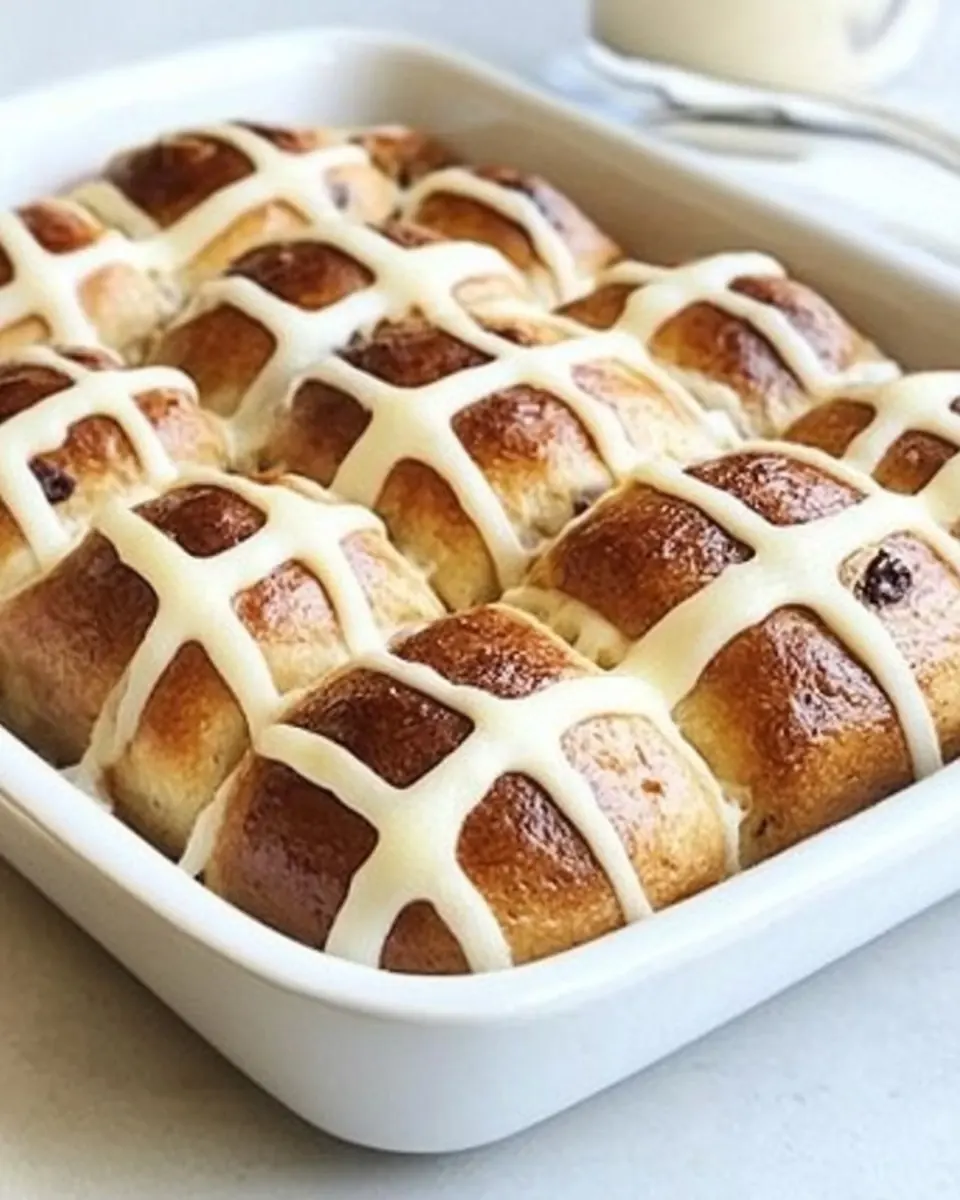
Place cream cheese glaze in a plastic zip top bag. Snip the corner and pipe a cross on each roll.: As you pipe, the cross should look clean and defined, with the glaze setting slightly on the warm bun. The contrast between the white cross and the golden roll is classic and satisfying. If the glaze runs, chill it briefly to thicken, and avoid cutting too large a hole in the bag which will make the lines too thick. Steady pressure and a consistent motion create the neat crosses that make these buns iconic.