Mix the ingredients for the mocha rub in a small bowl. You won’t need all of the rub, so save the extra in a tightly sealed container.: The aroma will be rich and heady, a mingling of coffee , cocoa powder , and smoked paprika that hints at the savory backbone you are creating. Smell is a great guide here, because a well balanced rub should smell complex, not overly salty or too smoky. When you combine the spices, stir until the texture is uniform, which ensures each piece of beef receives the same seasoning. One common mistake is overgrinding wet spices into the mix, make sure everything is dry and free flowing. If the rub smells too sharp, let it rest for a few minutes and recheck, because flavors will marry slightly as they sit.
Brew a cup of coffee. When I’m making just one cup, I turn to my Aeropress—not only because it makes a mean cuppa coffee, but also because it tickles me to know that the Aeropress was invented by the same dude who made Aerobie flying rings.: You should get a fragrant, slightly bitter cup that will add depth to the braising liquid. Using a strong brew enhances the mocha character, and I often choose a medium dark roast for balance. As you brew, notice the steam and the rich scent that wafts up, it is a useful preview of the sauce that will form. Avoid using overly acidic beans, which can impart an unpleasant tang when reduced. If your brew seems weak, use less water to concentrate the flavor.
Place the beef cubes in a large bowl and add three to four tablespoons of the mocha rub.: The cubes should be evenly coated in a dark dusting of the rub, and the dry spices will cling to the meat surface, promising a flavorful crust. Use your hands or tongs to massage the rub into the beef , ensuring the pieces are all covered. A frequent oversight is applying too little rub, which results in bland edges, so err on the side of complete coverage. If the rub is clumping, break it apart with your fingers so it distributes uniformly.
Toss well until the beef is evenly coated.: You will see the cubes take on a deep color and feel slightly tacky from the rub, which helps them hold a seared exterior if you pan sear before pressure cooking. Even coating is crucial for consistent flavor in every bite, so inspect the pieces and reapply a pinch of rub to any pale spots. Avoid overhandling the meat, which can compress the fibers and change texture; gentle tossing is best. If the rub falls off during transfer, pat the meat again to re-adhere seasonings.
Combine the brewed coffee, broth, onion, figs, and balsamic vinegar in a high-powered blender. Blitz until liquefied.: When you blitz these ingredients, you create a harmonious braising liquid with a silky texture and integrated sweetness. The blended onion will add body and natural sugars, while the chopped dried figs will liquefy and thicken slightly, marrying with the balsamic vinegar to give a glossy sauce. A common pitfall is underblending, which leaves chunks that can burn or separate, so blend until smooth. If the sauce smells overwhelmingly sharp, a short simmer will mellow it.
Transfer the seasoned beef to your pressure cooker and pour the sauce on top.: The visual should be the dark, seasoned cubes nested in a deep, coffee colored liquid. The sauce level should come up around the meat but not completely cover it, allowing the intense surface seasonings to remain distinct. Pour carefully to avoid disturbing the rub too much, and use a rubber spatula to scrape remaining sauce from the blender. An error I see is adding too much liquid, which dilutes flavor and prevents proper browning during any pre sear step.
Cover and lock the lid of your pressure cooker.: You will hear a soft click or feel the mechanism seat, a tactile cue that the pot is ready to build pressure. Ensuring the seal is clean is important, because a faulty seal can cause slow pressure buildup and inconsistent results. If your lid does not lock smoothly, sit the pot aside and check the sealing ring for food residue. Never force the lid closed, as that can damage the equipment.
If you’re using an Instant Pot, turn it on and press the 'Meat/Stew' button to switch it to the pressure cooking mode. And if your cubes are smaller than mine, you can press the 'minus' button to decrease the cooking time from the preset 35-minute cooking time. Once the pot is programmed, walk away. (Or, if you’re like me, sit down and eat dinner.): The display and gentle hum will tell you the cooker is working, and the preset timing does a lot of the heavy lifting. Walk away while it builds pressure, as fiddling can change the cycle. If your cubes are smaller, adjust the time to avoid overcooking. A common mistake is opening the pot too soon after cooking, which causes the meat to lose juices and become dry.
When the stew is finished cooking, the Instant Pot will switch automatically to a 'Keep Warm' mode. At this point, turn it off and let the pressure release naturally (about 15 minutes).: At this point, turn it off and let the pressure release naturally about 15 minutes; you will hear soft hisses as steam escapes gradually. Natural release allows the meat fibers to relax and retain moisture, resulting in tender, shreddable beef . Forced release can tighten the meat and make it tougher, so practice patience here. If you need to speed things up, be aware the texture will change.
(Using a stove-top pressure cooker? You won’t have all those buttons to press; instead, just cook on high heat until high pressure is reached. Then, reduce the heat to low to maintain high pressure for about 30 minutes. Remove the pot from the heat, and let the pressure release naturally.): You should be greeted by a fragrant cloud of mocha scented steam and a glossy sauce. The beef should be fork tender, easily yielding when probed. If the meat still resists, you can resecure the lid and pressure cook a few more minutes. A misstep is stirring immediately and shredding while the meat is too hot, which can make it stringy rather than tender, so let it rest briefly.
Pop open the lid. The meat should be fork tender. If it’s not, cook it under high pressure for 5 more minutes.: As you lift the pieces, notice the gelatinous sheen that forms, a sign of properly broken down collagen. Leaving the sauce behind lets you reduce it if desired, concentrating flavors into a finishing glaze. Avoid dumping everything at once if you plan to reduce the sauce, since separating gives you control over texture and thickness.
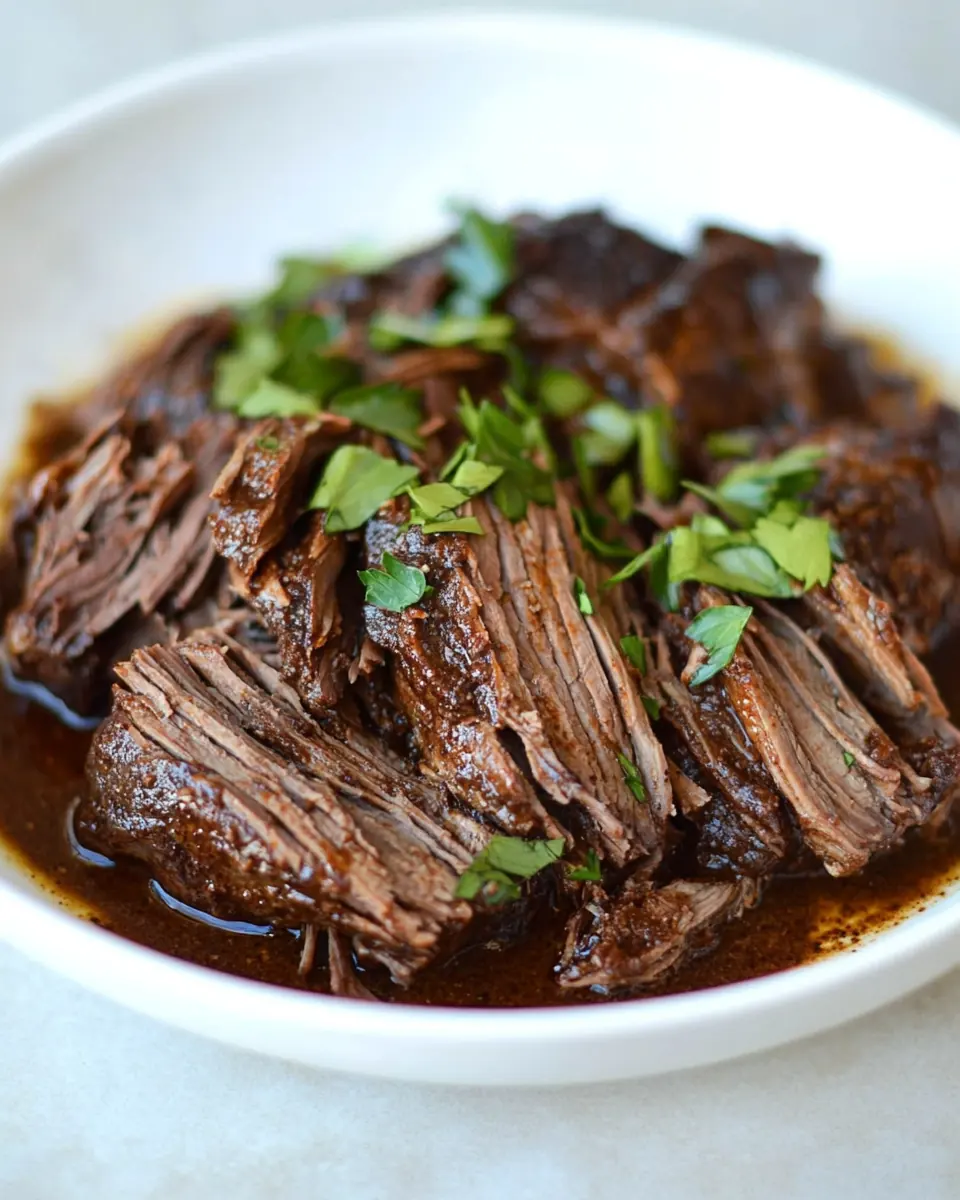
Transfer the cooked beef to a serving platter.: The meat should fall apart with minimal effort, producing tender strands that soak up the sauce. Shredding exposes more surface area, helping each bite carry both meat and sauce in harmony. If the pieces feel chewy, they likely need a touch more cooking time; return them to the cooker briefly. Over shredding can create mushy bits, so aim for uniform strands.
Shred the meat with two forks.: A short simmer will intensify the flavors and produce a lacquer like finish that clings to the shredded beef . Watch closely while reducing, stirring occasionally so nothing sticks or scorches. Season with kosher salt and freshly ground black pepper to taste, because reduction amplifies both salt and acidity. A common error is reducing too long and ending up with an overly salty syrup, so taste as you go.
If desired, heat the remaining sauce to a boil to reduce and thicken it. Adjust the seasoning with salt and pepper to taste.: The final presentation should be glossy, richly colored strands of beef generously coated in the mocha fig sauce. A finishing crack of fresh black pepper brightens the plate and a sprinkle of kosher salt if needed will elevate the flavors. Serve immediately while warm for the best textural contrast and enjoyment.