In a large bowl, add your shirataki noodles and cover with boiling water. Let it sit for 5 minutes, before draining. Set it aside.: You will notice a faint, neutral aroma as the hot water relaxes the noodles, and the steam will help remove any packaging scent. After five minutes the texture firms slightly, ready to absorb sauce. Press or shake off excess water to avoid diluting the stir fry, and pat them dry if needed. A common mistake is skipping the boil, which leaves a rubbery texture and lingering odor. Visually, they should look glossy and separated, not clumped together.
In a small bowl, whisk together the pad thai sauce ingredients.: As you whisk the 2 tablespoons fish sauce , 2 tablespoons soy sauce , 3 tablespoons brown sugar substitute , and 2 tablespoons sugar free ketchup , aromas will combine into a savory sweet perfume. The sauce should be smooth and slightly viscous, not gritty. Tasting a tiny bit helps you balance salty and sweet, and adjusting here prevents the need to fix the entire pan later. A pitfall is making the sauce too salty, so taste before adding to the main pan.
In a non-stick pan, add the oil and place it over medium heat. Once hot, add the onion and garlic and fry for 1-2 minutes. Add the chicken and cook until no longer pink.: As the oil heats, it will shimmer and carry the crushed scent of garlic and the sweetening edge of softened onion . You should hear an energetic sizzle when the chicken hits the pan, and the surface will gain a golden tint as it sears. Cooking until no longer pink ensures safety and builds flavor through browning, which adds complexity. Avoid crowding the pan, since that leads to steaming instead of searing, producing pale, unappealing pieces.
Push the chicken to one side and add the eggs. Whisk into the chicken. Add the bean sprouts, tofu, and green onion stems. Add the noodles and mix well, until combined.: The sizzling eggs will set quickly, offering a soft curd that mingles with the browned chicken . When you add the crisp bean sprouts and browned tofu , you should hear a fresh snap, and the pan will smell nutty and savory. Folding in the drained shirakaki noodles allows them to pick up the pan juices. Mixing thoroughly distributes textures and ensures each strand is coated. A common error is overmixing the eggs into dryness, so stop when they are tender and integrated.
Add the sauce over the top of everything and mix together, until the sauce covers the noodles and protein.: Pouring the sauce releases a concentrated aroma, and as it heats it will cling to the noodles and protein, creating a glossy finish. Stirring until the sauce is evenly distributed allows flavors to harmonize, and you should see the noodles take on a consistent color. If the pan looks too wet, cook briefly to reduce the sauce; if too dry, add a splash of water. Overheating can evaporate too much liquid, leaving the dish sticky instead of silky.
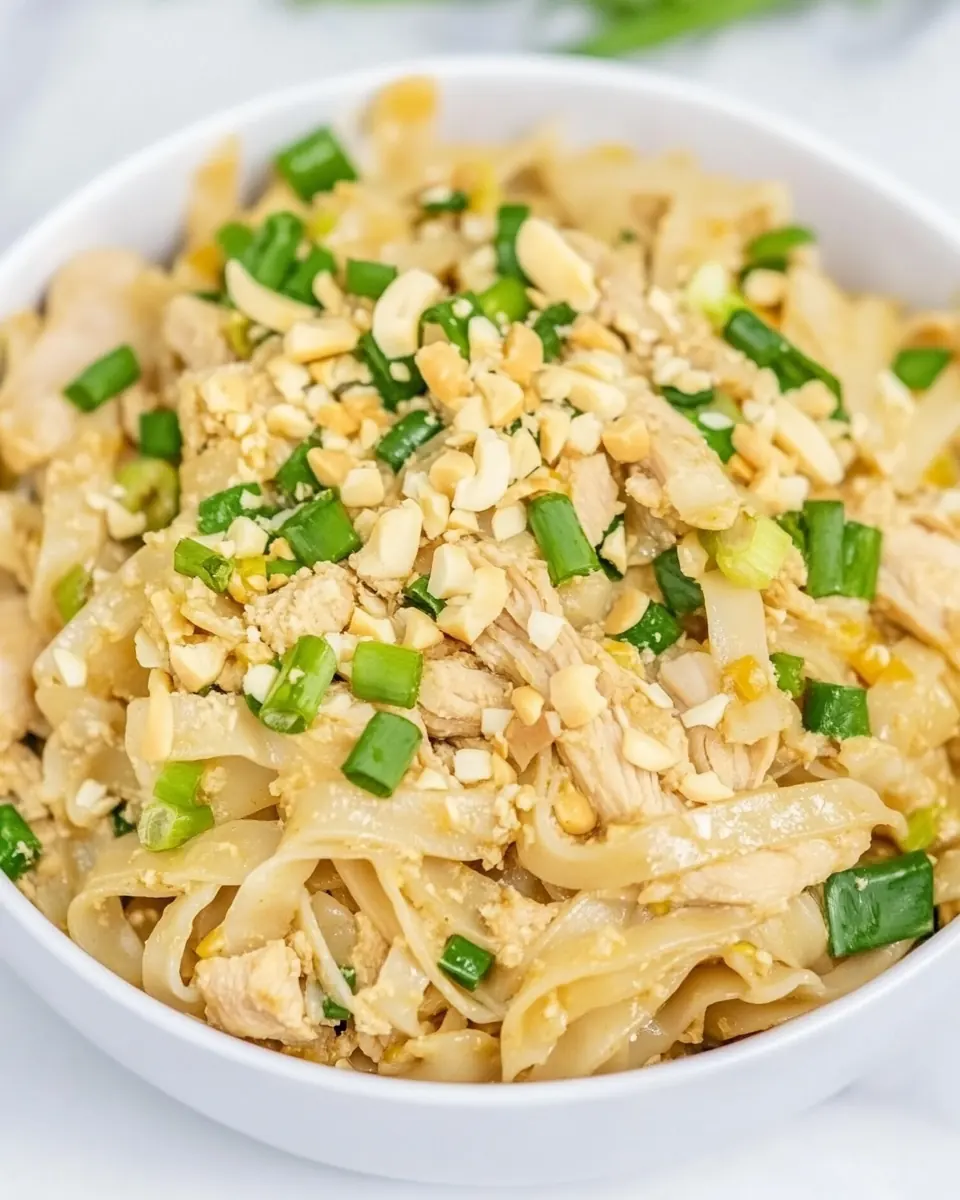
Remove the pad thai from heat and serve with sliced green onions and chopped peanuts.: Once off heat, the residual warmth will mellow the flavors and keep textures intact. Scatter the sliced green onions and chopped peanuts for bright color and crunch, and the first bite should present a mix of silky noodles, soft protein, and crisp garnishes. Serving immediately preserves the contrast; letting it sit will soften the sprouts and lose the fresh bite. A typical mistake is delaying plating, which makes the dish soggy and less dynamic.