Preheat oven to 325° F.: You will notice the oven warming and the air inside becoming dry and steady, which is ideal for slow roasting that produces an evenly cooked interior and a gently caramelized exterior. This moderate temperature allows the fat to render while the meat remains tender. A common mistake is starting with an oven that is too hot, which can char the outside before the center cooks.
Remove lamb roast from packaging and remove the stretchy string netting if included. Set netting aside for later use. Pat lamb dry with towel.: The surface should feel dry and cool to the touch after patting, which helps the olive oil and seasonings adhere and promotes browning. Drying also reduces excess moisture that would steam rather than roast. Avoid skipping the patting step or the roast may not develop a crust.
Using a paring knife, carefully score the top of the meat (fat side) by cutting slits (deep enough for your garlic pieces), making a uniform design (like a diamond pattern).: You will hear a soft slicing sound and see neat pockets form in the fat cap where the garlic and rosemary will tuck in. These channels allow aromatics to penetrate the meat as it cooks. Be careful not to cut too deep into the meat or you could cause juices to escape, resulting in drier meat.
Rub entire roast in olive oil.: The oil should bead and coat the surface evenly, giving a slight sheen. This step helps the seasonings stick and encourages the fat to crisp during roasting. A mistake is using too little oil, which can lead to uneven browning and patchy seasoning adhesion.
Generously salt and pepper entire roast. Add herbs and spices of your choice (I used Kirkland No-Salt Seasoning).: As you apply the seasonings, you will smell the pepper and herbs blooming against the warm oil. Even seasoning ensures each bite is well flavored from edge to center. Overdoing salt can make the roast too salty, so measure thoughtfully.
Place roughly chopped garlic pieces into each slit.: When you press the garlic into the slits, you will feel a slight resistance and then a snug fit. During cooking, the garlic will soften and mellow, releasing sweet roasted notes into the surrounding meat. Avoid inserting too large pieces that might not roast through, leaving a raw center.
Place rosemary sprigs into as many slits as you can, depending on how much you have/how large they are.: The fragrant oils from the rosemary will perfume the roast as it heats, and small amounts will suffuse the meat with herbal complexity. If you cram too many sprigs into a single area, the herb flavor can become overpowering, so distribute them evenly.
Gently place string netting back around the lamb leg or tie with butcher twine to retain its "roast" shape.: Securely binding the roast ensures even cooking and a uniform presentation. The roast should feel snug but not overly compressed. Tying too tightly can restrict heat penetration and impede even cooking.
Place lamb directly on roasting pan rack fat side up.: You should hear the roast settle onto the rack and see air circulating underneath, which encourages even heat flow. The fat side up placement allows rendered fat to baste the meat during cooking. Placing the roast too low in the pan or fat side down can prevent proper self-basting.
Pour the chicken broth into the bottom of the roasting pan to prevent juices from burning.: Pour until you see a shallow pool at the pan bottom that will catch drips and create a base for pan juices. As it heats, the broth will steam slightly and pick up caramelized bits, yielding a flavorful jus. Too much liquid will steam the roast and hinder crust development.
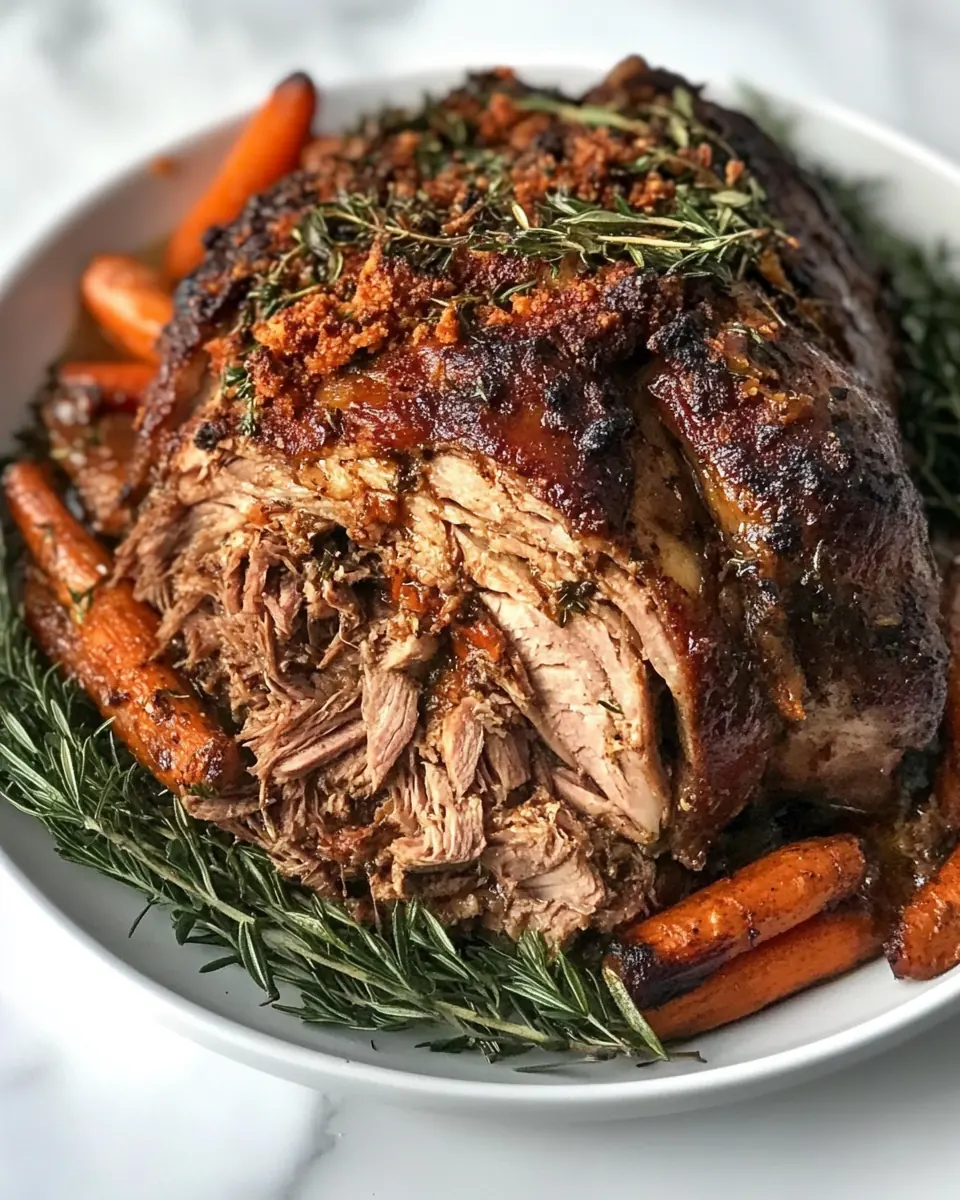
Bake uncovered for about 2 hours* or until internal temperature reaches 170° F.*Bake for about 30 minutes per pound for fall apart tender results.: During this long roast you will notice the surface slowly darkening and the aroma becoming richer and more savory. The moderate oven heat allows the fat to render slowly, keeping the interior juicy while creating a browned exterior. A common issue is removing the roast too early without checking temperature, which leads to undercooked center. Rely on an instant read thermometer for accuracy.
Let rest for 15 minutes before shredding/slicing. Serve with pan juices.: After removing from the oven the roast will go quiet and the juices will redistribute, which you can sometimes hear as a faint settling. Resting preserves moisture so slices or shredded pieces remain juicy. Cutting too soon causes juices to run out, making the meat drier than intended.