Preheat the oven to 160 °C/315 °F.: As the oven warms you will smell the faint dry heat, which signals an even, low temperature perfect for long braises. This steady oven prevents the meat from drying and encourages collagen to become gelatin for tender results. A common mistake is setting the oven too hot which speeds cooking but yields drier meat and a thinner sauce, so trust the low heat and allow time for gentle transformation.
Mix the ras-el-hanout, ground cinnamon, ground ginger, smoked sweet paprika, ground cumin, prunes, freshly ground black pepper and ground turmeric together in a bowl.: The combined aroma will be a heady mix of warm spice and sweet dried fruit, creating the foundation for the sauce's complexity. Crushing and blending these spices lets their oils bloom, ensuring even distribution across the lamb shanks . Avoid adding salt until later, as it can draw moisture out and tighten the meat prematurely.
Heat a large pan until smoking hot, then add a tablespoon of the olive oil and sear the lamb shanks on all sides until golden-brown all over. Remove the lamb shanks and set aside.: The sound of searing and the rising caramelized scent indicate the Maillard reaction, which builds deeply savory flavors. Searing locks in surface flavors that later dissolve into the braise, creating savory crust notes. Do not overcrowd the pan because the meat will steam instead of sear, leading to pale, less flavorful surfaces.
In the same pan, fry the onion until caramelized. Then add chermoula and garlic for 2-3 minutes. Add the lamb shanks back to the pan and stir well, then add all the remaining tagine ingredients – except for the shallots – and bring to a simmer.: The onions should go from glossy to deep golden, releasing sweet, savory perfumes that thicken the sauce. This caramelization adds natural sweetness that balances the spices and fruit, creating a rounded base. Stir occasionally to prevent burning, because bitter bits will carry through the entire dish if the onions scorch.
Reduce the heat, cover the pan with a lid and place in the oven for two and a half hours, or until the lamb is tender. Taste and season, if needed.: The pan will release a bright herbal and garlicky scent as the chermoula integrates, adding fresh, acidic notes to the caramelized base. Brief cooking helps mellow raw garlic sharpness while releasing herb oils, which is crucial for layered flavor. Overcooking at this point will blunt the fresh herbs, so keep it brief and aromatic.
Remove some of the lamb shank sauce and cook the kidney beans for 30 minutes, then add the potato. Cook it until both are cooked.: When the meat reunites with the sauce you will hear gentle bubbling and see spices dissolve into the stock, creating a glossy, richly colored liquid. Bringing to a simmer helps flavors merge without aggressive boiling that can break down delicate fruit textures. Avoid boiling hard, as it can toughen the meat and evaporate too much liquid.
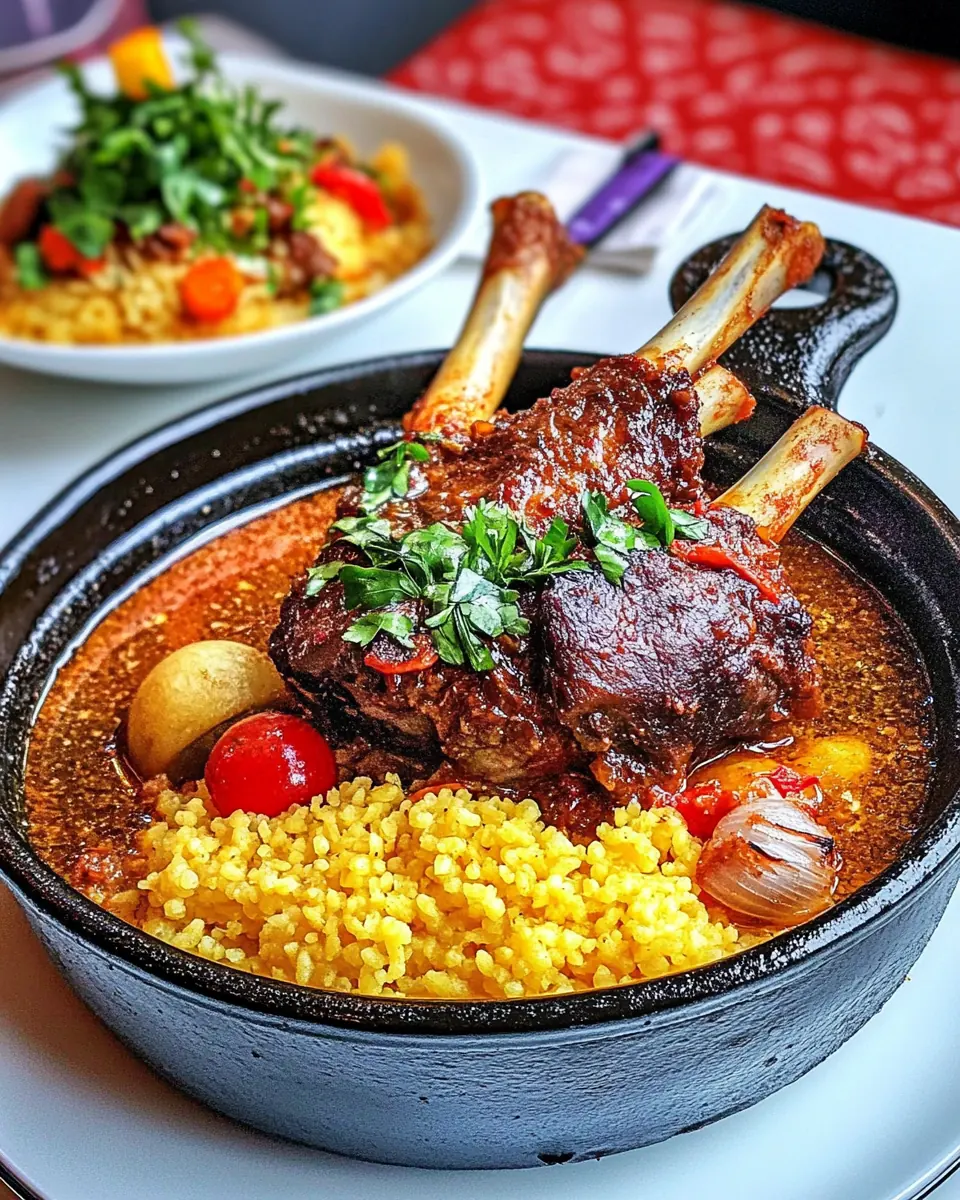
Place the traditional earthenware tajine on the hot plate with lamb shank in the middle with a lot of sauce, add cooked kidney beans, potato and baby carrots and prunes and cover it with the tajine lid. Let it boil until the steam develops and garnish with shallots. Serve with warm fluffy couscous.: During the slow oven braise you may notice a sweet, perfume like scent as fruit and spices meld into the stock. This prolonged low heat slowly dismantles connective tissue, yielding fork tender meat that pulls away easily. A common trap is lifting the lid frequently, which lets heat escape and lengthens cooking time, so resist peeking unless necessary.
Taste and season, if needed.: After long cooking the sauce concentrates, so tasting now lets you adjust salt and balance. You may find the preserved lemon rind has given enough brightness or you might add a bit more salt to round flavors. Seasoning too early can lead to over salting after reduction, so always taste toward the end of the cook.
Remove some of the lamb shank sauce and cook the kidney beans for 30 minutes, then add the potato.: Using the sauce to simmer the soaked beans infuses them with the dish's spices and ensures they are fully flavored, while the potato will absorb the braise and become tender. Watch the beans for breakage, overcooking will make them mushy, so keep them simmering gently and check for fork tenderness.
Cook it until both are cooked.: The beans should be creamy but intact, and the potato should yield under a fork. This step brings textural harmony, ensuring starchy, creamy, and meaty elements coexist. A mistake here is rushing to high heat to save time, which can split potatoes and toughen beans, so maintain a gentle simmer.
Place the traditional earthenware tajine on the hot plate with lamb shank in the middle with a lot of sauce, add cooked kidney beans, potato and baby carrots and prunes and cover it with the tajine lid.: As steam collects under the lid you will see a soft bubbling and smell intensified spices, which creates a theatrical finish and allows flavors to concentrate further. This presentation step deepens aroma and visually invites guests to the table. Avoid a dry base by ensuring plenty of sauce is retained when transferring.
Let it boil until the steam develops and garnish with shallots.: The final brief steam will warm all elements and marry flavors, while the sliced shallots provide a fresh snap and mild bite atop the rich stew. This final heat bloom brightens fragrance and invites immediate serving. Do not over reduce the sauce at this point or it will become too thick and lose its silky mouthfeel.
Serve with warm fluffy couscous.: The couscous should soak up sauce and contrast the tender meat with its light, grainy texture, making each mouthful balanced and satisfying. Spoon sauce generously so each bite is flavorful; a common error is serving too dry a couscous which makes the dish feel heavy and disconnected.