To prepare the crust, whisk together the flour and salt in a bowl. In a separate bowl, using a standing mixer or electric hand mixer, cream together the butter and sugar until fluffy. Mix in the vanilla. Beat in the flour mixture on low speed until just incorporated, being careful to not over mix. Use your hands to shape the dough into a ball. Wrap in plastic and refrigerate for 30 minutes.: Warm flour smells faintly nutty and dry, and combining it with salt creates an even foundation for the dough, making it easier to incorporate into butter. Use a whisk or fork to aerate the all purpose flour , which prevents compacting and helps the crust remain light rather than dense. When you blend the dry ingredients thoroughly, you ensure even seasoning and predictable texture. A common mistake is measuring flour by scooping directly with the cup, which compresses it and yields a stiff dough. To avoid this, spoon the flour into the cup and level it. Pay attention to the color and feel; the mixture should look homogeneous and feel slightly powdery.
Preheat oven to 350 degrees Fahrenheit and grease a 9 inch tart pan with removable bottom.: As you beat unsalted butter with powdered sugar , the mixture will transform from slick and pale to light and airy, with tiny air pockets that help create a tender crust. The sound changes too, going from a soft slosh to a higher pitched, drier finish, indicating adequate aeration. This step matters because it builds structure and distributes sweetness evenly. If you overbeat, the butter can become greasy and warm, making the dough sticky and harder to chill. If under beaten, the crust can be dense. Watch for a pale, slightly fluffy texture as your cue to move on.
Once the dough has chilled, press the dough into the tart pan and up the sides. Use a knife to score the edges and make them even at the top. Bake for approximately 15 minutes, or until the edges begin to lightly brown. If it has puffed up a little during baking, just gently press it down when you remove from oven. Cool completely in pan.: Adding pure vanilla extract brings a warm aroma that blends seamlessly with the buttery notes. A teaspoon is enough to add complexity without dominating the citrus and mascarpone to come later. Stir just until fragrant to preserve the aeration you created. A typical error here is to add more liquid ingredients at once which can deflate the creamed butter; add the vanilla and blend briefly to incorporate.
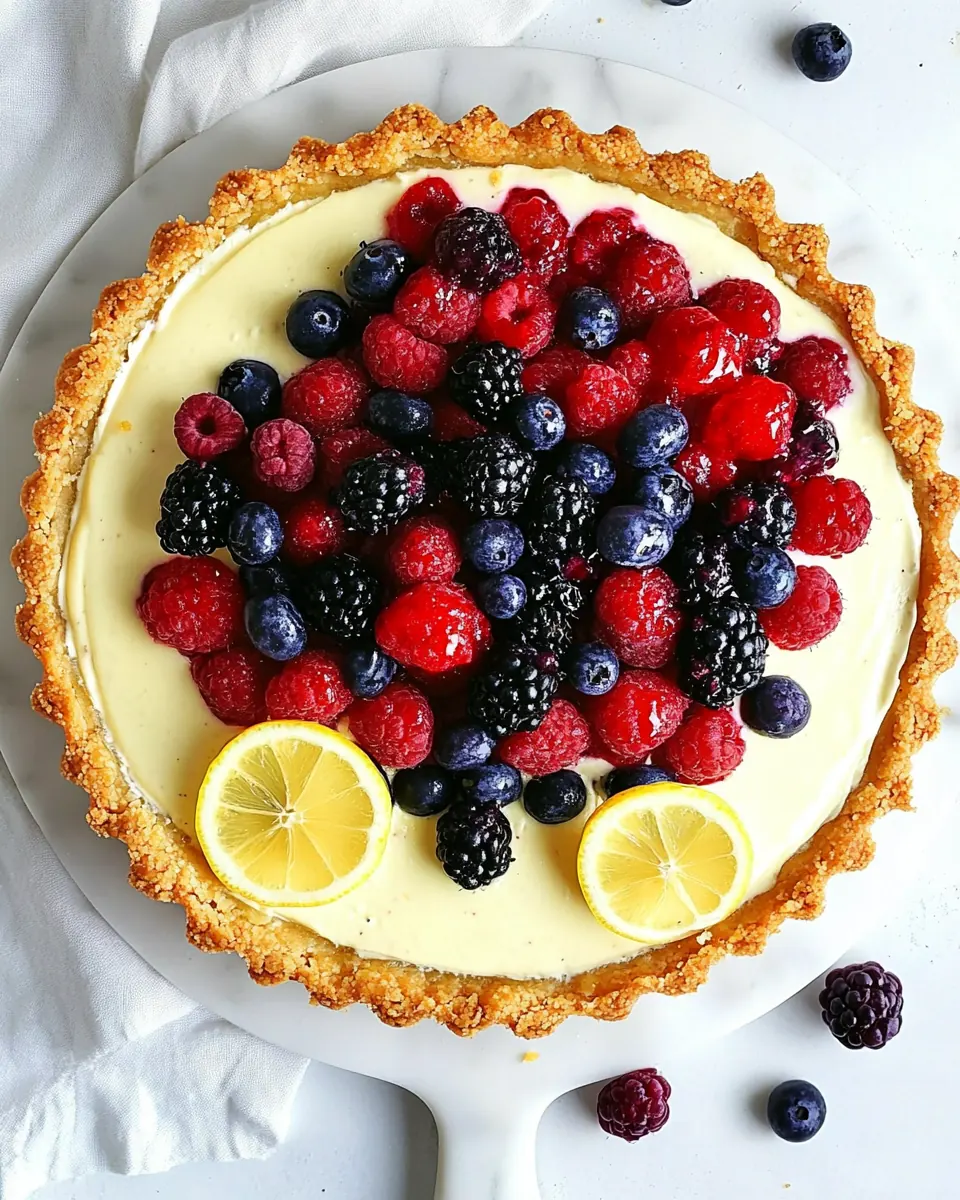
To prepare the filling, combine the mascarpone, sugar, lemon juice, and vanilla in a small bowl and mix until smooth. Spread mixture evenly in cooled tart shell, then top with berries. Garnish with lemon zest.: At this stage the bowl will emit a faint, cozy scent of butter and flour mingling. Mixing on low preserves fragile air pockets and prevents over development of gluten, which would toughen the crust. The dough should come together but remain slightly crumbly before you gather it. Over mixing is the most common problem; it yields a firm, elastic dough rather than a tender one. When the last streaks of flour disappear, stop mixing and proceed to shape.
Use your hands to shape the dough into a ball: As you gather the dough, the texture becomes more cohesive and the temperature of your hands helps bring it together. Press gently to avoid warming the butter. The dough should be smooth and hold together without being sticky. If it feels too soft, chilling will firm it up. A common pitfall is kneading like bread dough, which activates gluten and creates toughness, so resist extensive handling.
Wrap in plastic and refrigerate for 30 minutes: Chilling the dough solidifies the unsalted butter which helps preserve flakiness in the bake. Cooling also relaxes any gluten that formed while mixing, making the dough easier to press into the tart pan later. Thirty minutes is usually sufficient, though if your kitchen is warm you might need longer. Avoid skipping this rest, because a warm dough will shrink and lose shape during baking.
Preheat oven to 350 degrees Fahrenheit and grease a 9 inch tart pan with removable bottom: Preheating ensures the oven is at the correct temperature so the crust begins to set right away and develops even color. Greasing the pan, especially the removable bottom, prevents sticking and helps the tart release cleanly, preserving the edges you scored. If the oven is not fully preheated you may see uneven browning or a soggy bottom. Use a light coat of butter or baking spray to protect the crust.
Once the dough has chilled, press the dough into the tart pan and up the sides: Pressing chilled dough into the pan should feel cool and firm, and you will hear a slight crinkle as it molds. Work from the center out, building an even thickness across the base and up the sides, then use a knife to score the edges and make them even at the top. An even thickness bakes uniformly and prevents thin spots from over browning. A frequent mistake is to overwork the edges making them too thin. If the dough resists, let it rest a few more minutes to relax and soften slightly.
Bake for approximately 15 minutes, or until the edges begin to lightly brown: During baking the kitchen will fill with a warm, buttery aroma and you may notice the crust puffing slightly. Light golden edges are your cue that structure is set and flavors are developing. If the crust puffs, gently press it down after removing it from the oven to restore an even base for the filling. Watch closely in the last minutes since an otherwise perfect crust can go from golden to too dark quickly. Err on the side of slightly under browned if you plan to fill it soon, since residual heat can continue to cook the surface.
Cool completely in pan: Cooling in the pan prevents the crust from breaking when you try to transfer it. As it cools you may feel a faint buttery steam, then the shell will firm and become crisp. Allow full cooling so the filling does not melt into the warm shell, which can make slices sloppy. A common oversight is assembling the tart while the shell is warm, causing the filling to loosen and the fruit to slide off. Patience here preserves clean slices.
To prepare the filling, combine the mascarpone, sugar, lemon juice, and vanilla in a small bowl and mix until smooth: Mixing mascarpone cheese with powdered sugar , lemon juice , and pure vanilla extract releases a creamy, slightly tangy aroma. The texture should be glossy and spreadable, with no lumps. Smoothness matters because it influences how the filling sits under the fruit and how the first forkful feels on the tongue. If the mixture appears grainy, continue whisking gently until fully integrated. Overbeating can thin the mascarpone, so stop when it is satiny and uniform.
Spread mixture evenly in cooled tart shell, then top with berries: When you spread the filling, you should feel a gentle resistance and see a smooth surface that cradles the berries . Arrange fruit in clusters or a pattern, pressing just enough so the berries sit snugly without sinking. The contrast between the smooth filling and the juicy fruit is the signature of this tart. Avoid piling fruit too high, which can make slices topple when cut. Aim for balance across the surface so every slice gets a pleasing proportion of filling and berries.
Garnish with lemon zest: A final dusting of lemon zest adds a bright perfume and an attractive finish. The tiny oil laden strands will catch light and signal freshness. Use a fine grater and sprinkle sparingly; too much zest can introduce bitterness. This small flourish tells your guests that the tart is fresh and thoughtfully finished.