Preheat the oven to 375°F.: As the oven warms, notice the dry, steady hum of heat that signals it is ready. This temperature prepares the oven for pre baking the crust, ensuring a crisp base rather than a soggy one. If your oven runs hot, it can brown the crust too quickly, so consider an oven thermometer. One common mistake is skipping preheating, which leads to uneven bake and a pale, undercooked crust.
Place crust in a shallow 9-inch pie dish and pre-bake according to package directions.: During pre baking, the crust should smell faintly of toasted flour and butter, and the edges will turn a light golden. Pre baking prevents a wet bottom once the lemon filling is added. If the crust puffs up, dock the surface with a fork or use pie weights. Avoid underbaking, which causes a soggy base, and watch closely near the end so it does not overbrown.
Place egg yolks in a small bowl and beat them together. Set aside.: The yolks should look smooth and slightly viscous, with a consistent yellow color. Beating them briefly helps them incorporate evenly into the hot mix later, reducing the chance of scrambling. A common error is adding yolks directly to extreme heat, which can create curdled bits, so tempering is key.
In a medium saucepan, whisk together the sugar, cornstarch, and salt. Add the egg yolks and mix until combined. Add the milk, lemon juice, and lemon zest. Bring the mixture to a boil over medium heat, stirring frequently. Boil for one minute, then remove from heat and stir in the butter and vanilla. Pour into the prepared pie crust.: As the mixture warms, the aroma of lemon will intensify and the custard will thicken, moving from opaque to glossy as starch gelatinizes. Stirring frequently prevents scorching on the bottom, and once it reaches a boil you will see it bubble and thicken quickly, signaling that the starch has activated. Remove from heat promptly to avoid overcooking, then stir in butter for silkiness and vanilla for depth. A frequent mistake is insufficient stirring, which causes lumps or a grainy texture, so keep the movement steady.
Make the meringue by beating the egg whites and cream of tartar in a medium glass or metal bowl, until soft peaks form (3-5 minutes). Slowly add sugar, continuing to beat until glossy, stiff peaks form (about 2 minutes): As you whip, the whites will transform from clear and foamy to white and voluminous, emitting a faint sweet scent once sugar is incorporated. The bowl will feel slightly cool to the touch, and the beater will leave trails in the mixture when you lift it. Adding sugar slowly is essential to stabilize the foam and avoid a gritty texture. Overbeating can dry the meringue, while underbeating leaves it too soft to hold shape, so watch for glossy, firm peaks.
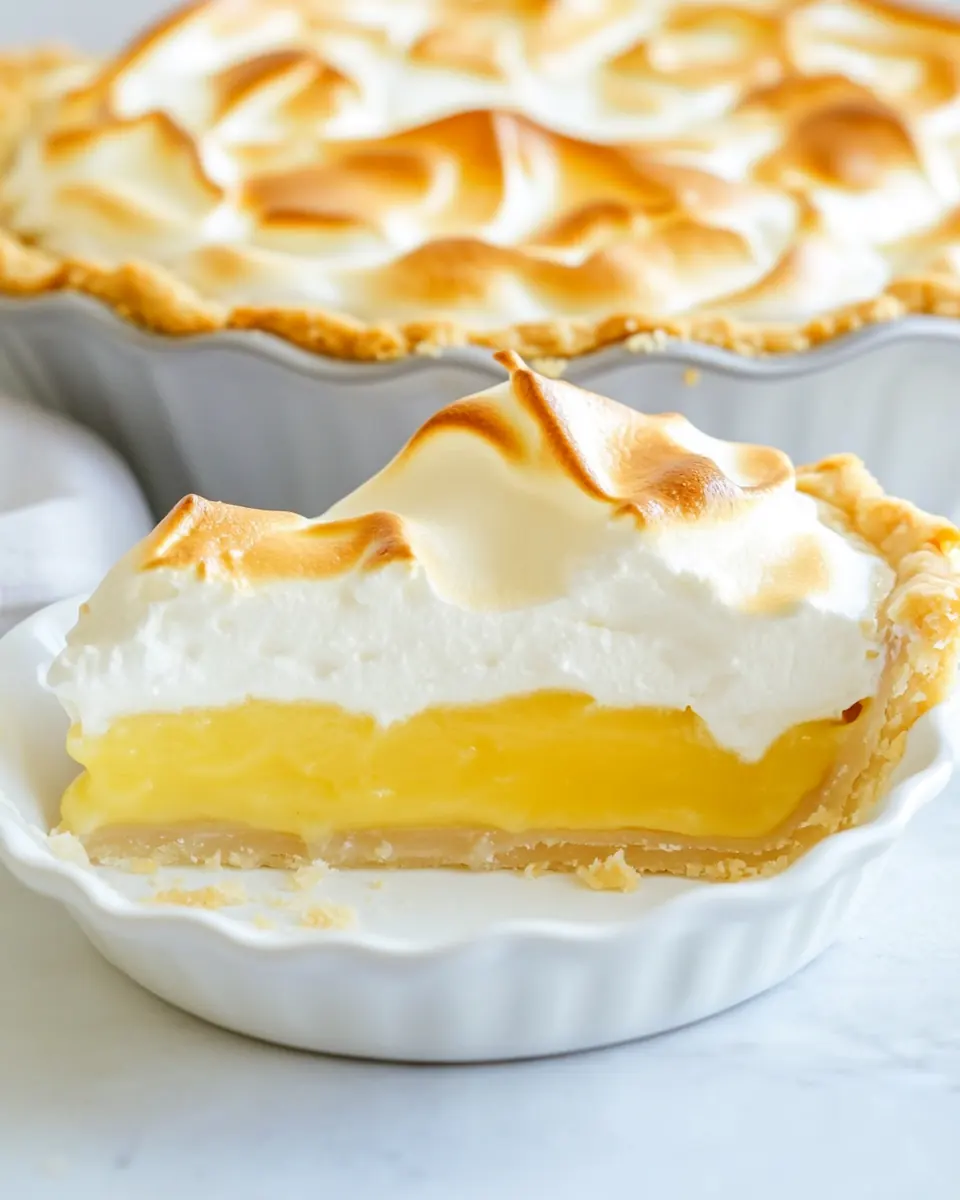
While the lemon filling is still warm, spread the meringue around the edge of the pie. Make sure the mixture attaches to the crust with no gaps. Add the remaining meringue to the center and use the back of a spoon to create small peaks all over the pie.: The warmth helps the meringue adhere and form a seal, preventing weeping between filling and meringue. As you spread, the meringue will feel billowy and smooth under the spoon, and making peaks gives more surface area to brown attractively in the oven. Ensure there are no gaps where filling could escape, as exposed curd can weep. A typical oversight is not sealing the meringue to the crust, which can lead to separation during baking.
Bake at 325°F for about 20 minutes, or until the meringue is golden brown.: During baking, watch as the peaks slowly take on a toasted color and the sugar gives a light caramelized aroma. The surface should look set and slightly glossy, with a warm, brown hue at the tips. If the meringue browns too quickly, lower the oven temperature slightly to avoid burning while the interior remains unstable. A common mistake is underbaking, which leaves weepy, soft tops, or overbaking, which can cause cracks and dryness, so aim for an even, golden finish.