Cook orzo in a large pot of boiling salted water until al dente, about 8 to 10 minutes. Drain and rinse under cold water to cool.: The cooking water should be at a rolling boil and smell faintly of salt, which seasons the orzo as it cooks. As it nears the target time, taste an individual grain for a slight bite at the center, that slight chew is the hallmark of al dente. Drain promptly to avoid residual heat continuing to soften the pasta. A common mistake is overcooking, which yields a mushy texture and causes the salad to become gluey; if you suspect overcooking, rinse immediately under cold water to stop the cooking.
In a large bowl, whisk together lemon juice, olive oil, lemon zest, salt, and black pepper.: When you run cold water through the orzo , you should see the steam vanish and feel the grains cool to the touch in seconds. This step locks in the chew and helps the orzo stop absorbing any more liquid from the dressing. Rinsing also removes some surface starch, preventing clumping. Avoid leaving the pasta standing warm in the colander, as trapped heat will continue to soften it and can alter the final texture.
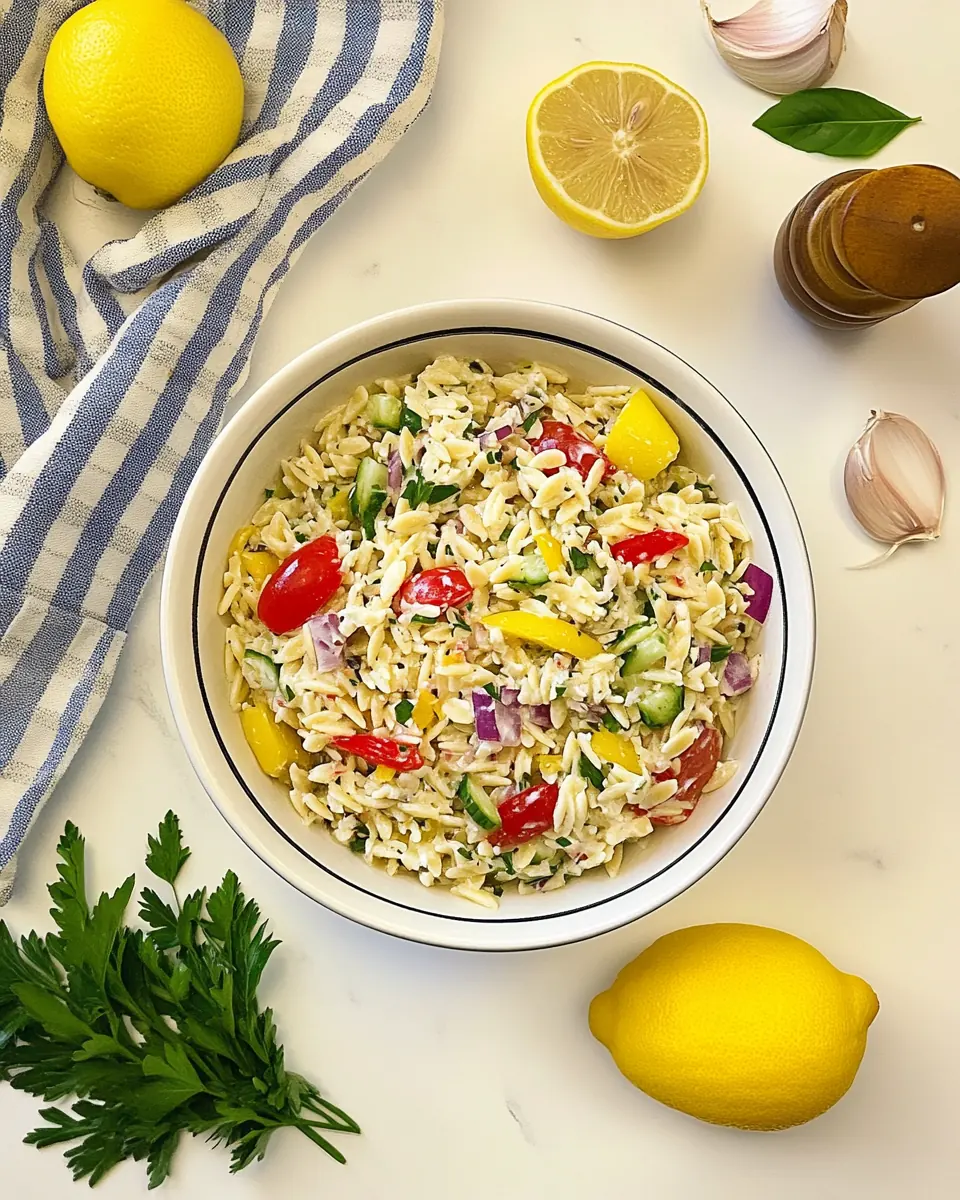
Add the cooled orzo, cherry tomatoes, cucumber, red onion, parsley, basil, and feta cheese to the bowl with the dressing. Toss to combine.: When you whisk, the dressing should look glossy and slightly emulsified, with tiny flecks of lemon zest dispersed through the olive oil . Smell the bowl as you mix; the lemon aroma should be bright and immediate. This simple emulsion clings to the orzo , ensuring even flavor distribution. A common pitfall is under seasoning, so taste once paired with a bit of orzo and adjust salt or pepper as needed.
Adjust seasoning with additional salt and pepper if needed. Chill in the refrigerator until ready to serve.: As you add each ingredient, notice how the colors layer, with the bright red of the cherry tomatoes and green of the parsley and basil creating visual contrast. Toss gently so the dressing coats evenly, and listen for the soft shuffle of grains and vegetables meeting, a comforting kitchen sound. The contrast between the silky dressing and the crunchy cucumber is why gentle handling matters; vigorous stirring can bruise herbs and break the feta cheese into pasty bits.
Toss to combine: After tossing, look for a sheen across the orzo and a light distribution of dressing and herbs. Each spoonful should include a little of everything, with pockets of creamy feta cheese and bursts of tomato juice. If parts look dry, gently fold more dressing from the bowl bottom to coat evenly. A frequent error is over mixing which can release too much tomato juice and water, watering down the salad; if that happens refrigerate uncovered briefly to let excess liquid settle and drain if necessary.
Adjust seasoning with additional salt and pepper if needed: This is the finishing touch where balance happens. Taste a sample and decide if it needs more salt to lift flavors or more black pepper for warmth. Remember that the feta cheese contributes saltiness, so add sparingly then retaste. A common misstep is adding too much salt at once; always add in small increments to avoid oversalting.
Chill in the refrigerator until ready to serve: As the salad chills, flavors meld and the orzo absorbs a bit of dressing, giving a cohesive mouthfeel. Coolness heightens the herb perfume and makes the salad refreshing. For best texture, chill at least 30 minutes; I usually aim for an hour. Avoid freezing or leaving it out for long periods, as the vegetables lose their crispness and the feta cheese can break down.