Lemon Orzo Salad
Lemon Orzo Salad has a special place in my summer meals rotation, and I still remember the first time I served it at a backyard dinner. I was juggling a tray of glasses, a slightly sunburned smile, and a bowl of pasta that smelled like citrus and herbs. Guests kept coming back for seconds, and I loved how this simple bowl got people talking, laughing, and comparing notes on who loved the feta the most.
Over the years I’ve tweaked the balance between bright lemon juice and silky olive oil, learned to cool the pasta quickly so it stays fluffy instead of gummy, and discovered that letting it rest in the fridge makes the flavors knit beautifully. I often bring this along to potlucks because it travels well, and it stays lively even after sitting for an hour. When I assemble it, I always pause to inhale the clean, zesty aroma of lemon paired with fresh herbs, and that little moment feels like a ritual.
Recipe Snapshot
25 mins
15 mins
10 mins
Easy
220 kcal
Mediterranean
Gluten-Free, Low FODMAP
Salads
Large pot, Colander, Large bowl, Whisk
Why You Need This Lemon Orzo Salad
Bright, fresh flavor in every forkful
I love how Lemon Orzo Salad sings with citrus notes, the kind that wake up the palate. The combination of lemon juice and lemon zest gives a layered brightness that makes each bite lively without overpowering the other ingredients. I find this brightness makes it a natural counterpoint to richer mains, and it never feels heavy.
Textural contrast that keeps interest
The tiny pearls of orzo are tender and slightly chewy, while the cherry tomatoes and cucumber add juicy pops. Crumbled feta cheese introduces creamy, salty pockets, and the finely chopped red onion gives a faint bite. I always appreciate how those contrasting textures keep each forkful exciting.
Simple, fast, and reliable
This recipe is unbelievably straightforward. I can have the bulk of it done while I prepare a main or set the table. When time is tight, I appreciate that the dressing is just a whisk away and that chilling the salad consolidates the flavors, so it tastes even better later.
Flexible and crowd friendly
I often change the herb ratio based on what I have, and Lemon Orzo Salad scales up easily for gatherings. It travels well to picnics because the dressing holds, and it stays fresh in the fridge for leftovers. Because it is light and herb forward, it works for warm afternoons or as a bright side for evening meals.
Fresh herbs make the difference
Parsley and basil are the unsung heroes here. I love how parsley keeps things grounded with its clean, green flavor, while basil brings a floral lift that plays off the lemon juice. Together, they push the salad from good to memorable.
What Goes Into Lemon Orzo Salad
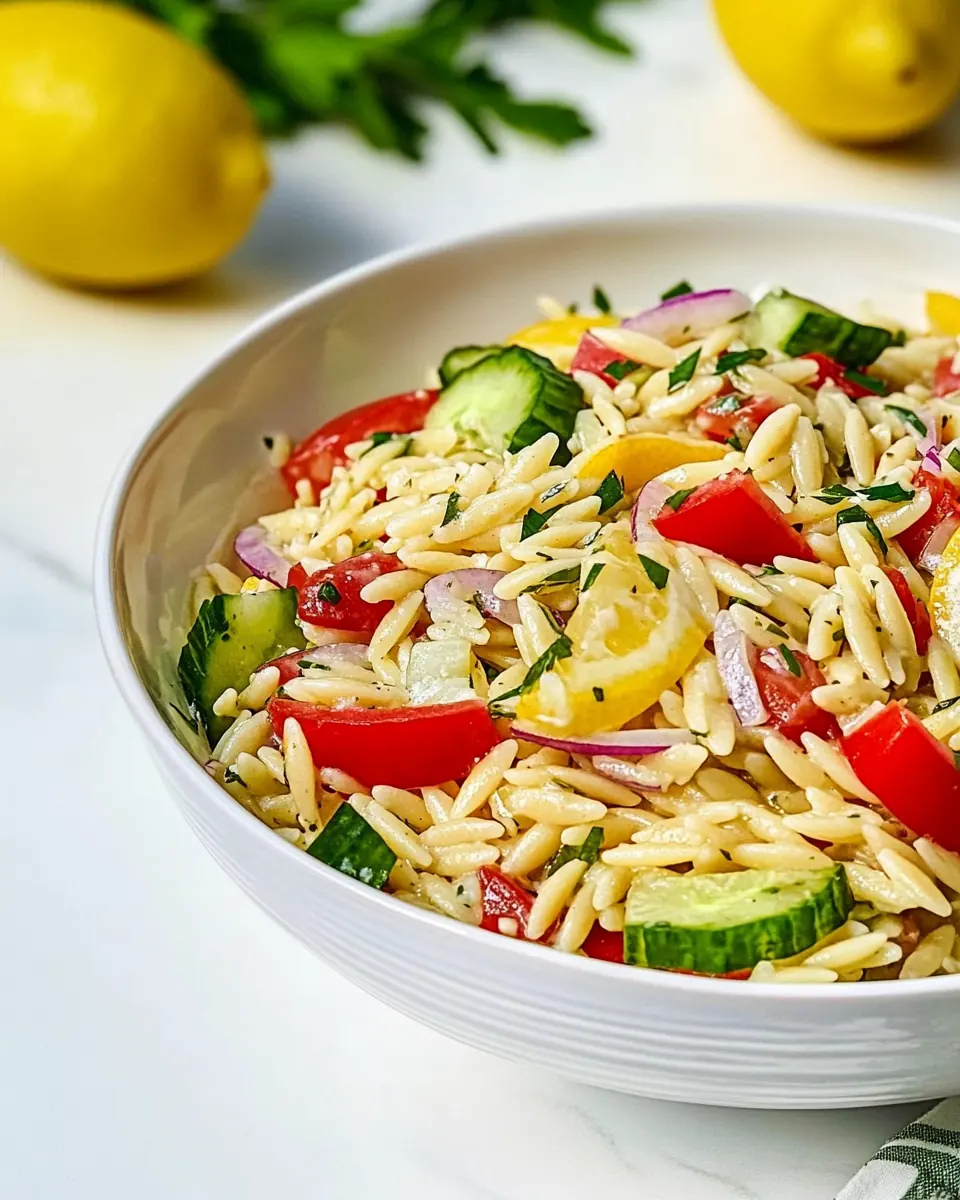
These ingredients were chosen to create a lively summer salad where brightness and texture work together. The bulk, orzo, offers a tender base that soaks up dressing, while citrus and olive oil form a clean, silky coating. The vegetables provide freshness and crunch, the herbs add aromatic lift, and the feta cheese brings a salty, creamy finish. Each player is essential to the overall harmony.
- 1 1/2 cups orzo: Cook until tender and slightly al dente; provides the starchy base that soaks up dressing and binds the salad together. Rinse briefly under cold water to stop cooking and prevent clumping, then toss with a little oil to keep grains separate. Offers a neutral canvas that lets bright lemon and herbs pop in every bite.
- 1/3 cup lemon juice: Whisk into a bright, acidic dressing that balances the richness of olive oil and feta, delivering refreshing citrus tang. Adjust quantity to taste to control acidity and brightness across the salad. Helps preserve and amplify fresh flavors while lightly marinating vegetables for cohesion.
- 1/4 cup olive oil: Emulsify with lemon juice to create a smooth, fruity dressing that coats the orzo and vegetables. Use extra-virgin for a richer, peppery note and healthier fats. Adds body and a silky mouthfeel that carries herbs and seasonings.
- 1 teaspoon lemon zest: Grate finely to release intense citrus oils that add concentrated brightness and fragrant lift to the dressing and salad. Zest enhances lemon flavor without extra acidity and complements the juice for layered citrus notes. Sprinkle sparingly to avoid bitterness from the pith.
- Salt to taste: Season to bring out and balance all flavors in the salad, enhancing both the dressing and the individual vegetables. Add gradually and taste, as feta contributes additional saltiness. Use coarse or fine salt depending on desired texture and dissolution speed.
- Black pepper to taste: Grind fresh to add mild heat and aromatic complexity that rounds out the citrus and herb flavors. Adjust coarseness to control perceived intensity and distribution throughout the salad. Finish with a light crack for visual appeal and subtle bite.
- 1 cup cherry tomatoes halved: Halve for bite-sized sweetness and juicy pops that contrast with the tender orzo and creamy feta. Choose ripe tomatoes for maximum flavor and toss gently to avoid crushing. Adds color, acidity, and refreshing moisture to each forkful.
- 1 cup cucumber diced: Dice into small, uniform pieces to contribute cool, crisp texture and mild vegetal flavor that balances sweet tomatoes and salty cheese. Keep pieces relatively small to distribute crunch evenly throughout the salad. Adds hydration and a clean, fresh mouthfeel.
- 1/4 cup red onion finely chopped: Chop finely to provide sharp, aromatic pungency that complements herbs and lemon dressing without overpowering. Rinse briefly if you prefer a milder bite, then drain well to avoid watering down the salad. Adds subtle savory depth and textural contrast.
- 1/4 cup fresh parsley chopped: Chop finely to deliver fresh, herbaceous brightness and a slightly peppery, grassy note that lifts the salad. Mix into the dressing and orzo to distribute flavor evenly. Acts as a green backbone that ties citrus, vegetables, and cheese together.
- 1/4 cup fresh basil chopped: Chop finely to introduce sweet, aromatic, slightly minty flavor that complements parsley and lemon. Fold in gently to prevent bruising and to preserve vibrant color and fragrance. Provides an aromatic lift and a Mediterranean herbal profile.
- 1/2 cup feta cheese crumbled: Crumble over the assembled salad to add creamy, tangy, and salty richness that contrasts with bright lemon and crisp vegetables. Serve chilled or at room temperature so the cheese softens slightly and melds with the dressing. Acts as a savory finishing touch that enhances umami and mouthfeel.
Preparation Steps for Lemon Orzo Salad
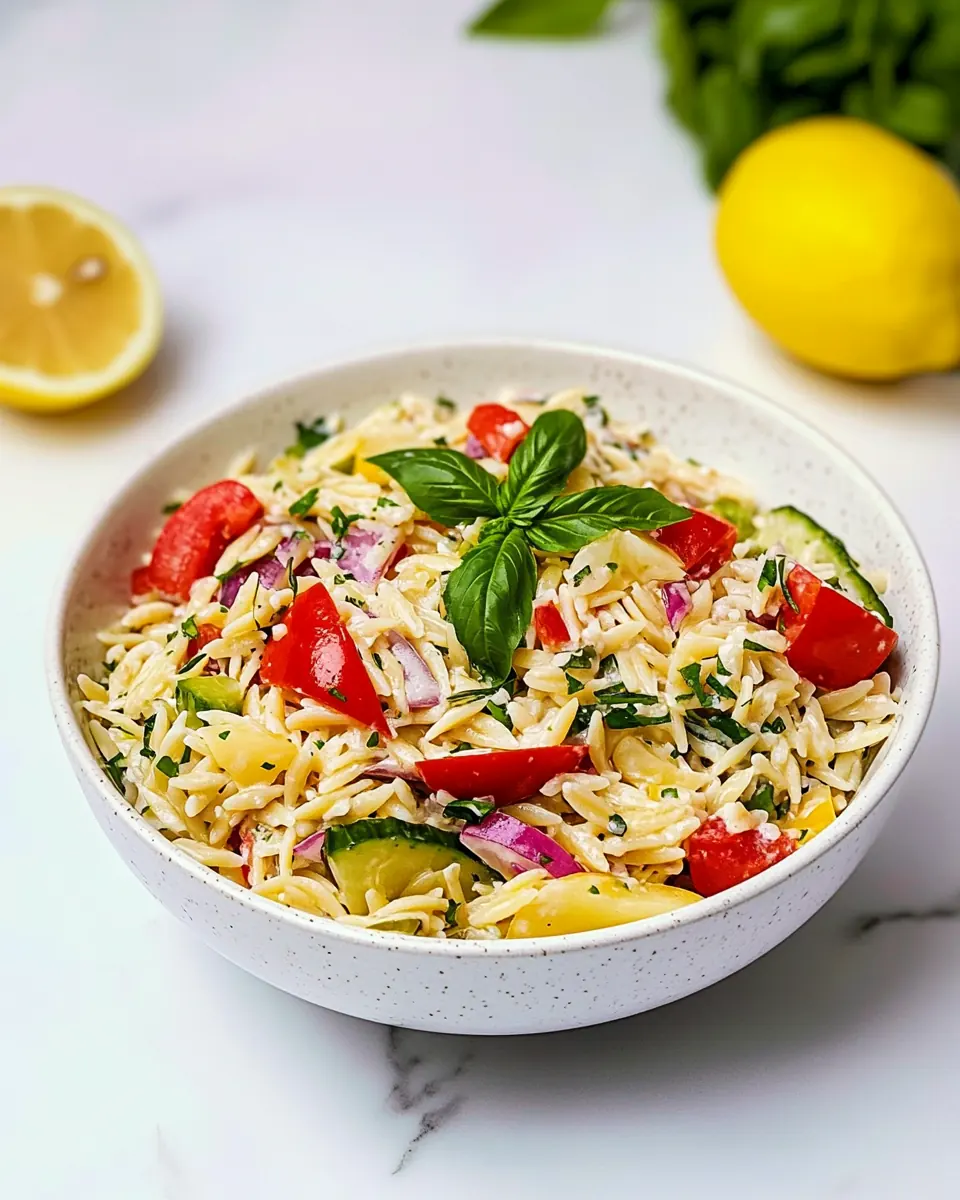
This salad comes together easily, and I like to stay attentive at each stage so the textures stay bright. The following steps expand on the original directions, offering sensory cues and troubleshooting tips so you get a perfect, chilled salad that holds up well.
- Cook orzo in a large pot of boiling salted water until al dente, about 8 to 10 minutes. Drain and rinse under cold water to cool.: The cooking water should be at a rolling boil and smell faintly of salt, which seasons the orzo as it cooks. As it nears the target time, taste an individual grain for a slight bite at the center, that slight chew is the hallmark of al dente. Drain promptly to avoid residual heat continuing to soften the pasta. A common mistake is overcooking, which yields a mushy texture and causes the salad to become gluey; if you suspect overcooking, rinse immediately under cold water to stop the cooking.
- In a large bowl, whisk together lemon juice, olive oil, lemon zest, salt, and black pepper.: When you run cold water through the orzo , you should see the steam vanish and feel the grains cool to the touch in seconds. This step locks in the chew and helps the orzo stop absorbing any more liquid from the dressing. Rinsing also removes some surface starch, preventing clumping. Avoid leaving the pasta standing warm in the colander, as trapped heat will continue to soften it and can alter the final texture.
- Add the cooled orzo, cherry tomatoes, cucumber, red onion, parsley, basil, and feta cheese to the bowl with the dressing. Toss to combine.: When you whisk, the dressing should look glossy and slightly emulsified, with tiny flecks of lemon zest dispersed through the olive oil . Smell the bowl as you mix; the lemon aroma should be bright and immediate. This simple emulsion clings to the orzo , ensuring even flavor distribution. A common pitfall is under seasoning, so taste once paired with a bit of orzo and adjust salt or pepper as needed.
- Adjust seasoning with additional salt and pepper if needed. Chill in the refrigerator until ready to serve.: As you add each ingredient, notice how the colors layer, with the bright red of the cherry tomatoes and green of the parsley and basil creating visual contrast. Toss gently so the dressing coats evenly, and listen for the soft shuffle of grains and vegetables meeting, a comforting kitchen sound. The contrast between the silky dressing and the crunchy cucumber is why gentle handling matters; vigorous stirring can bruise herbs and break the feta cheese into pasty bits.
- Toss to combine: After tossing, look for a sheen across the orzo and a light distribution of dressing and herbs. Each spoonful should include a little of everything, with pockets of creamy feta cheese and bursts of tomato juice. If parts look dry, gently fold more dressing from the bowl bottom to coat evenly. A frequent error is over mixing which can release too much tomato juice and water, watering down the salad; if that happens refrigerate uncovered briefly to let excess liquid settle and drain if necessary.
- Adjust seasoning with additional salt and pepper if needed: This is the finishing touch where balance happens. Taste a sample and decide if it needs more salt to lift flavors or more black pepper for warmth. Remember that the feta cheese contributes saltiness, so add sparingly then retaste. A common misstep is adding too much salt at once; always add in small increments to avoid oversalting.
- Chill in the refrigerator until ready to serve: As the salad chills, flavors meld and the orzo absorbs a bit of dressing, giving a cohesive mouthfeel. Coolness heightens the herb perfume and makes the salad refreshing. For best texture, chill at least 30 minutes; I usually aim for an hour. Avoid freezing or leaving it out for long periods, as the vegetables lose their crispness and the feta cheese can break down.
Tips and Tricks about Lemon Orzo Salad
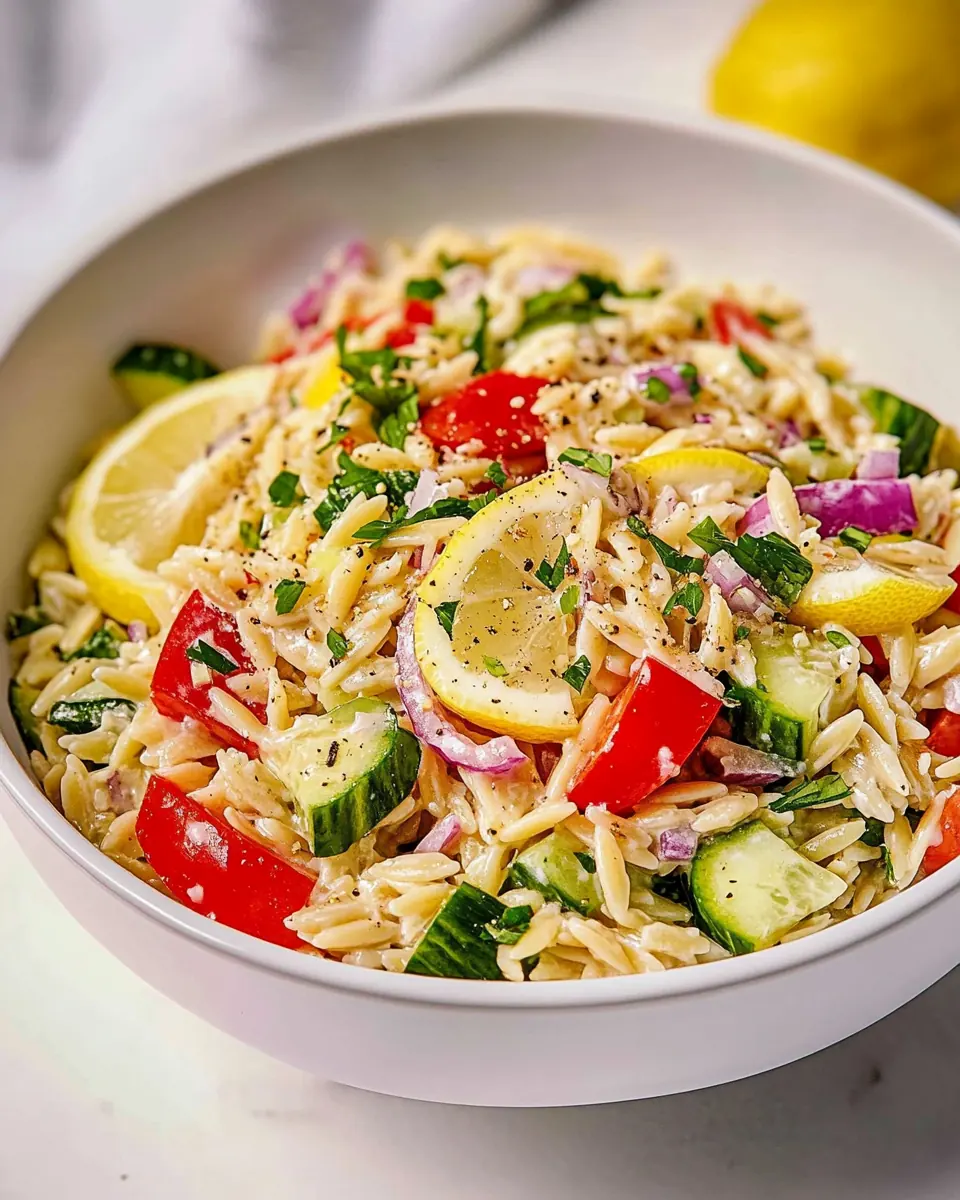
I like to keep a few practical notes in mind when making Lemon Orzo Salad. These tips help preserve crispness, maximize flavor, and make the salad easy to scale for guests. Below are detailed, hands on suggestions that I use every time I cook this dish.
- Cook to texture Start tasting the orzo a couple minutes before the lower end of the cooking time to catch the perfect al dente, because overcooked pasta will make the salad mushy.
- Cold rinse matters Rinse the orzo under cold water until it feels cool to the touch, this stops cooking and reduces surface starch so the grains remain separate in the salad.
- Fresh lemon impact Use fresh lemon juice and zest, as they provide brighter, more complex citrus oils that bottled juice cannot replicate.
- Herbs at the end Add chopped parsley and basil near the end of tossing to keep their color and aroma vibrant instead of wilted.
- Season gradually Salt in stages, tasting after the feta cheese is mixed in, because the cheese contributes salt and you want a balanced finish.
Serve This Lemon Orzo Salad With
This salad is flexible enough to accompany many meals, and the recommendations below will help you plan a full plate or a memorable buffet. Serving notes cover pairings, occasions, storage, and seasonal ideas so you can present it confidently.
- Light grilled mains Serve alongside a simply seasoned grilled chicken or fish for a balanced summer plate, the bright lemon juice and herbs complement mild proteins beautifully.
- Vegetarian spreads Pair with roasted vegetables or a mezze platter, the salad’s texture and tang provide contrast to rich or roasted flavors.
- Picnic and potluck friendly This salad travels well, making it perfect for outdoor gatherings where it can sit at room temperature safely for a moderate time when chilled beforehand.
- Meal prep and leftovers Store in an airtight container in the refrigerator for up to three days, the flavors continue to meld and often taste even better the next day.
- Seasonal serving It shines in summer when tomatoes and herbs are at their peak, and it brightens a spring or late summer table with fresh produce in season.
FAQ
Conclusion
Lemon Orzo Salad shines as a bright, herb forward dish that balances tender pasta with crisp vegetables and creamy feta. Give it a try when you want something that is both easy to make and impressive to serve, especially for warm weather gatherings. I hope you enjoy assembling it as much as I do, and that it becomes a reliable dish in your own summer repertoire.
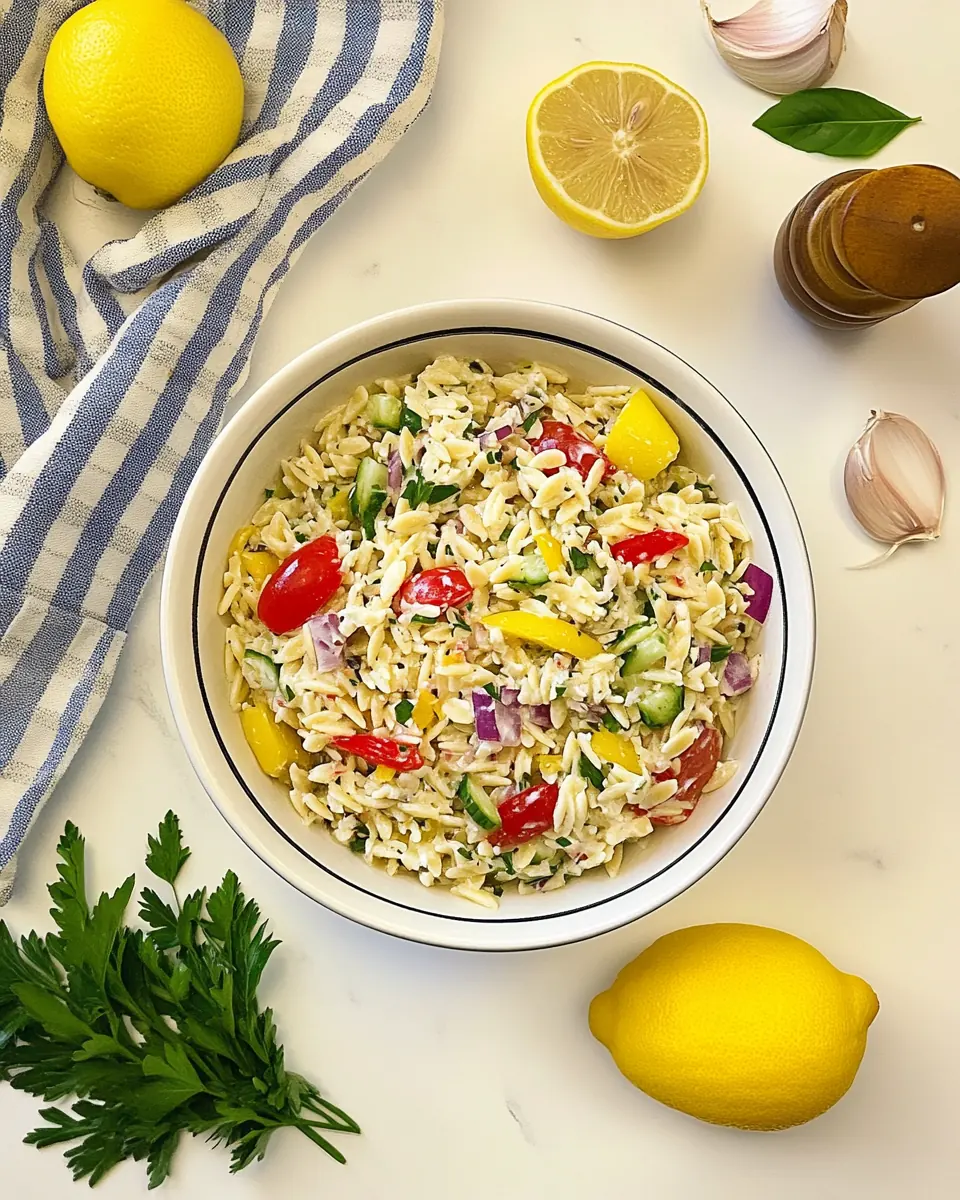
Lemon Orzo Salad
Ingredients
Equipment
Method
- Cook orzo in a large pot of boiling salted water until al dente, about 8 to 10 minutes. Drain and rinse under cold water to cool.: The cooking water should be at a rolling boil and smell faintly of salt, which seasons the orzo as it cooks. As it nears the target time, taste an individual grain for a slight bite at the center, that slight chew is the hallmark of al dente. Drain promptly to avoid residual heat continuing to soften the pasta. A common mistake is overcooking, which yields a mushy texture and causes the salad to become gluey; if you suspect overcooking, rinse immediately under cold water to stop the cooking.
- In a large bowl, whisk together lemon juice, olive oil, lemon zest, salt, and black pepper.: When you run cold water through the orzo , you should see the steam vanish and feel the grains cool to the touch in seconds. This step locks in the chew and helps the orzo stop absorbing any more liquid from the dressing. Rinsing also removes some surface starch, preventing clumping. Avoid leaving the pasta standing warm in the colander, as trapped heat will continue to soften it and can alter the final texture.
- Add the cooled orzo, cherry tomatoes, cucumber, red onion, parsley, basil, and feta cheese to the bowl with the dressing. Toss to combine.: When you whisk, the dressing should look glossy and slightly emulsified, with tiny flecks of lemon zest dispersed through the olive oil . Smell the bowl as you mix; the lemon aroma should be bright and immediate. This simple emulsion clings to the orzo , ensuring even flavor distribution. A common pitfall is under seasoning, so taste once paired with a bit of orzo and adjust salt or pepper as needed.
- Adjust seasoning with additional salt and pepper if needed. Chill in the refrigerator until ready to serve.: As you add each ingredient, notice how the colors layer, with the bright red of the cherry tomatoes and green of the parsley and basil creating visual contrast. Toss gently so the dressing coats evenly, and listen for the soft shuffle of grains and vegetables meeting, a comforting kitchen sound. The contrast between the silky dressing and the crunchy cucumber is why gentle handling matters; vigorous stirring can bruise herbs and break the feta cheese into pasty bits.
- Toss to combine: After tossing, look for a sheen across the orzo and a light distribution of dressing and herbs. Each spoonful should include a little of everything, with pockets of creamy feta cheese and bursts of tomato juice. If parts look dry, gently fold more dressing from the bowl bottom to coat evenly. A frequent error is over mixing which can release too much tomato juice and water, watering down the salad; if that happens refrigerate uncovered briefly to let excess liquid settle and drain if necessary.
- Adjust seasoning with additional salt and pepper if needed: This is the finishing touch where balance happens. Taste a sample and decide if it needs more salt to lift flavors or more black pepper for warmth. Remember that the feta cheese contributes saltiness, so add sparingly then retaste. A common misstep is adding too much salt at once; always add in small increments to avoid oversalting.
- Chill in the refrigerator until ready to serve: As the salad chills, flavors meld and the orzo absorbs a bit of dressing, giving a cohesive mouthfeel. Coolness heightens the herb perfume and makes the salad refreshing. For best texture, chill at least 30 minutes; I usually aim for an hour. Avoid freezing or leaving it out for long periods, as the vegetables lose their crispness and the feta cheese can break down.
Notes
- Cook to texture Start tasting the orzo a couple minutes before the lower end of the cooking time to catch the perfect al dente, because overcooked pasta will make the salad mushy.
- Cold rinse matters Rinse the orzo under cold water until it feels cool to the touch, this stops cooking and reduces surface starch so the grains remain separate in the salad.
- Fresh lemon impact Use fresh lemon juice and zest, as they provide brighter, more complex citrus oils that bottled juice cannot replicate.
- Herbs at the end Add chopped parsley and basil near the end of tossing to keep their color and aroma vibrant instead of wilted.
- Season gradually Salt in stages, tasting after the feta cheese is mixed in, because the cheese contributes salt and you want a balanced finish.