Remove the rib and stem from the kale leaves. Chop into bite-sized pieces.: When you work the tactile side of the leaves, you should feel the stiff ribs give way as you peel them off with a knife or by hand, leaving tender leaf material that tears easily into bite-sized pieces. The sound is subtle, a gentle tearing that signals you are removing the fibrous parts that would otherwise remain tough. This matters because the thick ribs do not soften when massaged, and leaving them in will create unpleasant strings in each bite. A common mistake is rushing and leaving large stem segments, which make the salad chewier and less enjoyable.
Add the chopped kale to a colander and rinse with warm water.: As you run warm water over the chopped kale , notice the slightly earthy scent lift and any grit rinse away, the leaves collapsing slightly under the stream. Warm water helps release trapped dirt more effectively than cold, and the leaves should look visibly cleaner and a touch more pliable after rinsing. This step matters for texture and cleanliness, because gritty salad is unpleasant. Avoid soaking for too long, which can leach flavor and make the leaves waterlogged.
Transfer the washed kale to a colander to drain or a salad spinner and spin.: Spinning the leaves creates a satisfying whoosh and removes excess water so the dressing clings rather than pools. When you stop the spinner, the leaves should be damp, not dripping, and they will fold and shimmer with tiny droplets rather than globs of water. Good drainage ensures the dressing adheres and flavors concentrate. A common error is tossing dressing onto very wet leaves, which dilutes the taste and makes the salad soggy.
Transfer the kale to a large bowl.: As you place the slightly damp kale into a big bowl, notice how the leaves settle and fill the space, giving you room to massage and toss. The bowl should be roomy so you can work the dressing throughout without spilling. This step is important because working in a cramped bowl makes it hard to evenly coat the leaves. Avoid using a small bowl that forces you to overcrowd the greens, which leads to uneven seasoning.
If you desire, toast the nuts in a skillet on medium heat until fragrant, stirring often. Set aside. Toasting nuts always brings out the flavor, but it isn't necessary.: When toasting pine nuts , you will smell a warm, buttery aroma and see a pale golden color develop; the sound is a gentle gentle crackle as moisture evaporates and oils bloom. Toasting brightens and deepens the nutty character, creating a richer contrast to the citrus and cheese. This technique matters because raw nuts can taste flat, while toasted ones add aromatic complexity. Be vigilant, because nuts can go from golden to burnt in seconds, which yields a bitter flavor you do not want.
To a bowl, add olive oil, lemon juice, garlic, salt, and pepper. Whisk until combined and pour over salad.: As you whisk the olive oil and lemon juice with minced garlic , you will see the dressing emulsify into a slight sheen, and the aroma will brighten as citrus oils mix with the savory garlic. Pouring this over the kale should produce a glossy coating, not a puddle at the bottom of the bowl. This technique matters because a well emulsified dressing adheres evenly, ensuring balanced flavor in every bite. A frequent slip is under-whisking, which leaves oil separated and causes uneven seasoning.
Using clean hands, gently massage the dressing into the salad mixture.: As you massage the leaves, you should feel them soften and darken slightly, the texture transitioning from stiff and fibrous to flexible and tender. The action breaks down cell walls, releasing natural sugars and mellowing any bitterness. This tactile step matters because massaging makes kale enjoyable to eat; skipping it leaves tougher leaves and a less pleasant mouthfeel. Do not overwork the salad into a limp mess; a few minutes of gentle pressure is enough.
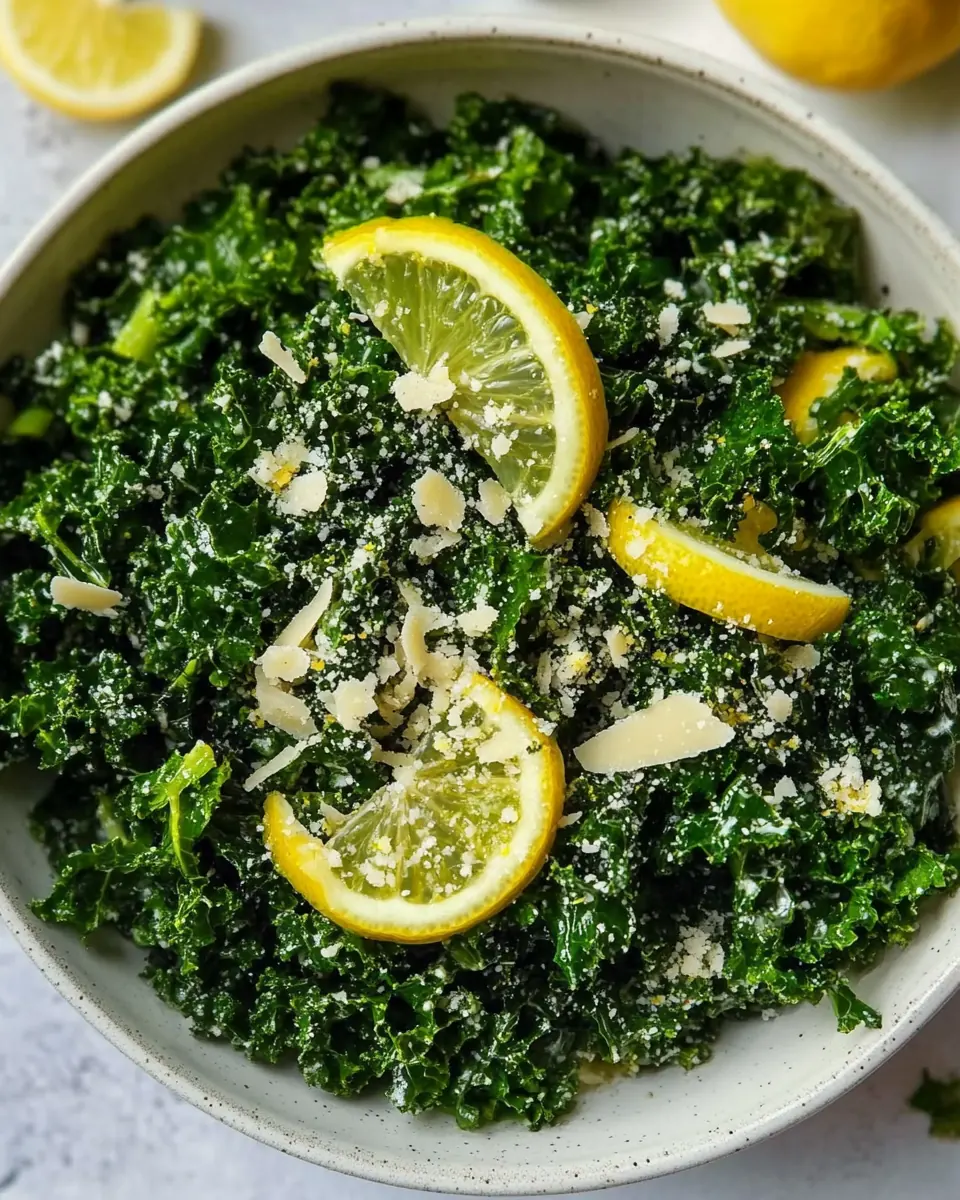
Top the salad with parmesan cheese and toasted nuts. Serve and enjoy!: When you scatter the grated parmesan cheese and toasted pine nuts over the dressed kale , the salad will look lively, with pale green leaves, flecks of white cheese, and warm golden nuts. The first forkful should offer contrasting textures and bright acidity followed by savory richness. This finishing step matters because the toppings provide the savory and crunchy accents that make the salad memorable. Avoid adding the cheese too early or it can thoroughly meld into the greens rather than offering bites of concentrated umami.