Lemon Parmesan Kale Salad
Lemon Parmesan Kale Salad has been my go to when I need a bright, crunchy bowl that feels both nourishing and celebratory.
I remember the first time I made this salad for a friend who swore she did not like kale. I massaged the leaves by hand until they softened, and the aroma of lemon and toasted nuts convinced her to take a bite. The combination of tendered kale, zesty lemon juice, and salty parmesan cheese won her over that night, and it became a staple whenever I wanted a reliable side that still feels special. Over the years I’ve tweaked the balance so the dressing is bright but not overpowering, and the nuts add that toasty snap that keeps each forkful interesting.
When I bring this to a potluck, it rarely comes back home. I like how the salad travels, how the flavors deepen if it sits for a bit, and how simple pantry items transform into something memorable. You’ll notice the textures, from the slightly chewy kale to the creamy dusting of parmesan cheese, and the occasional crunch of toasted pine nuts. This recipe has become my shorthand for a thoughtful, effortless dish that looks like you spent more time than you did.
Recipe Snapshot
11 mins
10 mins
1 mins
Medium
180 kcal
American
Keto, Gluten-Free
Salads
Colander, Salad spinner, Large bowl, Skillet, Whisk
The Appeal of This Lemon Parmesan Kale Salad
Bright, balanced flavor
I love how Lemon Parmesan Kale Salad delivers razor sharp acidity from the lemon juice, which wakes up the earthy kale. The acidity cuts through the richness of the parmesan cheese so every bite tastes fresh, not heavy. That contrast keeps me coming back, especially when I want a side that feels lively.
Simple, pantry friendly
This salad relies on a handful of ingredients you likely keep on hand. I often pull together the dressing with just olive oil, lemon juice, and a sprinkle of salt and cracked black pepper. The minimal list means it’s an easy choice for weeknight meals or an impromptu gathering.
Textural play that satisfies
The massage step transforms the fibrous kale, creating a tender base that still has structure. Then the toasted pine nuts add a crunchy counterpoint while the shaved parmesan cheese gives occasional pockets of savory, creamy flavor. That interplay makes it more than just a bowl of greens.
Flexible and forgiving
I appreciate how tolerant this recipe is. You can toast the pine nuts longer for more depth, or skip them for a quicker assembly. Adjust the lemon for brightness or the salt for seasoning, and the salad still shines. That flexibility is why I reach for it so often.
Healthy but celebratory
This is a recipe that reads wholesome yet dressed up. I serve it when I want to be mindful and when I want to impress, because the presentation is simple but the flavors feel considered. It works in so many situations, and that versatility is a big reason I adore Lemon Parmesan Kale Salad.
Key Ingredients for Lemon Parmesan Kale Salad
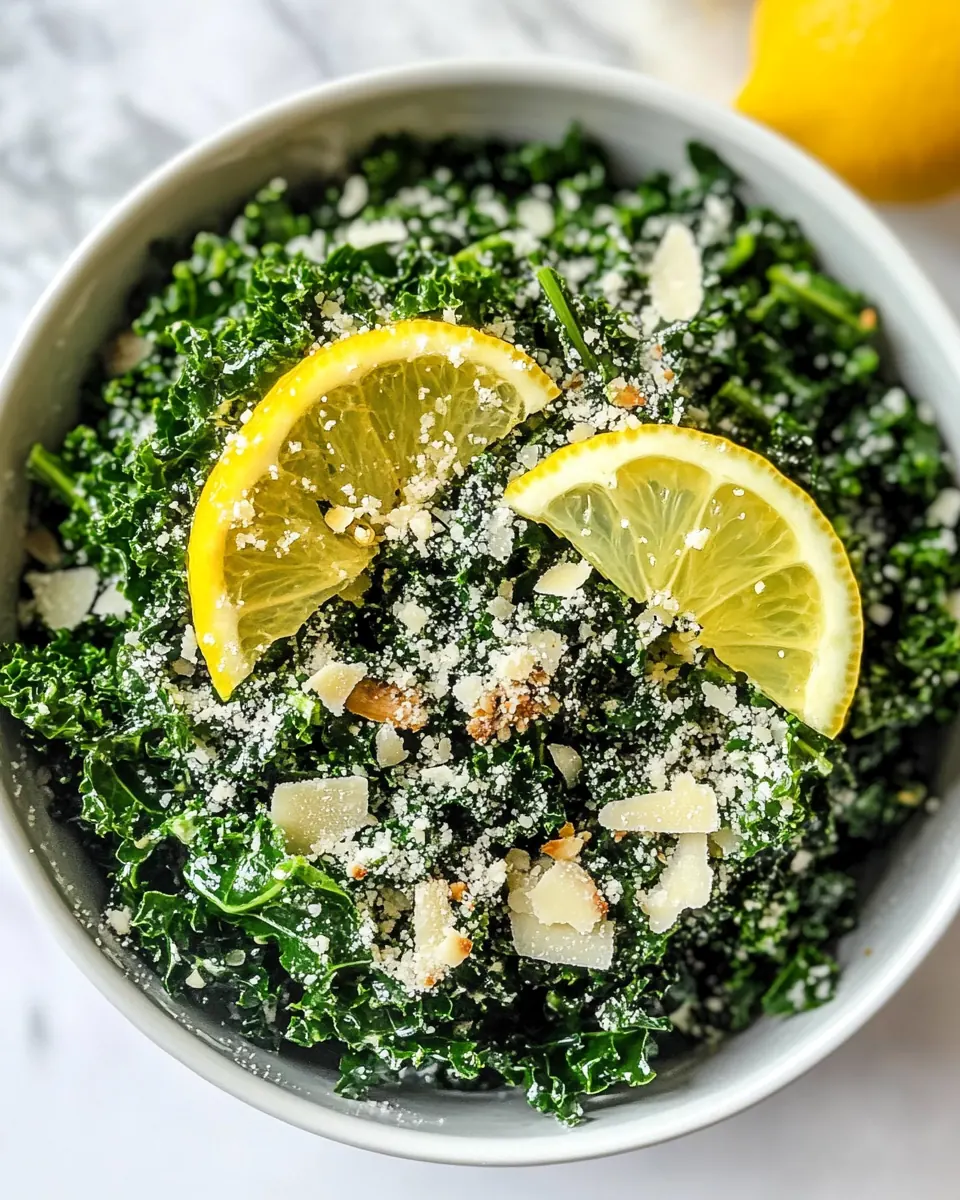
These ingredients are chosen to create balance. The star is hearty kale, which stands up to a bold dressing. Lemon juice brightens, olive oil smooths, and aromatics like minced garlic add subtle depth. Parmesan cheese provides savory richness while pine nuts contribute toasty crunch. Together they form a salad that is texturally interesting and flavor forward.
- 5 cups Kale Leaves, washed and chopped: Washed and chopped to provide a hearty, leafy base for the salad; massaging the leaves can soften their texture and reduce bitterness. Offers a robust nutrient profile and a substantial mouthfeel that pairs well with bright dressing.
- 2 tbsp Lemon Juice: Squeezed to add bright acidity and lift the flavors; balances the richness of cheese and oil while enhancing overall freshness. Works as the primary acidic component to tenderize the kale slightly and brighten the dish.
- 2 tbsp Olive Oil: Drizzled to create a smooth, emulsified dressing that coats the kale evenly and adds healthy fats. Helps carry flavor molecules and provides a silky mouthfeel that harmonizes the lemon and Parmesan.
- 1/2 tsp Garlic, minced: Minced finely to infuse the dressing with sharp, aromatic pungency without large pieces; contributes savory depth. Melding into the oil and lemon enhances complexity and gives subtle heat.
- 1/4 tsp Kosher Salt: Measured to season and enhance overall flavor while controlling saltiness; helps amplify other tastes without overpowering. Kosher salt's clean mineral profile makes it easy to distribute evenly through the salad.
- 1/8 tsp Cracked Black Pepper: Cracked freshly to add a fragrant, mildly spicy note and subtle warmth; enhances aromatic complexity of the dressing. Small amounts provide contrast to the lemon and complement the Parmesan.
- 1/4 cup Parmesan Cheese: Grated to contribute savory, umami-rich depth and a creamy, salty finish that binds the salad components. Sprinkling over the kale adds texture, richness, and a nutty, aged-cheese character.
- 3 tbsp Pine Nuts (Any nut works): Toasted or added as-is to contribute crunchy texture and a mild, buttery nut flavor that complements the dressing. Acts as a crunchy counterpoint to the tender kale while adding richness and visual appeal.
Recipe Directions for Lemon Parmesan Kale Salad
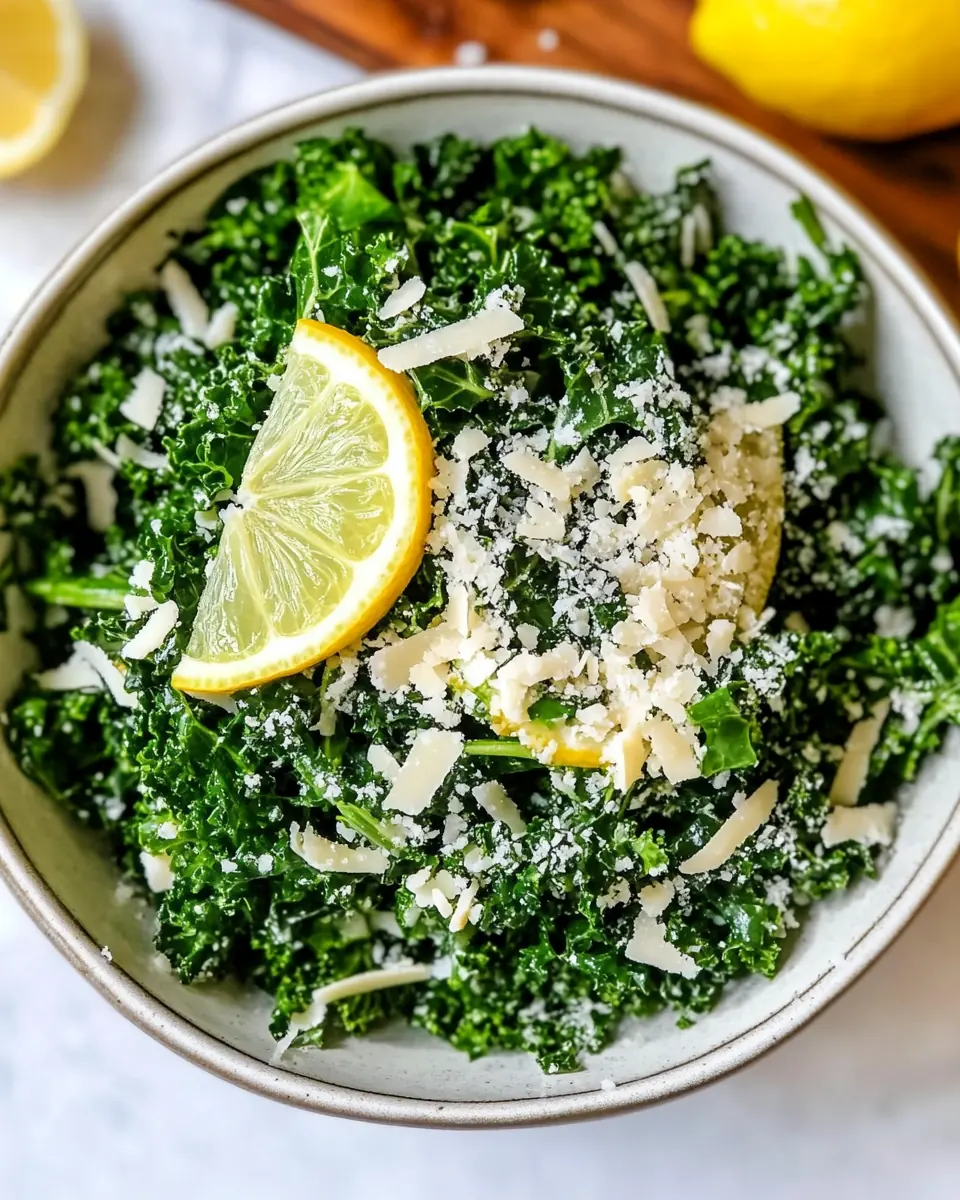
This recipe is straightforward but benefits from attention to technique. I like to treat each step as an opportunity to coax the best texture and flavor from the ingredients, especially the kale and the nuts. Follow the sensory cues and you will end up with a balanced and satisfying salad.
- Remove the rib and stem from the kale leaves. Chop into bite-sized pieces.: When you work the tactile side of the leaves, you should feel the stiff ribs give way as you peel them off with a knife or by hand, leaving tender leaf material that tears easily into bite-sized pieces. The sound is subtle, a gentle tearing that signals you are removing the fibrous parts that would otherwise remain tough. This matters because the thick ribs do not soften when massaged, and leaving them in will create unpleasant strings in each bite. A common mistake is rushing and leaving large stem segments, which make the salad chewier and less enjoyable.
- Add the chopped kale to a colander and rinse with warm water.: As you run warm water over the chopped kale , notice the slightly earthy scent lift and any grit rinse away, the leaves collapsing slightly under the stream. Warm water helps release trapped dirt more effectively than cold, and the leaves should look visibly cleaner and a touch more pliable after rinsing. This step matters for texture and cleanliness, because gritty salad is unpleasant. Avoid soaking for too long, which can leach flavor and make the leaves waterlogged.
- Transfer the washed kale to a colander to drain or a salad spinner and spin.: Spinning the leaves creates a satisfying whoosh and removes excess water so the dressing clings rather than pools. When you stop the spinner, the leaves should be damp, not dripping, and they will fold and shimmer with tiny droplets rather than globs of water. Good drainage ensures the dressing adheres and flavors concentrate. A common error is tossing dressing onto very wet leaves, which dilutes the taste and makes the salad soggy.
- Transfer the kale to a large bowl.: As you place the slightly damp kale into a big bowl, notice how the leaves settle and fill the space, giving you room to massage and toss. The bowl should be roomy so you can work the dressing throughout without spilling. This step is important because working in a cramped bowl makes it hard to evenly coat the leaves. Avoid using a small bowl that forces you to overcrowd the greens, which leads to uneven seasoning.
- If you desire, toast the nuts in a skillet on medium heat until fragrant, stirring often. Set aside. Toasting nuts always brings out the flavor, but it isn't necessary.: When toasting pine nuts , you will smell a warm, buttery aroma and see a pale golden color develop; the sound is a gentle gentle crackle as moisture evaporates and oils bloom. Toasting brightens and deepens the nutty character, creating a richer contrast to the citrus and cheese. This technique matters because raw nuts can taste flat, while toasted ones add aromatic complexity. Be vigilant, because nuts can go from golden to burnt in seconds, which yields a bitter flavor you do not want.
- To a bowl, add olive oil, lemon juice, garlic, salt, and pepper. Whisk until combined and pour over salad.: As you whisk the olive oil and lemon juice with minced garlic , you will see the dressing emulsify into a slight sheen, and the aroma will brighten as citrus oils mix with the savory garlic. Pouring this over the kale should produce a glossy coating, not a puddle at the bottom of the bowl. This technique matters because a well emulsified dressing adheres evenly, ensuring balanced flavor in every bite. A frequent slip is under-whisking, which leaves oil separated and causes uneven seasoning.
- Using clean hands, gently massage the dressing into the salad mixture.: As you massage the leaves, you should feel them soften and darken slightly, the texture transitioning from stiff and fibrous to flexible and tender. The action breaks down cell walls, releasing natural sugars and mellowing any bitterness. This tactile step matters because massaging makes kale enjoyable to eat; skipping it leaves tougher leaves and a less pleasant mouthfeel. Do not overwork the salad into a limp mess; a few minutes of gentle pressure is enough.
- Top the salad with parmesan cheese and toasted nuts. Serve and enjoy!: When you scatter the grated parmesan cheese and toasted pine nuts over the dressed kale , the salad will look lively, with pale green leaves, flecks of white cheese, and warm golden nuts. The first forkful should offer contrasting textures and bright acidity followed by savory richness. This finishing step matters because the toppings provide the savory and crunchy accents that make the salad memorable. Avoid adding the cheese too early or it can thoroughly meld into the greens rather than offering bites of concentrated umami.
Tips and Variations
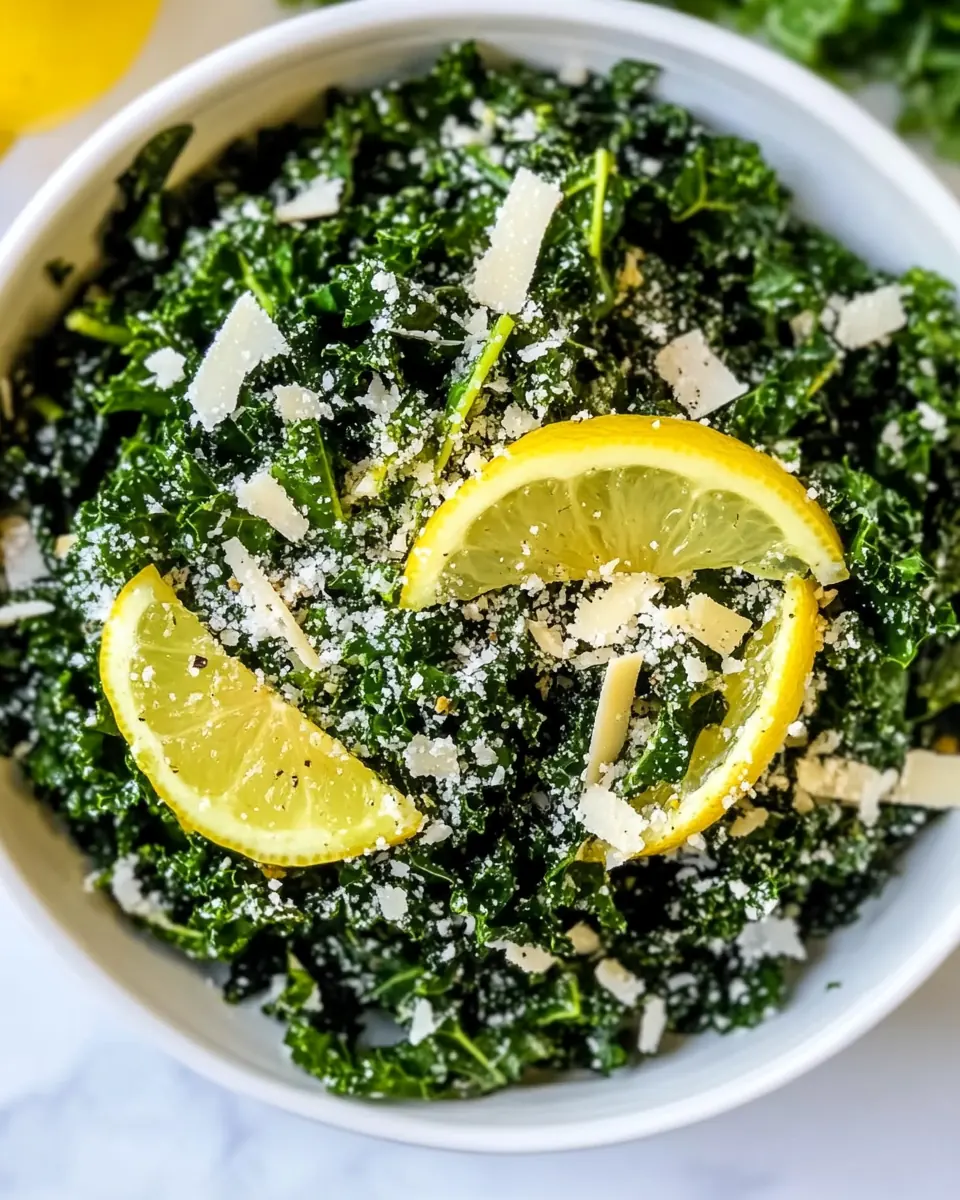
I like offering these tips as quick notes I can reference while I cook. They help preserve texture and highlight small adjustments that make a big difference. Below are practical variations and reminders to personalize the salad without losing its core identity.
- Toast for depth Toasting the pine nuts enhances aroma and creates a richer contrast to the bright lemon juice. Keep the heat at medium and stir constantly, watching for a light golden color.
- Massage method Use clean hands to massage the dressed kale until it softens and darkens, this step breaks down fibers and reduces bitterness, making each bite tender.
- Adjust acidity Taste the dressing before adding it to the salad, and add more lemon juice if you want a brighter profile, or a touch more olive oil to mellow sharpness.
- Garlic timing If raw garlic is too assertive, let it sit in the dressing for five to ten minutes to mellow, which softens the bite while preserving flavor.
- Parmesan finish Add the parmesan cheese last so you get pockets of savory umami instead of it blending uniformly into the greens.
What to Pair With Lemon Parmesan Kale Salad
This salad pairs easily with a wide range of mains and occasions. Its brightness makes it a great counterpoint to roasted or grilled dishes, and the texture works well for casual lunches or more formal dinners. Below I outline serving ideas, seasonal notes, and storage tips so you can plan meals around the salad.
- Weeknight mains Serve the salad alongside simply roasted vegetables or a roasted protein for an easy weeknight dinner that feels balanced and bright.
- Lunch bowls Turn the salad into a hearty lunch by adding grains or beans on the side, keeping the kale as the fresh component for texture contrast.
- Entertaining Present the salad in a large bowl at a dinner party as a refreshing counterpoint to richer main courses, the acidic dressing helps cut through heavier flavors.
- Seasonal serving In spring the salad reads lighter, pairing beautifully with new season vegetables and lighter mains, while in fall it complements heartier preparations thanks to the toasted nuts and parmesan cheese.
- Storage tips Store the dressed salad in an airtight container for a short time, but for best texture keep the dressing separate and add just before serving to preserve crunch.
- Occasion ideas Great for family dinners, potlucks, and holiday side rotations where you want a fresh, vibrant vegetable option that still feels polished.
FAQ
Conclusion
What makes this recipe special is its harmony of texture and bright flavor. The tenderized kale paired with zesty lemon juice, savory parmesan cheese, and toasty pine nuts creates a salad that feels both simple and refined. Try it the next time you want a side that stands out without complicated steps. I hope it becomes a reliable favorite in your rotation, one that’s easy to adapt and always satisfying.
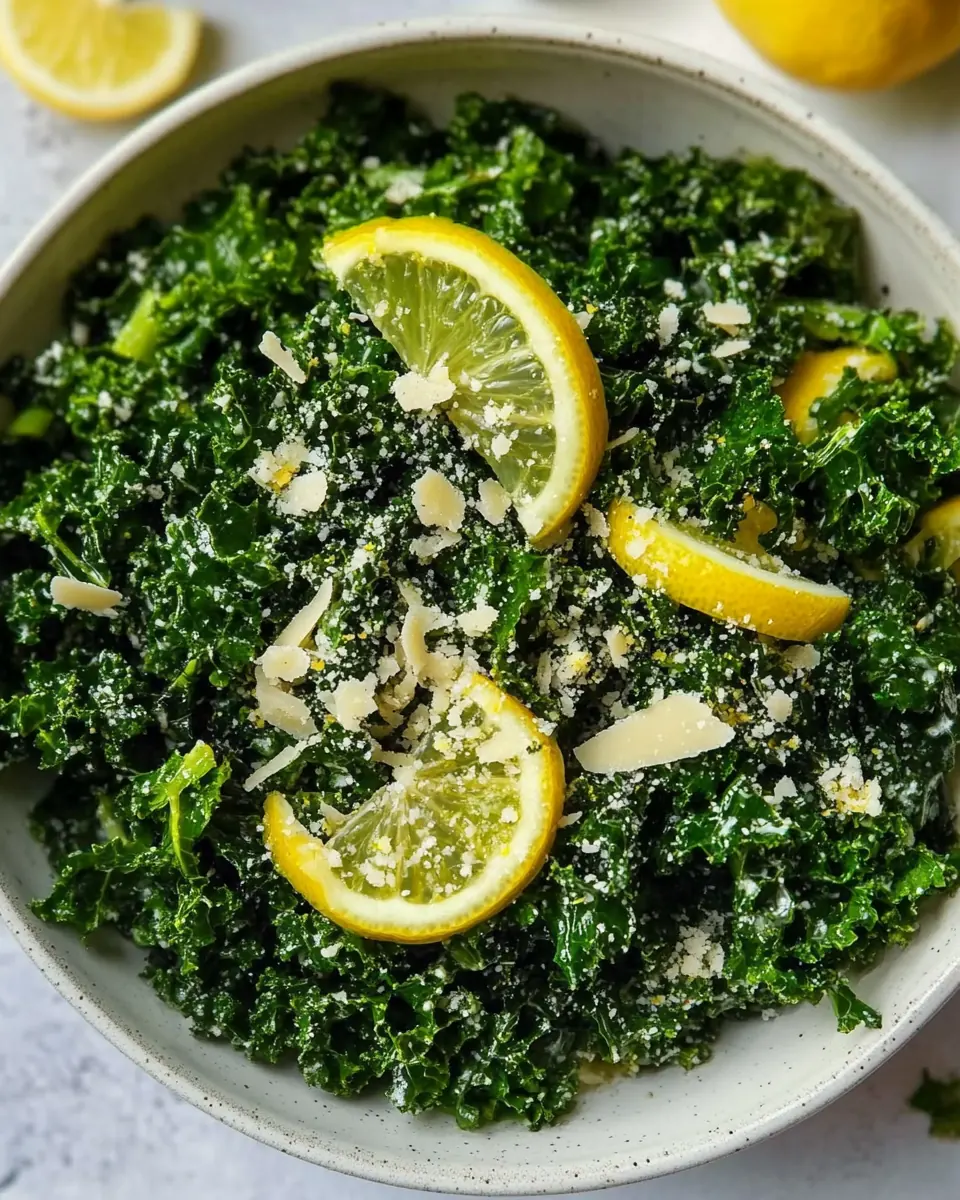
Lemon Parmesan Kale Salad
Ingredients
Equipment
Method
- Remove the rib and stem from the kale leaves. Chop into bite-sized pieces.: When you work the tactile side of the leaves, you should feel the stiff ribs give way as you peel them off with a knife or by hand, leaving tender leaf material that tears easily into bite-sized pieces. The sound is subtle, a gentle tearing that signals you are removing the fibrous parts that would otherwise remain tough. This matters because the thick ribs do not soften when massaged, and leaving them in will create unpleasant strings in each bite. A common mistake is rushing and leaving large stem segments, which make the salad chewier and less enjoyable.
- Add the chopped kale to a colander and rinse with warm water.: As you run warm water over the chopped kale , notice the slightly earthy scent lift and any grit rinse away, the leaves collapsing slightly under the stream. Warm water helps release trapped dirt more effectively than cold, and the leaves should look visibly cleaner and a touch more pliable after rinsing. This step matters for texture and cleanliness, because gritty salad is unpleasant. Avoid soaking for too long, which can leach flavor and make the leaves waterlogged.
- Transfer the washed kale to a colander to drain or a salad spinner and spin.: Spinning the leaves creates a satisfying whoosh and removes excess water so the dressing clings rather than pools. When you stop the spinner, the leaves should be damp, not dripping, and they will fold and shimmer with tiny droplets rather than globs of water. Good drainage ensures the dressing adheres and flavors concentrate. A common error is tossing dressing onto very wet leaves, which dilutes the taste and makes the salad soggy.
- Transfer the kale to a large bowl.: As you place the slightly damp kale into a big bowl, notice how the leaves settle and fill the space, giving you room to massage and toss. The bowl should be roomy so you can work the dressing throughout without spilling. This step is important because working in a cramped bowl makes it hard to evenly coat the leaves. Avoid using a small bowl that forces you to overcrowd the greens, which leads to uneven seasoning.
- If you desire, toast the nuts in a skillet on medium heat until fragrant, stirring often. Set aside. Toasting nuts always brings out the flavor, but it isn't necessary.: When toasting pine nuts , you will smell a warm, buttery aroma and see a pale golden color develop; the sound is a gentle gentle crackle as moisture evaporates and oils bloom. Toasting brightens and deepens the nutty character, creating a richer contrast to the citrus and cheese. This technique matters because raw nuts can taste flat, while toasted ones add aromatic complexity. Be vigilant, because nuts can go from golden to burnt in seconds, which yields a bitter flavor you do not want.
- To a bowl, add olive oil, lemon juice, garlic, salt, and pepper. Whisk until combined and pour over salad.: As you whisk the olive oil and lemon juice with minced garlic , you will see the dressing emulsify into a slight sheen, and the aroma will brighten as citrus oils mix with the savory garlic. Pouring this over the kale should produce a glossy coating, not a puddle at the bottom of the bowl. This technique matters because a well emulsified dressing adheres evenly, ensuring balanced flavor in every bite. A frequent slip is under-whisking, which leaves oil separated and causes uneven seasoning.
- Using clean hands, gently massage the dressing into the salad mixture.: As you massage the leaves, you should feel them soften and darken slightly, the texture transitioning from stiff and fibrous to flexible and tender. The action breaks down cell walls, releasing natural sugars and mellowing any bitterness. This tactile step matters because massaging makes kale enjoyable to eat; skipping it leaves tougher leaves and a less pleasant mouthfeel. Do not overwork the salad into a limp mess; a few minutes of gentle pressure is enough.
- Top the salad with parmesan cheese and toasted nuts. Serve and enjoy!: When you scatter the grated parmesan cheese and toasted pine nuts over the dressed kale , the salad will look lively, with pale green leaves, flecks of white cheese, and warm golden nuts. The first forkful should offer contrasting textures and bright acidity followed by savory richness. This finishing step matters because the toppings provide the savory and crunchy accents that make the salad memorable. Avoid adding the cheese too early or it can thoroughly meld into the greens rather than offering bites of concentrated umami.
Notes
- Toast for depth Toasting the pine nuts enhances aroma and creates a richer contrast to the bright lemon juice. Keep the heat at medium and stir constantly, watching for a light golden color.
- Massage method Use clean hands to massage the dressed kale until it softens and darkens, this step breaks down fibers and reduces bitterness, making each bite tender.
- Adjust acidity Taste the dressing before adding it to the salad, and add more lemon juice if you want a brighter profile, or a touch more olive oil to mellow sharpness.
- Garlic timing If raw garlic is too assertive, let it sit in the dressing for five to ten minutes to mellow, which softens the bite while preserving flavor.
- Parmesan finish Add the parmesan cheese last so you get pockets of savory umami instead of it blending uniformly into the greens.