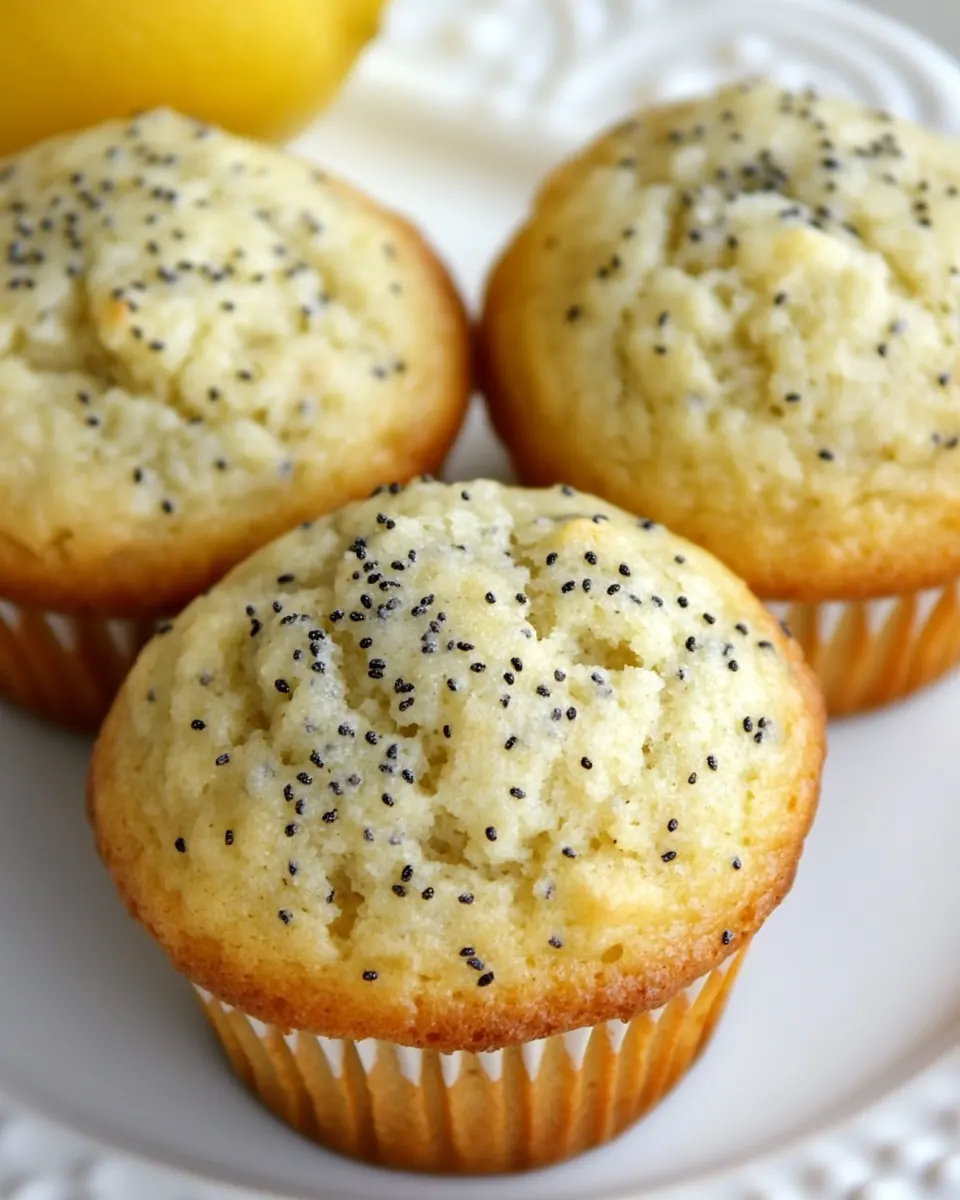
Preheat oven to 375 degrees. Line 12 large muffin cups with liners and spray with cooking spray.: The warm, slightly hot oven helps the muffins rise quickly so you get a nicely domed top and golden exterior. You should feel a gentle warmth when you open the oven and see the heat shimmer, which indicates the air is dry and ready for baking. Preheating ensures the batter begins cooking immediately on contact, giving the right oven spring. A common mistake is skipping preheat, which can lead to flat, dense muffins. If your oven runs hot or cool, use an oven thermometer to confirm the reading, and make small adjustments so the surface browns without overcooking the interior.
In a large bowl, stir together flour, poppy seeds, baking soda, baking powder, and salt. Set aside.: Preparing the muffin tin prevents sticking and makes serving effortless. The liners should sit snugly in each cup, and a light spray ensures the bottom releases cleanly after baking. When you press a fingertip gently on a liner, it should spring back, indicating the tin is properly prepared. People sometimes overfill the cups, which leads to overflow and uneven baking, so aim to fill just below the top. If liners ripple or lift while filling, press them back in so the batter distributes evenly and the muffins bake uniform shapes.
Using an electric mixer, beat together the butter and sugar on high speed until light and fluffy. Add eggs one at a time, stopping to scrape down the sides of the bowl.: The dry ingredients create the framework of the muffin and distribute leavening agents evenly. As you whisk, notice the faint powdery scent of the flour and the tiny dark flecks of poppy seeds suspended throughout. Sifting is optional, but stirring thoroughly ensures there are no pockets of baking powder or salt. A frequent error is uneven mixing, which can leave dense pockets or uneven rise; take a minute to mix until homogenous. Use a spatula to scrape the bowl sides so nothing clings and goes unused in the finished batter.
In a small bowl or glass measuring cup, combine buttermilk, lemon zest and juice, and vanilla. Add liquid ingredients to mixing bowl, alternating with flour mixture. Stir just until flour is incorporated, being careful not to overmix.: Creaming butter and sugar traps air, producing a lighter crumb. You will notice the mixture transform from gritty to pale and creamy, with a faint buttery aroma. Adding the eggs one at a time helps maintain an emulsion, preventing separation. Scrape the bowl between additions so all ingredients integrate evenly. If you add eggs too quickly or use cold eggs, the batter may curdle and lose volume, so keep an eye on texture and temperature. A good cue that the step is complete is a glossy, airy batter that falls from the paddle in ribbons.
Scoop the batter into the muffin cups, filling just below the top of the liner. Bake for 20 to 25 minutes, or until tops spring back when touched. Cool muffins completely before frosting.: Introducing the wet mixture in alternating additions with the dry prevents overmixing and keeps the muffins tender. You will smell the bright citrus as the lemon juices hit the batter, and the buttermilk adds a gentle tang that softens the final crumb. Stir only until the dry streaks disappear, because overmixing activates gluten and makes the muffins tough. I often fold the last addition by hand to feel if any flour remains. A classic mistake is dumping all the liquid in at once, which can cause the batter to become thin and lead to flat tops. The right consistency should be thick but stirrable, like a dense cake batter.
For frosting, using an electric mixer on high speed, cream together the sugar and cream cheese until well mixed and fluffy. Beat in the vanilla extract, lemon zest, and enough lemon juice to make the frosting a spreadable consistency.: When the batter hits the warm tin, it begins to set around the edges, producing the familiar domed top. As they bake you may detect a gentle lemon scent filling the kitchen, and the tops will turn a soft golden color. Use the touch test near the end of baking the top should spring back when pressed lightly. Avoid opening the oven too often, which can cause temperature fluctuations and lead to uneven rising. If the muffins brown too quickly, rotate the pan once during baking so the color evens out. Remove them when a toothpick comes out with a few moist crumbs, not wet batter, to keep them tender without being underdone.
Spread frosting on muffins.: Cooling is crucial so the frosting does not melt into the muffin and become runny. Place them on a wire rack to let air circulate underneath, and you will notice steam slowly vanish from the crumb surface. This rest helps the texture set and makes frosting application neater. Rushing this step leads to sagging frosting and a less attractive finish. If you are impatient, cooling for at least 30 minutes is a reasonable minimum; fully cool to the touch before spreading the frosting.
Cream together confectioners' sugar and cream cheese until fluffy: The frosting base should become light and silky, with a soft sheen as the cream cheese and confectioners' sugar blend. The mixer will hum softly, and you will see the mixture lighten in color as air is incorporated. Properly softened cream cheese prevents lumps, so be sure it is at room temperature. A common error is adding too much liquid too soon, which can make the frosting loose and weepy; add lemon juice gradually to reach the desired spreadable consistency. The finished frosting should hold soft peaks and spread smoothly without sliding off the muffin.
Beat in vanilla, lemon zest, and enough lemon juice to make a spreadable consistency: These additions bring aromatic complexity and the final bright note to the frosting. The lemon zest will release fragrant oils that perfume the frosting, while the juice thins it to a silky texture. Add juice in small amounts and taste as you go so the balance of sweet and tart matches your preference. Too much juice can make frosting runny, while too little leaves it overly sweet; find the middle ground. When properly balanced, the frosting will spread easily and hold shape with a gentle shine.
Spread frosting on muffins: The final act is tactile and rewarding, the frosting gliding across the warm color of the muffin tops. Use a small offset spatula or butter knife to apply a thin even layer, and the contrast of creamy white against golden muffin is satisfying. If you want a smoother finish, chill the frosting slightly so it firms before spreading. Avoid piling on too much frosting, which can overpower the delicate muffin and make them overly sweet. Aim for balance so each bite has just enough frosting to complement the lemon and poppy seeds without dominating them.