Prep: Preheat the oven to 350°F (180°C). Butter an 8-inch square glass baking dish, or 6 individually sized ramekins. In bowl, combine together the sugar and flour; set aside.: Preheat the oven to 350°F (180°C). Butter an 8-inch square glass baking dish, or 6 individually sized ramekins. In bowl, combine together the sugar and flour; set aside : The room will smell faintly warm from the oven as it reaches 350°F , a comforting cue that the kitchen is ready. Buttering the dish not only prevents sticking but also encourages even browning around the edges. Combining granulated sugar and all purpose flour upfront ensures the dry ingredients distribute evenly when added to the wet mix later, preventing pockets of flour. As you mix them, listen for the soft whisper of sifted flour, a sign everything is aerated. A common mistake is skimping on greasing the dish, which can make unmolding or serving messy. Also avoid leaving lumps in the dry mix, which will show as gritty bits in the finished pudding.
Whip the whites: Place egg whites in a medium sized bowl and beat on high speed for 4 to 5 minutes or until stiff peaks form.: Place egg whites in a medium sized bowl and beat on high speed for 4 to 5 minutes or until stiff peaks form : When you beat the egg whites , you'll first notice them go cloudy, then turn glossy as air is incorporated. The sound of the mixer will shift from a watery hum to a firmer, rhythmical thrum as peaks form. Stiff peaks mean the whites hold their shape and do not slump when the beater is lifted, which supplies the structure for the airy top. Temperature matters, so I often use room temperature whites for better volume. Over whipping is a common pitfall, and it leads to dry, grainy whites that collapse; stop as soon as you see stable, shiny peaks.
Whip the yolks: Add the egg yolks to a medium size bowl and beat on medium-high speed until the yolks are thick and lightened in colour. Add the butter, lemon zest and juice; beat for 1 more minute on medium speed. Alternately beat in flour/sugar mixture and milk, making 5 additions of flour and 4 of milk.: Add the egg yolks to a medium size bowl and beat on medium-high speed until the yolks are thick and lightened in colour. Add the butter, lemon zest and juice; beat for 1 more minute on medium speed. Alternately beat in flour/sugar mixture and milk, making 5 additions of flour and 4 of milk : The egg yolks will transform from dense to pale and slightly ribbon like as air incorporates, offering a silkier mouthfeel. Adding the melted butter now coats the yolks, creating an emulsion that helps the batter remain smooth. When you add the lemon zest and lemon juice , inhale the bright citrus that instantly sharpens the aroma. Alternating small additions of the dry mix and warm milk encourages the batter to come together gradually, preventing lumps and encouraging a silky texture. If you dump everything in at once you risk a curdled or uneven batter. A typical error is adding cold milk straight to hot yolks, which can shock and seize them; temper gently and stir steadily.
Finish the batter: Fold in the egg whites with a spatula. Transfer to the prepared baking dish or ramekins. Place dish in large shallow roasting pan. Add hot water to half way up side of baking dish or ramekins.: Fold in the egg whites with a spatula. Transfer to the prepared baking dish or ramekins. Place dish in large shallow roasting pan. Add hot water to half way up side of baking dish or ramekins : Folding is where patience shows. Use a wide spatula and a gentle lifting motion to preserve the air in the whipped whites; you want ribbons, not full deflation. The combined batter should look marbled initially then harmonize into a pale, airy mixture. Transferring into the buttered dish, the surface will feel glossy and slightly billowy. Setting the dish inside a shallow roasting pan and adding hot water to come halfway up the sides forms a bain marie, which insulates the custard and prevents abrupt temperature swings that create cracks or tough edges. A mistake here is pouring boiling water too close to the dish rim and splashing batter; pour slowly to avoid disturbing the surface.
Bake: Bake in the centre of oven for 50 to 55 minutes. If making in ramekins, bake for 35 to 40 minutes until the cakes start to lightly brown on top. Cool for 5 minutes. Top two-thirds will be cake consistency and bottom third will be pudding consistency.: Bake in the centre of oven for 50 to 55 minutes. If making in ramekins, bake for 35 to 40 minutes until the cakes start to lightly brown on top. Cool for 5 minutes. Top two-thirds will be cake consistency and bottom third will be pudding consistency : As the dish bakes, steam will rise from the water bath and the top will gradually set and take on a pale golden hue. You may hear a faint whisper as the surface tightens. When the top springs back slightly to the touch and shows a light tan, the structure is ready; the internal split between cake and pudding is the hallmark of success. Ramekins shorten the time because of their smaller mass, so check them earlier. If you underbake, the top may flop; if you overbake, it becomes dry and loses the luscious pudding below. Allowing a short rest before serving helps the layers settle so the texture reads clearly on the spoon.
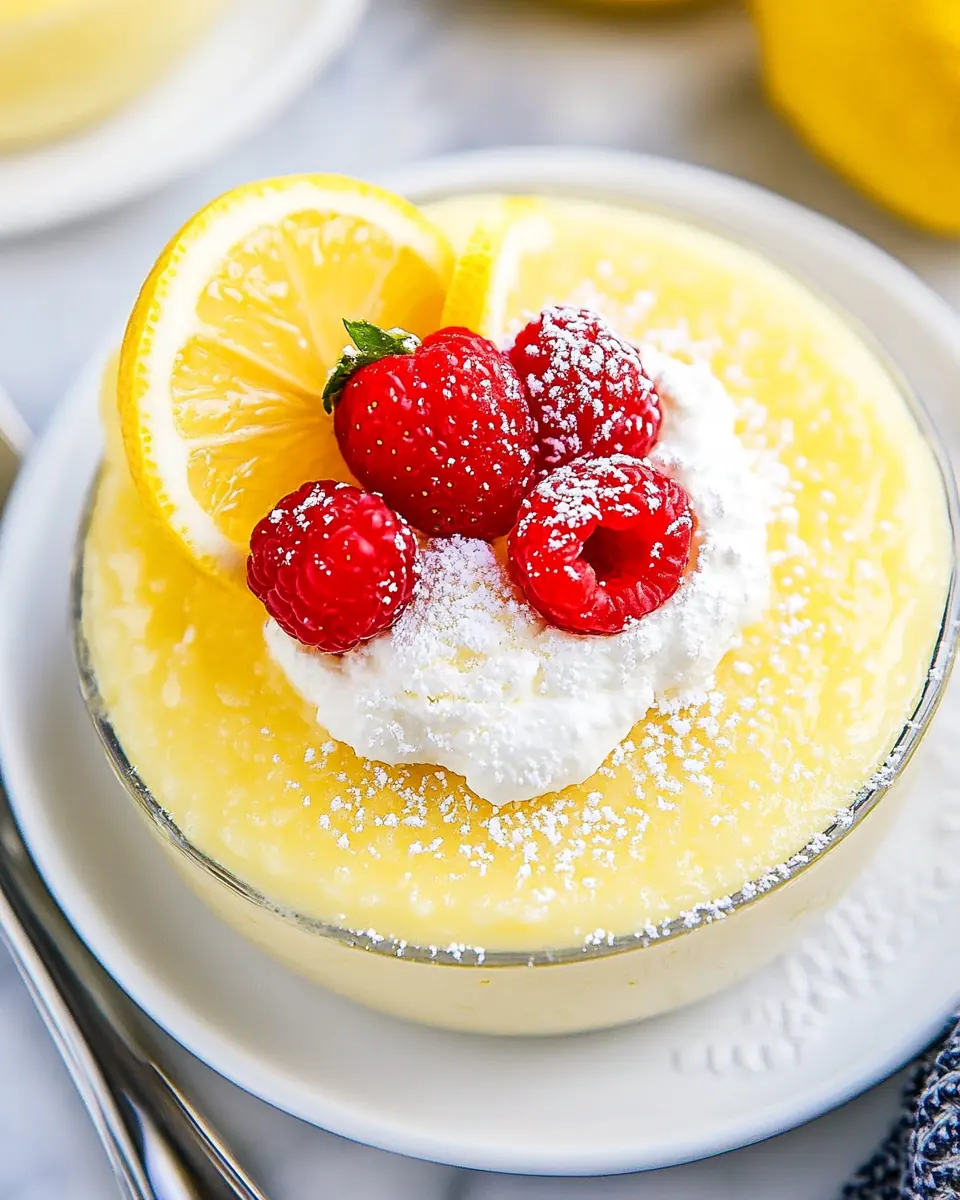
Garnish: These can be served warm or chilled. Sprinkle with powdered sugar and serve with berries.: These can be served warm or chilled. Sprinkle with powdered sugar and serve with berries : Warm servings offer a comforting steam and stronger citrus aroma, while chilling highlights a silkier pudding texture and firmer slice. A dusting of powdered sugar adds a gentle sweet note and a pretty finish, and fresh berries introduce a tart counterpoint and color. When plating, use a gentle hand to keep the top intact. A common slip is attempting to unmold too vigorously, which shatters the delicate top crust; serve directly from the dish or spoon portions instead.