Cookies:: The air in the creamed mixture should look pale and slightly fluffy, and you will notice a soft, sweet butter aroma. Pay attention to the feel of the bowl as you cream, because when the sugar has incorporated into the butter properly it will glide more smoothly on the paddle and form a ribbon when lifted. This texture matters because it traps tiny pockets of air that translate to a tender crumb. A common mistake is working with butter that is too warm, which creates greasy batter and overly flat cookies; if that happens, chill the bowl briefly before continuing.
Wet Ingredients: With a stand or handheld mixer, cream the butter and sugars together at medium speed until light and creamy. Add egg, lemon juice, lemon extract and vanilla, scraping down the sides as needed. Set aside.: After adding the egg and liquids, the mixture will smell bright with lemon and slightly floral from the extracts, and the texture will smooth out. Scraping down the sides avoids pockets of unincorporated butter or sugar. The 'why' here is that even mixing ensures even leavening and a consistent crumb. A common pitfall is under-scraping, leaving streaks of unmixed butter that cause irregular cookies; make sure the bowl bottom and edges are cleanly mixed.
Dry Ingredients: In a medium-sized bowl, add the flour, baking soda, salt, cinnamon, and cloves and whisk to combine. Add the quick oats and lemon zest and whisk to combine.: As you whisk, the spices release a warm scent that balances the citrus, and the lemon zest releases oils that smell intensely fresh. Combining dry ingredients first ensures even distribution of leavening and spices so every bite tastes uniform. Mixing them separately prevents pockets of baking soda, which could create uneven rise; do not skip this step or you risk bitter or spotty flavor pockets.
With the mixer running on low, slowly add the Dry Ingredients to Wet Ingredients. The dough will be quite thick and you may have to mix it all by hand after a few seconds in the mixer.: As the dough comes together you will feel resistance on the mixer, which is normal because of the quick oats . The scent will shift toward baked cookie notes even before hitting the oven. The technique matters because overmixing at this stage can develop gluten and make cookies tough, while undermixing leaves streaks of flour; stop when the last bits are just incorporated, and finish by hand if needed. Avoid adding extra flour to firm the dough, as that can dry out the cookie.
Preheat oven to 375 F degrees. Line a large cookie sheet with parchment paper or nonstick baking mat. Drop dough with a large cookie scoop, or make sure each ball of dough is 3 tablespoons in measurement. Cookies will spread in the oven, so drop each ball of dough at least 2 inches apart.: The oven temperature gives a quick set to the edges while the center stays tender, producing the ideal contrast. When you place the trays in the oven you should hear a faint settling sound as the dough hits heat, and you will smell a toasty oat aroma as they bake. Spacing matters because overcrowding leads to merged cookies. A common error is not rotating pans; if your oven has hotspots, rotate halfway through baking for even coloring.
Bake for 10 minutes, until cookies are lightly golden around the edges. Allow cookies to cool on cookie sheet for 3 minutes before transferring to a wire rack to cool completely.: Look for edges that are just golden and centers that still look slightly soft, because they will continue to set as they cool. The smell at this point becomes rich with browned butter notes and warm spices. Letting them rest briefly on the sheet lets the bottoms finish baking without overcooking the centers. Taking them off too early will cause collapse, and leaving them too long on the hot pan can overbrown the bottom, so transfer after the short rest.
Raspberry Filling: With a stand or handheld mixer, beat butter until smooth. Add 2 cups confectioners’ sugar, pureed raspberries, vanilla extract, lemon extract and salt. Beat on low just until combined. Add 1 1/2 cups more confectioner’s sugar and beat on high for 3-4 minutes until fluffy. Add more powdered sugar if frosting is too thin, or add heavy cream or milk (a teaspoon at a time) if it is too thick. Taste and add a pinch or two of salt as desired.: The filling should whip to a soft, airy texture and smell of bright raspberry and citrus. Whipping on high incorporates air for a pillowy finish, and the confectioners’ sugar helps stabilize it. The 'why' is that a light filling gives contrast to the denser oat cookie and prevents the sandwich from feeling heavy. Common mistakes include adding liquid too quickly, which can make the filling weep, or overbeating, which can break the emulsion and make it grainy.
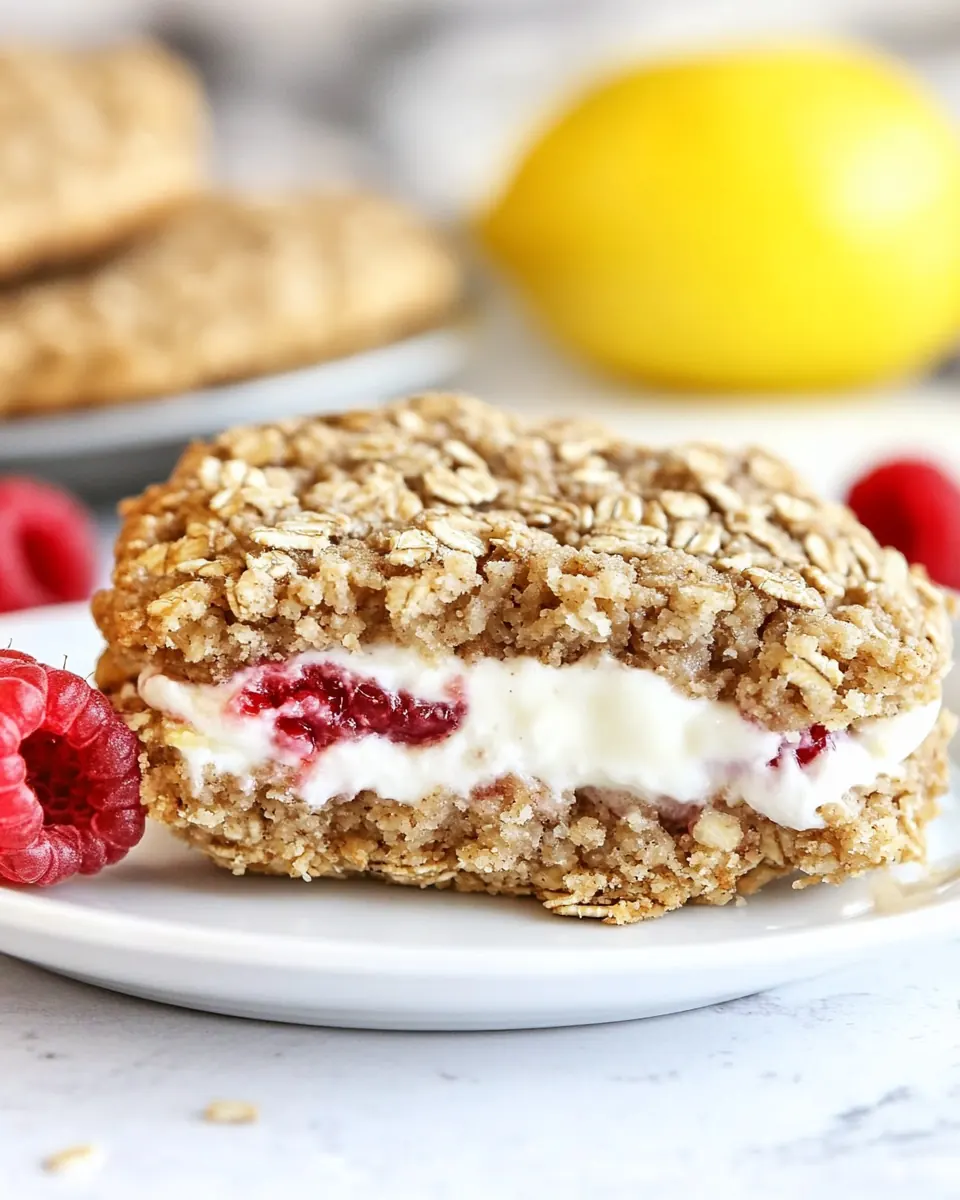
Spoon 1 1/2 tablespoons of cream filling on the bottom side of half of cookies; top with remaining cookies right side up and push down to spread filling.: When you assemble, you will notice the filling squeeze slightly to the edges, creating an appealing rim of pink between cookies. Pressing gently ensures an even distribution so each bite has the right ratio of cookie to filling. Assembly matters for appearance and eating experience; pressing too hard will force filling out and make the sandwich messy, while too little filling will taste dry.
Devour.: The first bite should release a burst of citrus and a soft, fruity cream melding with chewy oats. Pay attention to the textures as you eat, because that confirms you hit the balance right. The pleasure of sharing freshly made cookies is part of the recipe; serve at room temperature for the best mouthfeel. A common misstep is refrigerating immediately, which firms the filling and dulls flavors; let them rest at room temperature before serving if chilled.