In a large pot, heat the olive oil over medium high heat. Add the onion, carrot, celery, and red pepper and cook until tender, about 5-7 minutes. Stir in the garlic and cook for one more minute.: As the oil warms you will notice it shimmer and thin in viscosity, signaling it is ready. The sound is a quiet tickle when vegetables first hit the pan, which then softens to a gentle sizzle as they release moisture. Warming the oil properly ensures the onion and other vegetables cook evenly and absorb the fat for flavor. Avoid using too high a heat because the oil can smoke and turn bitter, and do not crowd the pan or the vegetables will steam rather than sauté.
Add the dried bay leaves, cumin, coriander, smoked paprika, thyme, tomatoes, and vegetable broth.: You will see the edges of the onion soften and turn translucent while the carrot and red pepper dull slightly and release a sweet aroma. Stir frequently so no piece browns excessively, and listen for the consistent low sizzle that means moisture is evaporating. The why here is simple, gentle cooking develops sweetness and complexity, and rushing this stage risks raw vegetable flavors in the final soup.
Stir in the rinsed lentils and season with salt and black pepper. If you want the soup to have a little heat, you can add in a little crushed red pepper flakes or a pinch of cayenne pepper. Bring the soup to a boil. Place the lid on the pot and reduce the heat to low. Let the soup simmer for 30-40 minutes, stirring occasionally, or until lentils are soft.: The moment you add the garlic the kitchen will fill with a sharp, inviting scent. Cooking for about a minute softens its raw edge and releases its oils, which intensify the base flavor. Avoid overcooking because garlic will turn bitter when brown, so keep the heat moderate and stir constantly to preserve its bright flavor.
Use an immersion blender to puree the soup a little. I do about 3 turns around the pan with the blender. You don’t want to puree the entire soup. If you don’t have an immersion blender, use a regular blender. Remove 2 cups of the soup from the pot and let cool for a few minutes before blending. Blend and return the pureed soup back into the pot and stir.: Adding spices to the warm oil and vegetables wakes up their aromatics, creating a fragrant base. When the canned fire roasted diced tomatoes hit the pot you will see steam and a burst of tang, and the combined aromas will deepen. This step layers flavor, and using the broth as your liquid ties spices and vegetables into a cohesive broth. A common mistake is adding cold broth to a scorching pan, which can cool the pot and slow the flavor development, so add liquids steadily.
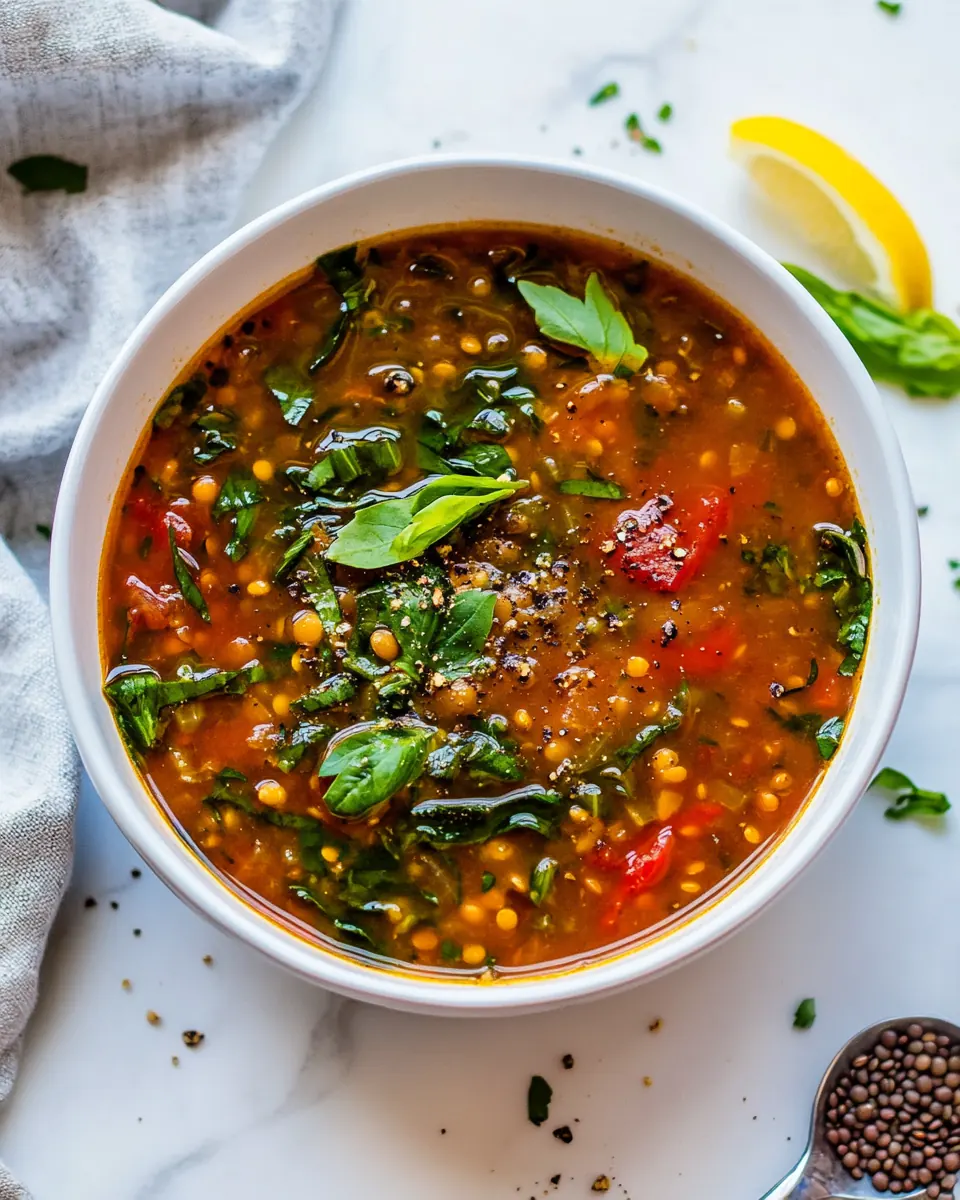
Add the spinach and fresh lemon juice. Stir and taste. Add additional salt and pepper, if necessary. Ladle the soup into bowls and serve warm.: Once the lentils enter the pot they begin to absorb the liquid and spices, swelling and softening. The visual cue is a gradual thickening of the liquid and the disappearance of the glossy raw sheen on the lentils . Seasoning early allows the salt to penetrate the legumes, but be cautious because the broth and tomatoes contribute saltiness too, and over salting is a common error that is hard to reverse.
If you want the soup to have a little heat, you can add in a little crushed red pepper flakes or a pinch of cayenne pepper: A small pinch will send a warm tingle through the soup without dominating the palate. Add conservatively because capsicum's heat intensifies with simmering. If you are unsure, add a smaller amount now and adjust after tasting at the end of cooking, which prevents an overly spicy final dish.
Bring the soup to a boil: As the liquid reaches a boil bubbles will rise steadily and the surface will shimmer, signaling the transition to active cooking. Boiling helps the lentils begin to hydrate rapidly, but once boiling is achieved the next important move is to reduce heat for a controlled simmer so the legumes cook evenly and the broth concentrates slowly.
Place the lid on the pot and reduce the heat to low: Lowering to a gentle simmer produces a soft bubbling and a steady aroma that develops over time. Covering the pot traps steam, ensuring the lentils cook through without evaporating too much liquid. A misstep is leaving the lid off the whole time, which can dry the soup and lead to uneven cooking, so keep it partially covered if you need to watch liquid levels.
Let the soup simmer for 30 to 40 minutes, stirring occasionally, or until lentils are soft: During simmering the broth will gently reduce and flavors meld; you will notice a thickened body and a deepened color. Stirring prevents sticking at the bottom and helps you monitor doneness. Test a few lentils by mashing between your fingers; they should yield but not completely disintegrate. Overcooking can make the texture mushy, so check early if you prefer more bite.
Use an immersion blender to puree the soup a little: After partial blending the aroma becomes creamier and the texture silkier, with some whole lentils remaining for bite. If you do not have an immersion blender, the alternative is to remove about two cups, cool slightly, and blend in a regular blender before returning. Be careful with hot liquids in a blender, vent the lid slightly to avoid pressure buildup. Puree only part of the soup to preserve contrast.
Add the spinach and fresh lemon juice: The addition of chopped spinach will wilt quickly into the warm broth, turning the soup a brighter green and adding a fresh vegetal note. The squeeze of lemon juice brightens the flavors, cutting through the earthiness and lifting the overall profile. Taste and then adjust salt and pepper, because acid changes perceived seasoning and you may need a final tweak.
Ladle the soup into bowls and serve warm: Serve when the soup is steaming but not scalding, and notice the aroma and layered flavors as you eat. Presenting it warm highlights the texture contrast and the brightness from the lemon. A common serving mistake is letting it sit too long after reheating, which can mute the fresh notes, so serve promptly for the best sensory experience.