Start with the mirepoix. We add a good dab of our flavored butter as a base and then we sauté the diced onions, carrots and celery.: The air will fill with a warm, vegetal scent as you melt the Butter and add the softened onion , carrots , and celery , their edges turning translucent and then a gentle gold, which signals the sugars are releasing and building complexity; you should hear a low sizzling that calms as moisture leaves the vegetables, and if the pan sizzles too loudly the heat is too high, so lower it to prevent burning and ensure the mirepoix becomes tender rather than charred.
You don't want to ever rush this process! A good bisque or any soup as a matter of fact needs enough time for the mirepoix to cook until soft and golden. This is how you develop a rich taste to any recipe.: As the vegetables cook, the scent will evolve from sharp to sweet and nutty, and that slow transformation creates a deep base; the visual cue is soft, slightly caramelized edges on the onion and carrot , and the texture should be yielding when pressed with a spoon, if they still feel raw, keep cooking gently, because rushing here leaves raw vegetal notes in the broth.
When ready you'll add in the garlic and sauté that for just a minute or so. Be careful not to let it burn or turn golden. You need a fragrant opaque garlic, not a golden one.: Garlic should bloom briefly and give off a fragrant, aromatic steam without browning, producing a gentle perfume that enhances the base; if you let it brown it turns bitter, so stir constantly and pull it off heat sooner rather than later to preserve a mellow garlic flavor.
Now you'll add in the flour to begin thickening the soup, or making the roux.: Once the flour hits the fat and vegetables, it will clump then smooth out, and you should cook it while stirring until it smells toasty and no longer floury to the nose, a process that builds body; undercooked flour will leave a raw taste, so be patient and watch for a faint toasty color change as your visual guide.
Again this step should not be rushed. You need the flour to be slightly toasted, so cook it for 2 minutes or so. This also removes any raw flour taste from your lobster bisque. Feel free to add a teaspoon or two of extra butter here to achieve a nice toasted flour base if the mixture feels too dry.: During the roux phase the aroma shifts to a warm, biscuit like scent and the texture becomes satin; stirring continuously prevents hot spots and ensures even cooking, and if the mixture seems dry, a little extra Butter will bring it together, but if you add too much you risk thinning the roux, so add sparingly and keep stirring until it is evenly toasted.
Now add in the tomatoes and cook some more. Allow the tomatoes to release their juices (if using fresh, and allow the juice to evaporate if using fresh or canned. You'll have a paste looking like that when you're ready for the next step.: The tomatoes will release juice and their scent will brighten the pot, and as the liquid reduces you will see the mixture thicken into a paste with concentrated tomato aroma; allow this evaporation so the tomato integrates rather than diluting the bisque, and if the mixture splatters, lower the heat and stir to prevent burning the paste.
Next step is to add the lobster stock.: When the lobster stock joins the pot, it will lift the tomato paste and roux into a cohesive broth, and you should bring this to a gentle boil where steam carries a robust shell scent; watch for tiny bubbles at the surface as the signal to lower heat to a simmer, because a rolling boil will break down delicate flavors and can make the soup cloudy.
The lobster stock will infuse your soup with so much flavor and taste. Bring the mixture to a boil and then drop the heat to medium low. Cover the pot and let your bisque simmer for all the flavors to blend in.: As the pot simmers, aromas deepen and the broth becomes savory and layered, the edges of the pot showing small, steady bubbles that indicate a gentle infusion; simmer covered to retain heat and let flavors marry, and avoid a vigorous boil which can evaporate too much liquid and concentrate saltiness.
30 minutes later and your bisque looks ready to blend. While you can use a high speed heat proof blender, we prefer a good old immersion blender for this.: At this stage the vegetables will be fully collapsed and aromatic, and the broth should smell rich and marine with a hint of sweetness from the carrots; use a long spoon to check texture, and if any vegetable pieces still have structure, continue simmering briefly, because under softened vegetables will produce a slightly grainy mouthfeel after blending.
Just blend the soup until nice and silky. You'll notice the color will change into a light orange tone as all the ingredients blend together, and the bisque will feel so silky already.: Blending transforms the mixture into a luminous, velvety texture and the color will lighten into a warm orange, with the sound shifting to a steady hum if you use an immersion blender; work until completely smooth while watching for splatters, and if you get air pockets or foam, let the soup rest a moment before blending again to avoid over aeration which can change texture.
At that point you're ready to serve or you can add in that splash of table cream as we did. Cream adds an impeccably silky smooth and rich finish to the soup.: Adding the cream softens edges and gives a satin sheen, and you will notice the aroma mellow and the mouthfeel become richer; add slowly and warm the soup gently after stirring, because sudden high heat can cause the cream to separate, so stabilize on low heat if you finish on the stove.
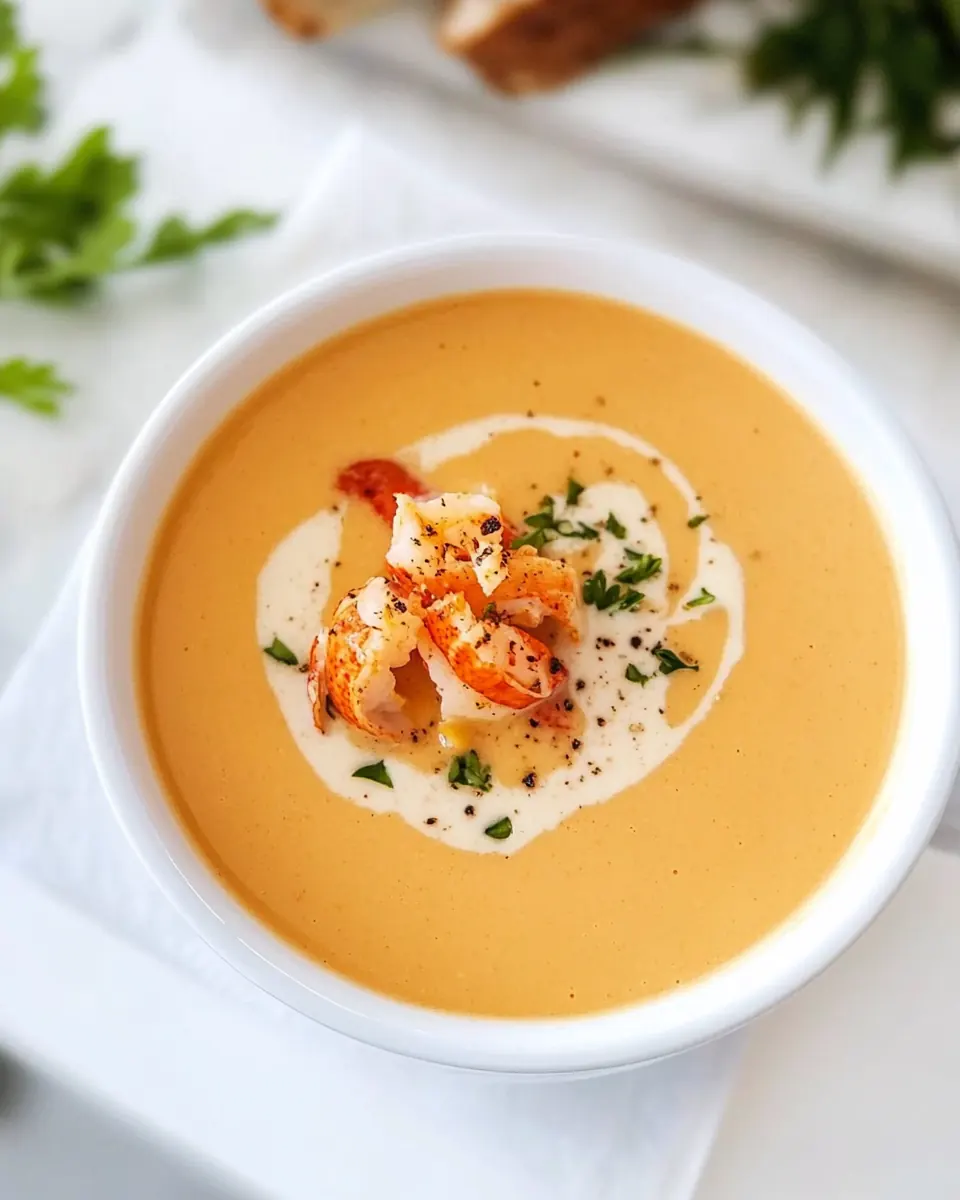
And now you're ready to plate!: The clean, silky surface of the bisque invites garnishes, and when ladled into bowls it should coat the spoon with a slow, clingy ribbon; if the soup looks too thin, a brief reduction over low heat will thicken it, but avoid boiling which can alter the texture.
We love to plate our lobster bisque by topping it with plenty and plenty of butter poached lobster chunks.: The tender Lobster Meat should be warm and buttery, offering a contrast in texture and a sweet, oceanic burst with each bite, and if the lobster pieces feel rubbery you likely overcooked them earlier, so warm gently to retain tenderness.
Finish and garnish with some fresh oregano, a splash of cracked black pepper and a lemon slice or lemon wedge.: Bright herb and citrus notes cut richness and amplify the seafood flavors, and the final pepper crack adds a lively edge on the tongue; avoid adding too much acid too early, as it can mask subtle butter and shell flavors, so finish at plating for best balance.