Preheat the oven to 400 degrees Fahrenheit. Grease a 9×13 inch pan and set aside.: You should feel the warmth rising from the oven as it comes to temperature, and the smell of clean heat will be faint but noticeable. Preheating ensures the casserole begins to bake immediately for even browning on the topping, so do not skip this step. A common mistake is putting the dish into a not fully heated oven, which leads to uneven baking and a soggy topping. Make sure the pan is evenly greased so the casserole releases easily after baking.
Combine topping ingredients in a small bowl. Set aside.: As you mix the Italian style bread crumbs , melted butter, and grated Parmesan cheese , you will notice the crumbs take on a glossy, cohesive look. This binding helps them brown uniformly when baked. If the crumbs feel dry, a touch more melted butter will help, but avoid making them greasy. A mistake to avoid is prepping the topping too far in advance in a humid kitchen, which can make crumbs lose their crunch.
Cook pasta to al dente according to package directions. Drain and run under cold water and set aside.: The pasta should be tender but still offer slight resistance when bitten, not mushy. Rinsing with cool water stops the cooking instantly and firms the texture, which prevents overcooking in the oven. Be careful not to over rinse if you want sauce adhesion; you want the pasta damp, not soaked. Overcooking the elbow macaroni is a frequent error that results in a gluey final texture.
While pasta is cooking, melt butter over medium heat in a saucepan. Stir in onion powder, garlic powder, dried mustard, salt, and pepper. Add in flour and whisk to combine it.: As the butter melts and the spices bloom, you will smell a toasty aromatic note that hints at depth in the sauce. When you add the flour , whisk constantly to make a smooth roux; it should look pale and glossy, not lumpy or browned. If the roux darkens you will change the flavor profile, so keep heat moderate. A common pitfall is not whisking enough, which allows lumps to form when liquids are added.
Slowly add half and half, then milk while whisking to combine. The mixture will be very thick at first but will smooth out as you continue adding liquid.: Add liquids in a steady stream and whisk vigorously, and you will see the roux transform into a silky, opaque mixture. Initially the texture may be thick and slightly pasty, but continue whisking as the volume increases. If you add cold milk too quickly you risk small lumps, so temper by adding gradually. One error is pouring all liquid at once, which often traps tiny flour bits that are hard to smooth out later.
Once all of the liquid is added, bring the mixture to a boil. Reduce heat and simmer for 1 to 2 minutes or until thickened while whisking constantly.: When the sauce comes to a gentle boil you will see it thicken and coat the back of a spoon with a glossy film. Simmering briefly cooks the flour and concentrates flavor, yielding a smooth mouthfeel. Keep whisking to prevent scorching on the bottom, and watch for tiny bubbles as a cue to reduce heat. If you skip simmering, the sauce may taste pasty or raw.
Remove from heat and stir in the cheeses, whisking until the sauce is smooth and melted.: Off the heat, add the shredded cheddar , mozzarella , and Parmesan so they melt gently into the warm sauce without becoming grainy. You will feel the sauce go from viscous to luxuriously smooth as the cheeses incorporate. Overheating during this stage can cause the cheese to separate and become oily, so patience is key. A common mistake is returning the pan to high heat, which ruins the texture.
Combine the sauce and the pasta. Gently stir in half of the lobster meat.: As you fold the sauce into the elbow macaroni , notice how the noodles glisten and the sauce clings to each curve. Gently incorporating half the lobster meat ensures even distribution while preserving tender pieces. Be gentle so the meat stays in chunks; rough stirring can shred it too finely. Overmixing will also cause the pasta to break down and the dish to lose structure.
Pour the mixture into the prepared pan and spread out evenly.: You should hear a soft, reassuring sound as the sauce settles into the pan and the surface smooths under the back of a spatula. Spreading it evenly promotes uniform baking and bubbling. Avoid pressing hard, which can compact the casserole and make the top dense. Uneven spreading leads to parts that overbrown or remain underbaked.
Add remaining lobster meat on top and then sprinkle with the topping mixture.: Placing the reserved lobster on top showcases its texture after baking, and sprinkling the buttery crumb mixture creates that golden crust. The crumbs should glisten and sit loosely atop the sauce so heat circulates and crisps them. A mistake is pressing the crumbs into the surface, which prevents them from getting crisp and results in a steamed, soggy top.
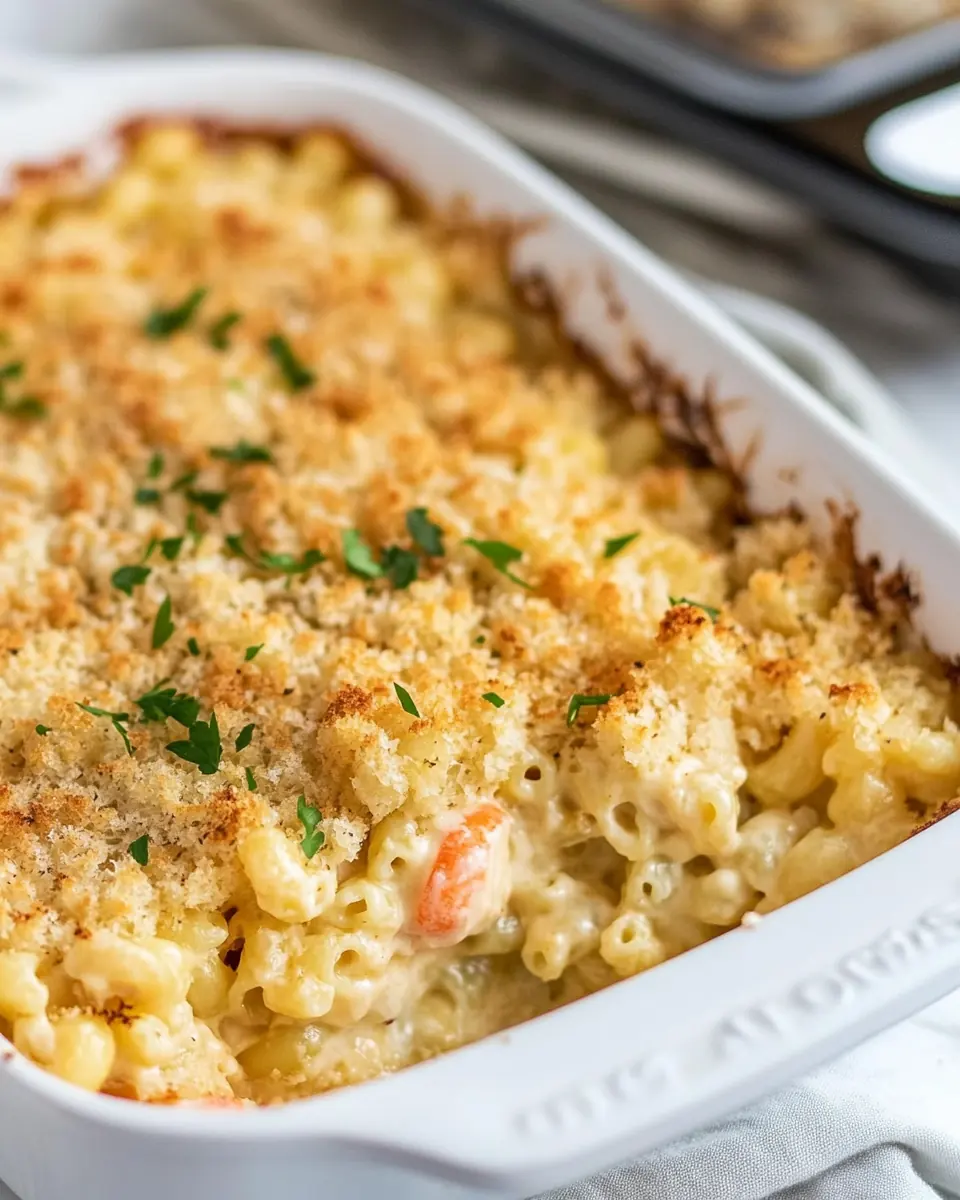
Bake at 400 degrees Fahrenheit in preheated oven for 18-20 minutes or until bubbly and topping is browned.: In the oven you will hear a soft bubbling and then see the edges gently simmer, with the crumbs turning golden and fragrant. The aroma of toasted Parmesan and butter will be a reliable signal the bake is nearly done. If the topping browns too fast, tent loosely with foil to avoid burning while the center finishes. A common misstep is removing the dish too early, leaving a lukewarm center that has not fully set.