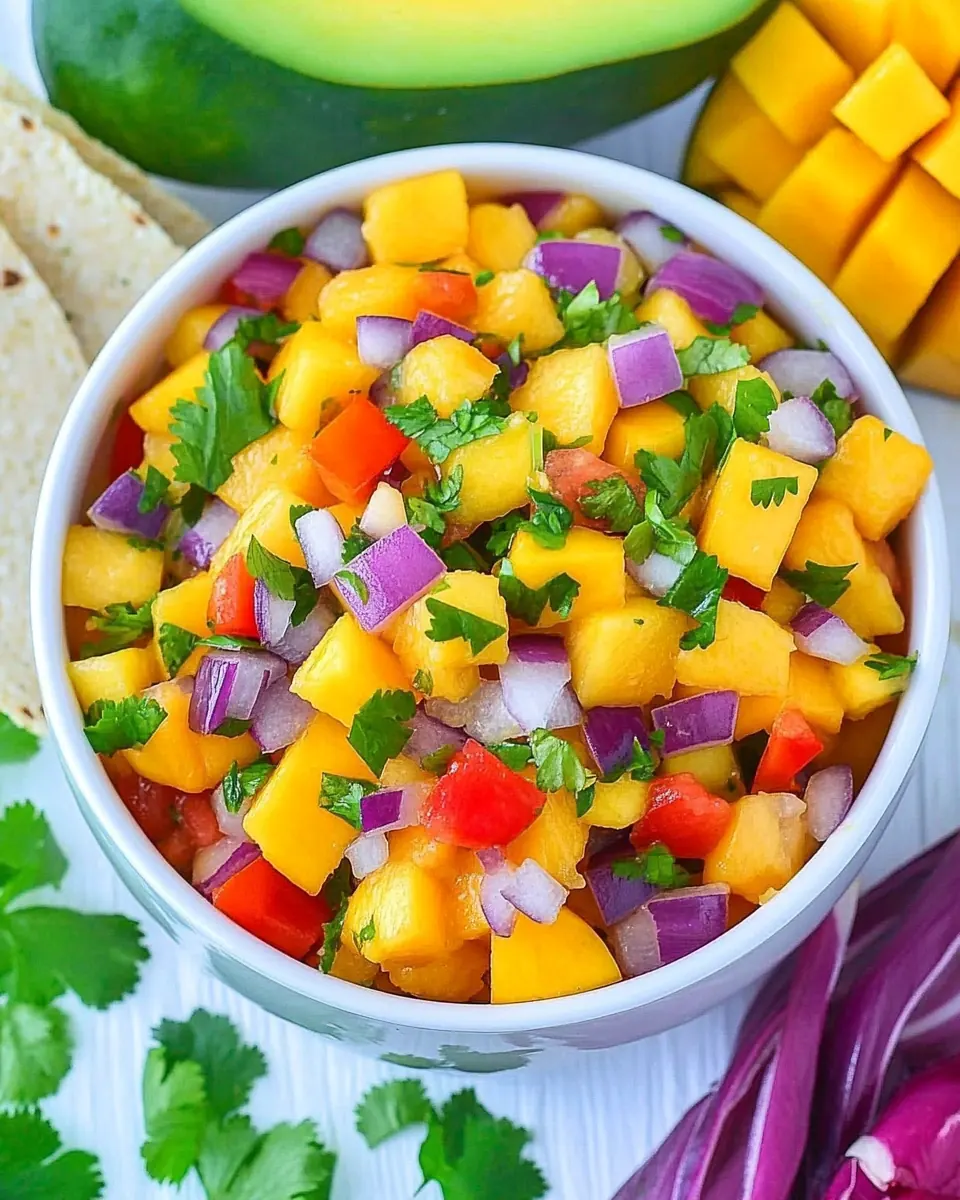
Feel free to stir in any of the ingredient suggestions listed earlier in this post. The recipe is great for using up whatever fruit or veggies you have on hand. To make the salsa, simply stir all ingredients together. Serve either cold or hot, and refrigerate leftovers in a covered container for up to four days. If you try it, be sure to rate the recipe below!: The moment you mix in optional bits like the jalapeno or bell pepper you will notice new aromas rising from the bowl, and these additions change the salsa character more than you might expect. Sensory cues are crucial here, pay attention to the way heat from peppers opens the nose and how bell pepper adds a fresh vegetal crunch. Why this matters, is that each optional ingredient should enhance, not compete with, the sweetness of the mango . A troubleshooting tip is to add optional ingredients incrementally and taste between additions, because it is easy to overshoot with heat or raw onion intensity.
The recipe is great for using up whatever fruit or veggies you have on hand: As you combine produce, note the differing textures and moisture levels, because softer fruits will break down faster than crunchy vegetables. Listen for the quiet shift in texture as you toss, and watch for excess liquid that can make the salsa watery. The reason this flexibility is helpful, is it lets you customize the salsa to the season and pantry, but avoid mixing very watery fruit without adjusting acid or salt, since that can thin the mixture and mute flavors.
To make the salsa, simply stir all ingredients together: When you bring the components together, look for uniform distribution of color and texture, and smell the citrus brightening the bowl. A gentle toss is preferable to vigorous mixing, which can bruise the mango into a puree. This technique preserves those pretty cubes that make the salsa appealing. One common mistake is over stirring, which reduces visual appeal and can change mouthfeel, so stop once everything is evenly coated.
Serve either cold or hot, and refrigerate leftovers in a covered container for up to four days: Serving temperature shifts the profile, chilled salsa reads as crisp and refreshing, while a room temperature bowl amplifies aroma and softness. If refrigerating, pack the salsa into an airtight container and press a piece of parchment or plastic directly on the surface to limit oxidation. Keep in mind textures will soften over time, and overly long storage will dull the bright notes, so aim to consume within the suggested window.
If you try it, be sure to rate the recipe below: Feedback helps refine the balance between acid, salt, and heat, so pay attention to how each element reads on your palate and note any tweaks you made. Sensory journaling, even briefly, is a helpful habit, because your next batch will be better tuned to your preferences. A frequent oversight is neglecting to taste after resting, because flavors settle and often improve after a short rest, so taste again before serving and adjust if needed.