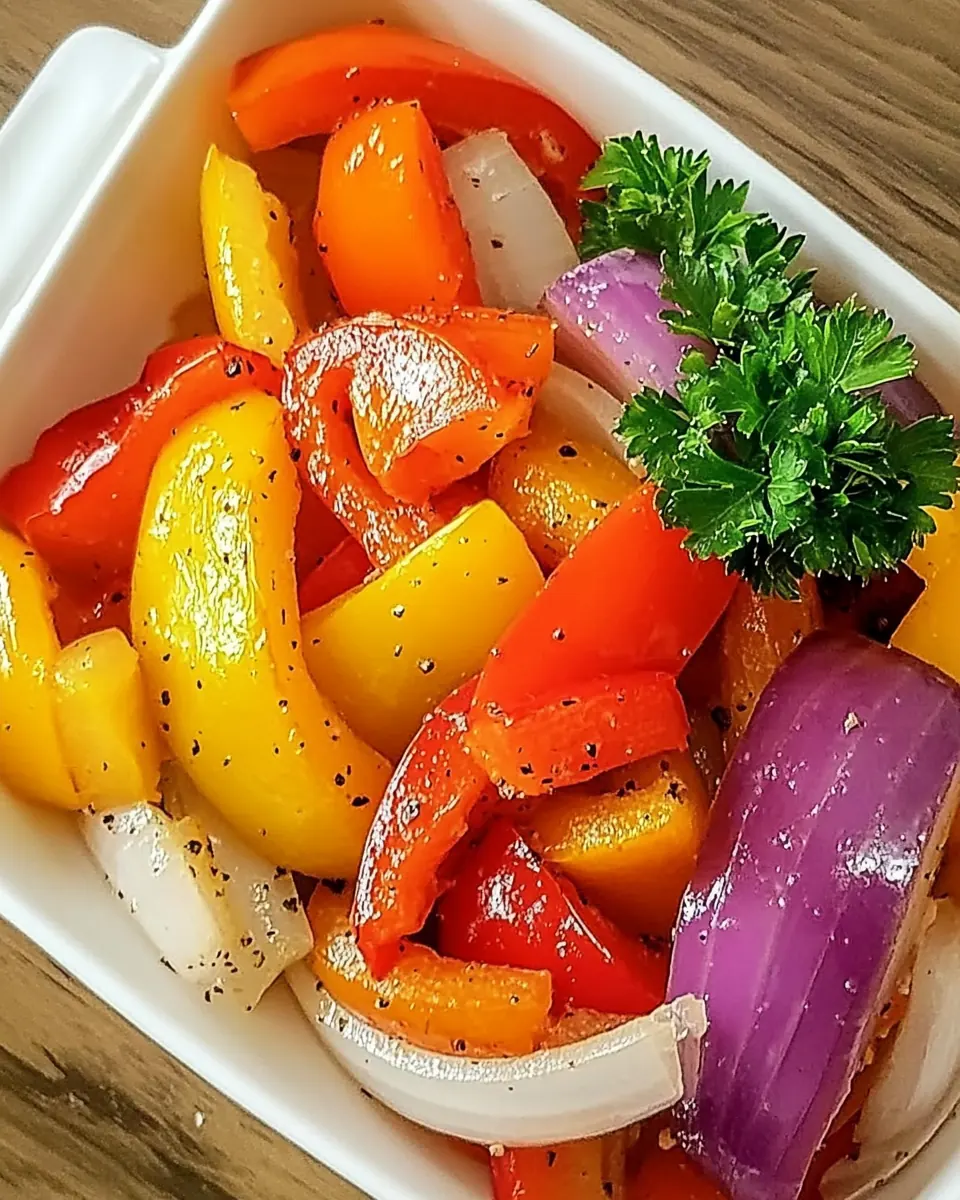
Prep the veggies: Cut all peppers and onions into large, uniform chunks—about 3 inches each.: Cut all peppers and onions into large, uniform chunks about 3 inches each. : As soon as I touch the vegetables I notice their firmness and scent, the green stems and crisp flesh, and I aim for uniformly sized pieces so they cook evenly; visually you are looking for pieces that will hold together on a skewer but still get tender. The slicing sound is satisfying, a steady rhythm that helps you focus, and the cut surfaces will soon pick up the oil and seasonings. A common mistake is cutting pieces unevenly, which leads to some parts turning mushy while others stay raw, so take a minute to match sizes. If a piece looks too thin it will char too quickly, and if it is too large it might remain firm in the center.
Make the marinade: In a large bowl, toss the veggies with olive oil, salt, black pepper, and garlic powder until evenly coated.: In a large bowl toss the veggies with olive oil salt black pepper and garlic powder until evenly coated. : The first sensory cue here is how the olive oil glosses the cut surfaces and carries the aromas of the spices, creating a light, fragrant sheen. As you toss, listen for the soft clack of vegetables against the bowl, and watch the seasonings distribute into a thin coating that will promote even browning. This technique matters because oil is the medium for heat transfer and flavor adhesion, ensuring the edges char while the insides soften. One troubleshooting tip is to avoid overdressing the vegetables; too much oil will make them soggy rather than roasted, while too little leads to dry, pale results. If you notice puddles of oil, blot lightly or use a little less next time.
Marinate: Cover and refrigerate 30 minutes to overnight to let the flavors soak in.: Cover and refrigerate 30 minutes to overnight to let the flavors soak in. : You will notice that after marinating the surface of the vegetables looks slightly softened and shinier, a quiet change that signals the salt drawing moisture and the oil settling into the flesh. Marinating enhances depth, allowing the garlic powder and black pepper to permeate, and longer rest yields a more integrated flavor profile. The why is simple, resting gives the ingredients time to mingle rather than just sit on the surface. A common mistake is leaving them at room temperature too long; for safety and texture I keep them refrigerated if I plan to hold beyond 30 minutes. If you are short on time, even a brief 30 minute rest is beneficial compared to no rest at all.
Use as desired: Perfect for popping onto skewers, grilling in a veggie basket, or roasting on a sheet pan in the oven.: Perfect for popping onto skewers grilling in a veggie basket or roasting on a sheet pan in the oven. : When you move the vegetables to heat you will immediately sense a change, the sizzle as they meet a hot grill or oven, and the aroma of sugars beginning to caramelize. On the grill the edges will pick up smoky char and blistered spots, offering a rustic crunch, while in the oven the pieces will roast more evenly and the natural sugars will concentrate into jammy notes. Technique matters because direct heat creates char and complexity, whereas enclosed oven heat promotes even caramelization. A frequent misstep is crowding the pan or basket; overcrowding traps steam and prevents browning, so give each piece breathing room. If you see steaming rather than browning, spread them out or roast in batches.