Bring a large pot of salted water to boil. Carefully add the sweet potatoes. Reduce heat to medium and cook, uncovered, for 15 minutes or until sweet potatoes are fork tender.: The kitchen will fill with a faint mineral scent as the water simmers, and a rolling boil signals enough heat to cook rapidly. Salting the water seasons the sweet potatoes from the inside, which matters because it prevents a flat tasting result. A common mistake is under-salting the water, which leaves the mash bland, so taste a small cube if unsure and adjust. Ensure the pot is large enough so the pieces move freely and cook evenly, and watch for vigorous bubbling that could cause breakage or foam over.
Drain the sweet potatoes in a colander, shaking to remove all of the water. Place the sweet potatoes in a large bowl and add 1/4 cup milk, butter, and salt. Use a potato masher or hand blender and mash the potatoes until smooth. Add additional milk, if necessary. Serve warm.: Dropping the pieces in causes an audible clatter and a quick steam puff, which confirms contact with hot water. Evenly distributed chunks cook at the same rate, so avoid tossing them all on one side. Stir once gently to separate pieces, then resist frequent stirring which can cause breakage. If you crowd the pot, some pieces will stay firm while others turn mushy, so use a large pot and give them space.
Reduce heat to medium and cook, uncovered, for 15 minutes or until sweet potatoes are fork tender: You will hear a steady simmer and see little movement around the pieces; that is perfect. Fork tenderness means the tines slide in with minimal resistance, but the pieces should not be falling apart. Overcooking will waterlog them, creating a gluey texture, so check at about 12 minutes and poke several pieces to confirm doneness. If you undercook, the mash will be lumpy and grainy, so patience here is rewarded with a creamy finish.
Drain the sweet potatoes in a colander, shaking to remove all of the water: The sound of water draining is reassuring, and shaking the colander helps drop excess steam quickly so the potatoes do not continue to absorb moisture. Removing surface water prevents a watery mash later, which can dilute flavor and texture. A common error is letting them sit in hot water after cooking, which will keep cooking them and risk mushy results, so transfer promptly when ready.
Place the sweet potatoes in a large bowl and add 1/4 cup milk, butter, and salt: As you add warm milk and soft butter , the aroma shifts to creamy and inviting, and you can almost hear a gentle splat as butter meets warm tuber. Starting with 1/4 cup of milk keeps the texture controlled, while the butter melts to create a glossy sheen. If you add cold liquid, the mixture cools and tightens, so use warm dairy or temper it slightly. Over-salting at this stage is easy, so add salt sparingly and taste before adjusting.
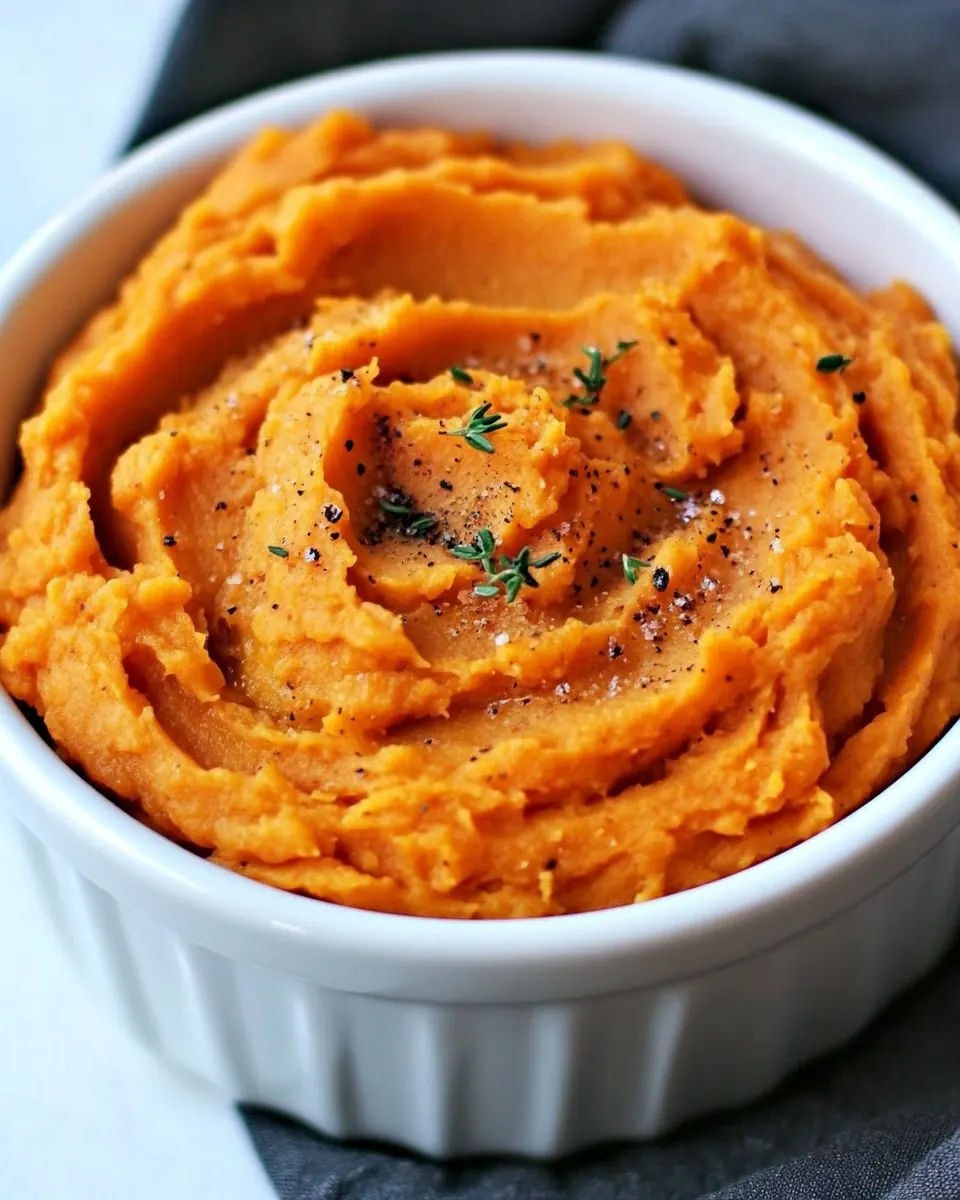
Use a potato masher or hand blender and mash the potatoes until smooth: Mashing releases steam and the bowl will smell richer and sweeter; if you use a hand blender you will get silkier results, while a masher leaves a bit of rustic texture. The choice affects mouthfeel, so pick the tool that matches your mood for the meal. A frequent pitfall is over blending with a high speed tool, which can create gluey starch, so pulse briefly and check texture often. Stop when the mash looks cohesive and glossy, with no dry clumps visible.
Add additional milk, if necessary: As you stir, you will see whether the mash needs thinning; it should hold shape but still be scoopable and slightly glossy. Adding more warm milk softens the mouthfeel and helps the dish spread nicely on a plate. Avoid pouring too much at once, which can make it runny, and remember you can always add more but not take it back. If the mash seems lumpy, a splash of milk plus a few vigorous stirs usually corrects the texture.
Serve warm: A warm serving temperature brings forward the sweet potatoes aroma and allows the fat to coat the palate properly, creating a satisfying mouthfeel. Spoon into a warmed serving bowl and smooth the surface slightly so it catches any glaze or melted butter. Serving cold flattens the flavors, so plan to present right after finishing. If you must hold it, cover and keep in a low oven to maintain warmth without drying the surface.