Make the Scones: Preheat oven to 400 degrees F. Line a baking sheet with parchment paper; set aside.: Preheat oven to 400 degrees F : The warm, slightly hot oven creates steam quickly from the butter pockets, which is critical for lift and flaky texture. You should feel the oven heat change when you open the door, and the air will smell faintly warm. The immediate bounce in temperature helps set the crust while the interior rises. A common error here is not allowing the oven to fully preheat, which can lead to uneven baking and poor rise, so give it time to reach a steady temperature before sliding the tray in.
Place the sugar in a large bowl and add the lemon zest. Using your fingertips, rub the lemon zest into the sugar until it is evenly distributed. Add the flour, baking powder and salt to the bowl and whisk to combine.: The parchment prevents sticking and makes for even browning on the bottom surface, plus it helps you transfer the scones easily. When I place the sheet, I press the parchment flat so the scones sit level and bake uniformly. Avoid using a greased pan without parchment if you can, because removal becomes messy and the bottoms can brown too fast.
Add the cubed butter and, using a pastry blender or two knives, cut the butter into the flour mixture until it is the texture of coarse sand and there are no pieces of butter larger than the size of a pea remaining.: Rubbing the zest into the granulated sugar releases aromatic oils that perfume the sugar, creating an infused base for the dough. You will notice the sugar darken slightly and the bowl fill with citrus scent, which signals a good distribution. Be careful not to over rub to the point of pulverizing the zest, or you will lose the delicate texture it brings.
Pour the heavy cream and raspberries into the flour mixture and, using a spatula, gently fold until a dough starts to come together. Turn the dough out onto a lightly floured surface and gently knead a few times to bring the dough together. Using floured hands, gently pat the dough into a 7-inch circle and cut into 8 triangles.: This tactile step warms your hands a little and spreads the citrus oils. The sugar should look speckled and fragrant, and when you press a bit between fingers it should feel slightly moist from the zest oils. If the mixture seems too dry, you may have missed enough zest, so take a moment to recheck the lemon before adding other dry ingredients.
Transfer the scones to the prepared baking sheet and bake for 15 to 20 minutes, or until golden brown and set. Remove from the oven and allow to cool completely.: Whisking makes the leavening and salt distribute evenly through the all purpose flour , which ensures consistent rise and seasoning. You will see the mixture look uniform and slightly aerated, which helps later when the butter is cut in. A mistake to avoid is adding the butter before the dry ingredients are fully combined, as that leads to inconsistent pockets of leavening.
Make the Glaze: In a small bowl, whisk together the powdered sugar and juice from Meyer lemons and drizzle over scones. Add more powdered sugar or juice if you prefer a thicker or thinner glaze.: Work until the texture resembles coarse sand with pea sized bits of unsalted butter . As you do this, you should hear a soft scraping and see small, irregular bits of butter coated in flour. The remaining visible butter bits are what create flakiness, so resist the urge to overwork them into the flour. Overblending results in a uniformly mealy mix that will not steam properly in the oven.
Until it is the texture of coarse sand and there are no pieces of butter larger than the size of a pea remaining: The tactile check here is key, aim for a sandy feel under your fingers. You may pick up a pinch and press it to see if it holds slightly; that indicates the right proportion of butter to flour. If some chunks remain larger, cut them down carefully rather than working the whole mix too long, which generates warmth and softens the butter.
Pour the heavy cream and raspberries into the flour mixture: When you add the heavy cream and the raspberries , the mixture transforms from dusty to tacky, carrying sweet and fruity aromas. The cream hydrates the flour, while the berries add moisture and color. Pour slowly to avoid sudden saturation and be ready to fold immediately to keep the fruit intact.
Using a spatula, gently fold until a dough starts to come together: Folding is about patience, you should see streaks of cream soften the dry mix and the raspberries nestle into the dough. The sound changes from dry rustling to a soft pat as the dough forms. Avoid vigorous stirring that will crush the berries and turn the dough pink and runny.
Turn the dough out onto a lightly floured surface and gently knead a few times to bring the dough together: The table will feel cool under your hands, and your touch should be light, using the heel of your hand to fold the dough over itself about four to five times. Kneading too much produces gluten development that makes the scones tough, so limit this to just enough to make the dough cohesive. A sticky surface may need a dusting of all purpose flour , but add sparingly to avoid a dry texture.
Using floured hands, gently pat the dough into a 7 inch circle and cut into 8 triangles: As you pat, you will feel the dough spread and relax. The surface should be smooth with visible berry pockets. Cutting into triangles gives classic scone shapes and even baking. If the dough resists shaping, chill it for a few minutes rather than forcing it, which can compress the air pockets you want to keep.
Transfer the scones to the prepared baking sheet and bake for 15 to 20 minutes, or until golden brown and set: In the oven, the kitchen fills with a warm, buttery aroma and the tops take on a golden sheen. Watch for deepening color at the edges and a set center, which indicates doneness. Opening the oven too often reduces heat and can prevent proper rise, so check near the lower end of the time range and rely on color and firmness rather than the clock alone.
Remove from the oven and allow to cool completely: Cooling lets the crumb set and prevents the glaze from sliding off, and you will notice the scones firming as steam escapes. Patience here means cleaner glazing and a better texture when you bite in. Cutting or glazing too soon leads to a gummy interior and messy topping.
Make the Glaze: In a small bowl, whisk together the powdered sugar and juice from Meyer lemons : The glaze should become glossy and pourable, and the lemon scent will brighten as you whisk. Start with the stated ratio and adjust to reach a consistency that coats the back of a spoon. If it is too thin, add a touch more powdered sugar , if too thick, a few drops of Meyer lemon juice will loosen it.
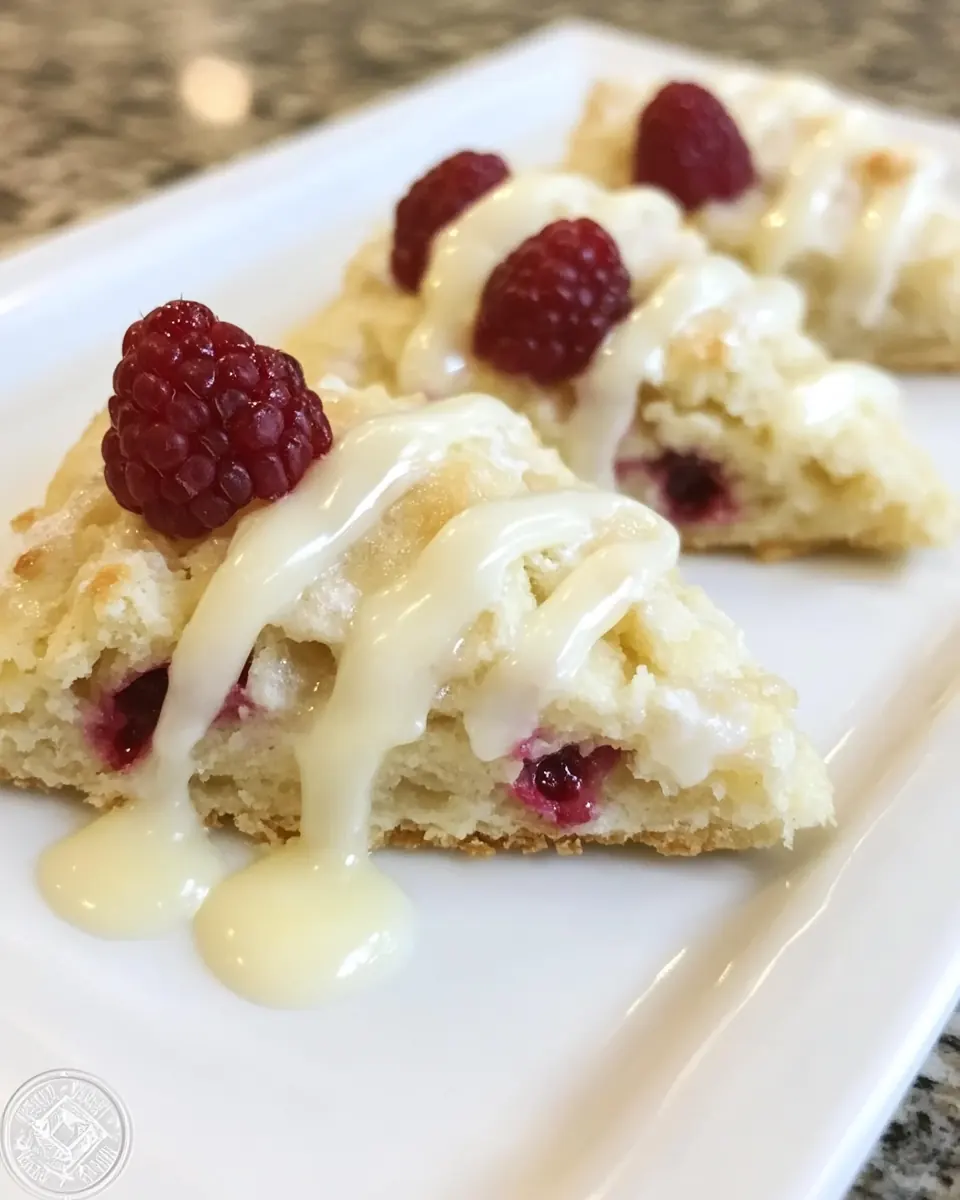
And drizzle over scones: The glaze should form a shiny, slightly opaque coating that sets within minutes. I like a loose drizzle that pools subtly on the tops, highlighting the raspberries . A common mistake is pouring while the scones are very hot, which can cause the glaze to run off; let them cool to avoid that.
Add more powdered sugar or juice if you prefer a thicker or thinner glaze: Tastes vary, so tweak the balance to match your preference for sweetness or brightness. Thicker glaze gives a sweet snap when you bite into it, while thinner glaze soaks slightly into the crumb for extra moisture. Make adjustments in small increments to keep the flavor balanced.