Pierce the potato several times with a fork. Rub olive oil around the sides.: You will feel the resistance of the skin give way under the tines and hear the faint scrape as you pierce, this creates vents for steam to escape so the interior cooks evenly instead of bursting. If you skip this, steam can build up and split the skin, which not only makes a mess but also reduces the ideal fluffy texture.
Place the potato on a microwave-safe plate. Microwave on high for 4 minutes, then flip the potato over and microwave for an additional 4 minutes. If the potatoes aren’t fully cooked yet (check the doneness by inserting a knife in the center of the potato), microwave in 30-second increments until they are.: The oil will feel slick to the touch and adds a soft gloss to the skin that becomes slightly firmer under heat, improving mouthfeel and aroma. This matters because a too dry surface can create an unpalatable contrast with the soft interior. Avoid using too much oil, which can pool and make the skin feel greasy rather than pleasantly rich.
Let the potatoes rest for a minute, slice down the center, and fluff with a fork. Add toppings and serve.: You should hear the quiet hum of the microwave and see the potato seated centered on the plate for even exposure. Proper placement helps heat circulate evenly, and using a microwave-safe plate prevents cracking or heat damage. A common mistake is stacking potatoes or using warped plates, which can produce uneven cooking.
Microwave on high for 4 minutes: The first burst of heat starts the internal steam and softens the core; you might smell a faint nutty note as the surface warms. This initial interval jumpstarts the cooking process and prevents long total cook times. Do not assume the same timing works for all microwaves, as power varies significantly between ovens.
Flip the potato over: When you turn the potato, the other side receives direct exposure and any cool spots begin to even out visually; the skin will feel warm to the touch through a towel. Flipping matters because microwaves can create hot and cool zones, and turning helps reduce uneven doneness. Be cautious, as steam pockets can release and cause brief bursts of heat.
Microwave for an additional 4 minutes: The second interval should make the flesh noticeably softer, and you may see the skin tighten slightly as moisture redistributes. This step continues the internal steaming action that yields the fluffy texture we want. Overcooking here can dry the interior, so we use the next check to avoid that error.
Check doneness by inserting a knife in the center: Gently probing should offer little resistance and the knife will slide in with a faint give, indicating the interior is tender and fully cooked. This sensory cue is the most reliable sign that the potato is done; if there is resistance, continue in small increments. A mistake is assuming time alone is enough without a feel test, which can leave an underdone center.
Microwave in 30 second increments until they are: Short additional bursts let you fine tune doneness, listening and feeling for the slightest softening; this prevents overshooting the texture. This incremental approach is important because microwaves and potato sizes vary, and a few seconds can make a big difference. Avoid large extra intervals, which risk drying the potato out or making the skin rubbery.
Let the potatoes rest for a minute: During this brief pause the internal steam evens out and the starches settle, giving you a creamier mouthfeel. Resting also cools the surface slightly so you can handle the potato safely, and it prevents the steam from escaping too quickly when you cut it. A common oversight is slicing immediately, which releases hot steam and can make the texture gummy rather than fluffy.
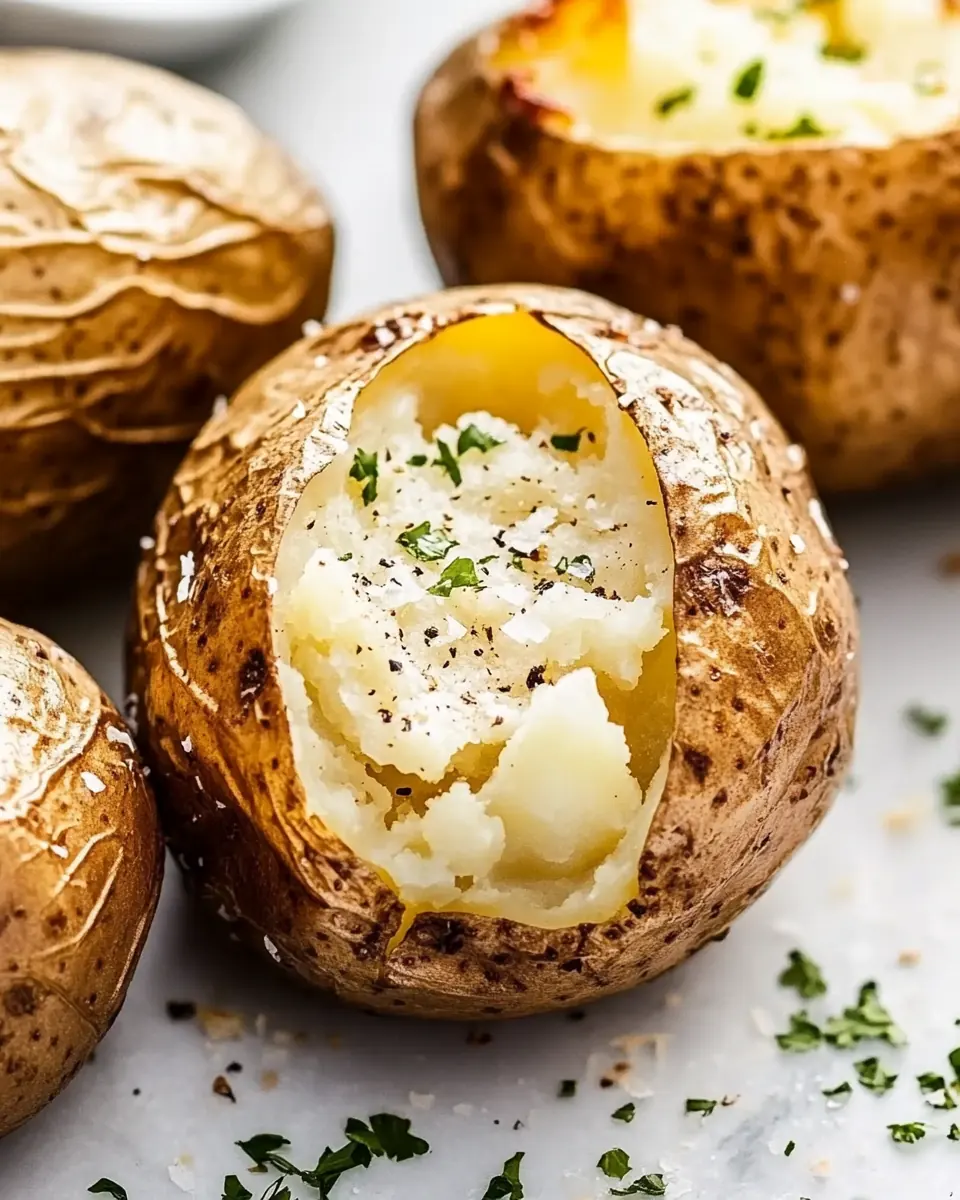
Slice down the center and fluff with a fork: When you cut, you should hear a soft crack and see the fluffy interior separate in tender strands as you fluff with a fork, creating air pockets that make each bite light. Fluffing also helps absorb any toppings and enhances the overall texture. Don’t mash aggressively, which can compress the interior and lose the airy quality you worked for.
Add toppings and serve: Warm toppings will meld into the spongy interior, releasing aromas and moisture that enrich each forkful; the contrast between the soft inside and the firmer skin is part of the appeal. Choose toppings that complement the mild starch, and serve immediately to enjoy the best texture. A misstep here is letting the potatoes sit too long after adding wet toppings, which can make the skin soggy.