Combine brown sugar, butter, corn syrup and milk in a small saucepan. Cook and stir over medium heat until dissolved. Pour into a greased 9 in pie plate. Set aside.: When these ingredients first hit the pan you'll hear a quiet soft bubbling as the butter melts into the brown sugar, releasing a warm molasses aroma. Stir gently with a heatproof spatula so the sugar dissolves into the butter rather than settling on the pan edges. This gentle simmer encourages the corn syrup to integrate smoothly, preventing graininess. Watch for the mixture to become uniform and glossy, and avoid letting it boil vigorously because that can darken the sugars too quickly and lead to a bitter note. A common mistake is rushing to high heat, which will scorch the sugar and ruin the caramel's flavor.
Separate crescent dough into four rectangles; press perforations to seal. Combine sugar and cinnamon in small bowl. Sprinkle evenly over rectangles. Roll up jelly-roll style, starting with a long side; pinch the seams together.: As you maintain medium heat, notice the texture change from granular to silky, and the scent will shift from sweet to a deeper toasted sweetness, signaling readiness. Stir consistently so no pockets of sugar remain, scraping the bottom to prevent hotspots. The skillet will be warm to the touch through the handle, so use a potholder when moving it. If you let it sit unmoving, the sugar can stick and burn, so active stirring is the key to smoothness.
Cut each into 9 slices; place cut side down in prepared pie plate.: When you pour the caramel it should flow like liquid gold, evenly coating the bottom of the plate with a glossy sheen. Tilt the plate slightly to help the caramel reach the edges, creating a uniform layer that will become the sticky base for the rolls. Greasing the plate first prevents sticking and helps the caramel release when inverted. If the caramel is too hot it may bubble aggressively, so allow a moment to calm before pouring to avoid splatters.
Bake at 375 degrees for 15-18 minutes or until golden brown. Cool in a pie plate for 1 minute before inverting onto serving plate.: Let the caramel rest while you prepare the dough so it thickens a little, which helps it hold the rolls in place during baking. The residual warmth will keep it pourable but slightly tacky. Resist the urge to chill it, because a cold caramel base will prevent the rolls from nestling into the sauce correctly. A typical oversight here is moving too fast and adding the rolls while the caramel is excessively runny, which can cause them to slide in the pan.
Separate crescent dough into four rectangles; press perforations to seal: As you open the tube, the dough will feel soft and slightly tacky, ready to be shaped. Press along the perforations firmly so the seams do not open while rolling, ensuring even layers and a tidy spiral. Work on a lightly floured surface if the dough wants to stick, but avoid adding too much flour or you will dry the dough out. Not sealing the perforations well will let butter and fillings seep out, creating uneven rolls.
Combine sugar and cinnamon in small bowl: Whisk these together until uniform, and smell the bright, spicy note of cinnamon that should lift the sugar's sweetness. This simple mixture distributes easily and gives consistent flavor to every roll. If you skip thorough mixing, pockets of plain sugar or concentrated cinnamon will create inconsistent bites, so make sure it is homogeneous.
Sprinkle evenly over rectangles: Scatter the cinnamon sugar so it reaches all corners, and gently pat it into the dough with your fingers or the back of a spoon so it adheres without compressing the layers. Even coverage ensures every spiral has both sweetness and spice. Avoid overloading one section, which would create a dense, overly sweet patch that bakes differently from the rest.
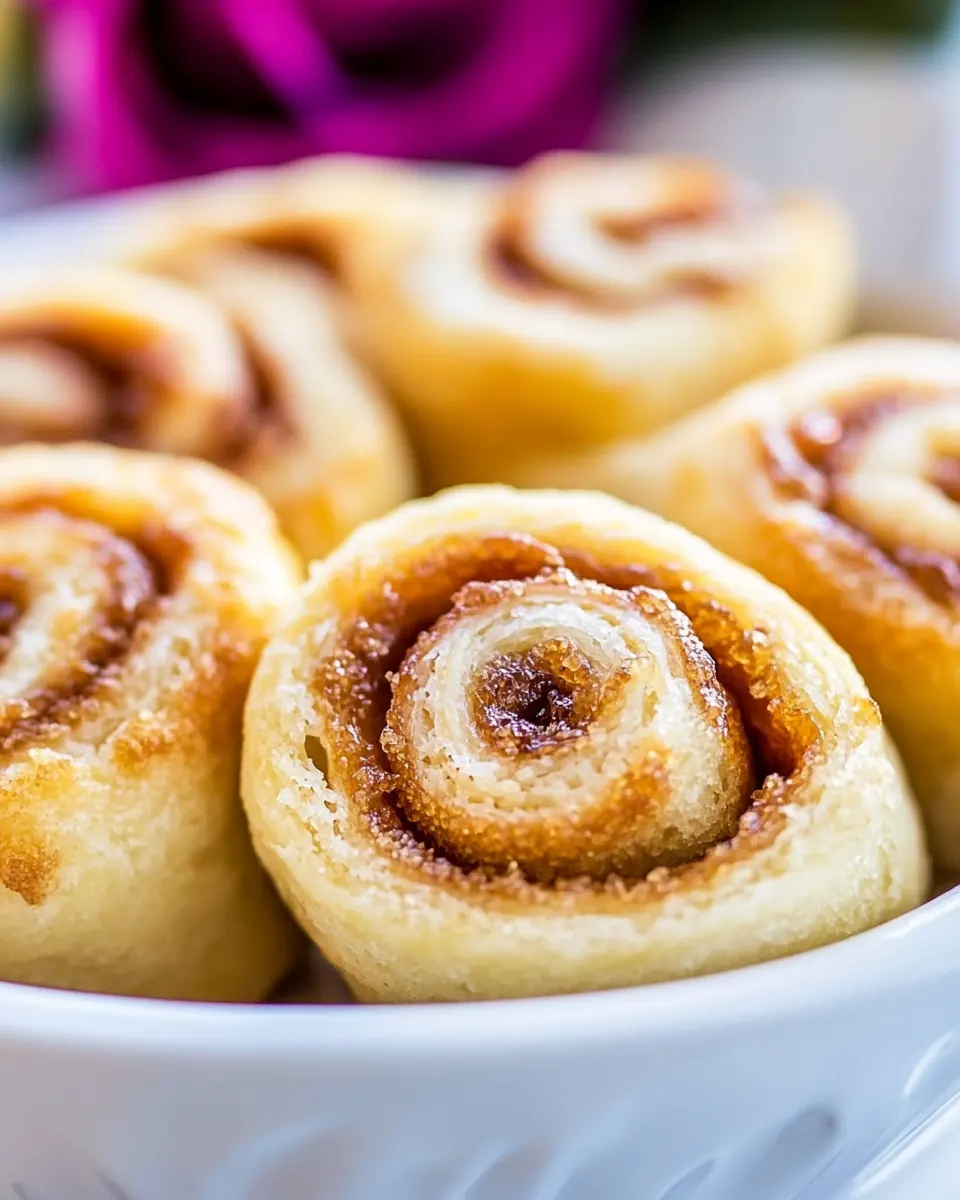
Roll up jelly-roll style, starting with a long side; pinch the seams together: As you roll, keep gentle, consistent pressure so the layers form tight spirals. The act of rolling frames the cinnamon sugar into rings that melt into ribbons of flavor while baking. Pinch the final seam firmly to keep the roll intact, and if any sugar spills out, gently tuck it back in. Loose rolling will cause the spirals to collapse, and a poorly sealed seam may unfurl during baking.
Cut each into 9 slices; place cut side down in prepared pie plate: The sound as you slice is clean and slightly yielding, and arranging them cut side down lets the caramel bubble up between and around each roll, coating the bottoms. Space them evenly so they bake uniformly and press slightly into the caramel to nestle. If slices are uneven in thickness, the smaller pieces will brown faster, so aim for consistent cuts for even baking results.
Bake at 375 degrees for 15-18 minutes or until golden brown: The oven will produce a warm, bakery like aroma as the caramel melts and the dough browns. Look for the tops to reach a golden brown and the edges to pull slightly from the pan, that indicates readiness. The caramel may bubble at the edges, creating a beautiful glossy finish. Overbaking will dry the dough and harden the caramel, so check at the lower end of the range and adjust for your oven's temperament.
Cool in a pie plate for 1 minute before inverting onto serving plate: That brief rest lets the caramel settle just enough so it does not run away entirely, while still warm enough to coat the rolls when flipped. Inverting is a satisfying moment, revealing glossy caramel and neat spirals. If you wait too long the caramel can set firmly, making the release harder, so time this step carefully. Flipping too quickly while extremely hot may cause the caramel to splatter, so a one minute rest is a reliable balance.