Center a rack in the oven to 350°F. Spray a nonstick cupcake pan or mini cake pan with nonstick cooking spray.: The oven smell and beginning warmth set the stage, and you should notice a faint metallic hum as it comes up to temperature. Preheating ensures consistent oven spring, which gives you an even rise across all mini cakes; if you skip this, some cakes may bake unevenly with domed centers or uneven textures. A common mistake is not adjusting rack placement, which can cause the tops to brown too quickly, so take a moment to place the rack and prepare the pan carefully, enjoying the small ritual of readiness.
In a large bowl, sift together the flour, baking powder and salt.: The soft, floury scent and light cloud as you sift creates an even base and eliminates lumps, ensuring uniform distribution of leavening. Sifting aerates the dry mix which helps achieve a tender crumb; if you skip sifting, you may encounter pockets of baking powder that create uneven rise. One pitfall is over stirring after sifting, which develops gluten and can toughen the cake, so keep the motion gentle and purposeful.
In a medium bowl, whisk together the milk and egg whites.: Whisking yields a pale, slightly glossy mixture that feels cool and silky. This preblend helps the liquids incorporate evenly into the batter, preventing streaks of egg or clumps. If the eggs are not at room temperature, the batter can seize or become uneven; common mistakes include adding very cold milk straight into creamed butter, which can cause tiny lumps, so always bring liquids to room temperature for smooth blending.
In the bowl of a stand mixer fitted with the paddle attachment, or with a hand mixer, beat the butter, sugar and vanilla bean seeds at medium speed for 3 minutes, or until the butter and sugar are very light.: As you cream, the texture goes from glossy to pale and fluffy, and you can almost smell the vanilla intensify. Proper creaming traps air, which is essential for lift; undercreamed butter yields dense cakes, while overbeating after adding dry ingredients can collapse that air. A typical error is starting at too high a speed, creating a gritty texture, so maintain medium speed and watch for that pale, ribbon like change.
Add in the vanilla extract and one third of the flour mixture, still beating on medium speed. Beat in half of the milk-egg mixture, then beat in half of the remaining dry ingredients until well incorporated. Add the rest of the milk and eggs, beating until the batter fully incorporated and smooth, then add the last of the dry ingredients.: The batter changes consistency through each addition, moving from thick to more fluid and back to smooth. Alternating wet and dry prevents lumps and overworking the gluten, producing a tender final crumb. You should see a smooth, velvety batter that holds a slight ribbon when lifted; if the mixture curdles or looks split, you likely added ingredients too quickly. A common issue is dumping everything at once, which yields a denser texture, so proceed in the alternating pattern while listening for a quiet, even mixer sound.
Once ingredients are thoroughly incorporated, give the batter a good 2-minute beating to ensure that it is thoroughly mixed and well aerated. Using a large scoop (about 3 tablespoons), distribute the batter between 24 cupcake wells, filling each well 2/3 full.: That final beating refines the batter, smoothing any remaining streaks and incorporating tiny air bubbles that promote an even rise. Scooping by size creates uniform baking times, and you can feel the batter's thickness as you fill each well. If you underfill, the minis will be smaller and drier, while overfilling leads to overflow and domed tops, so aim for consistent fills. One mistake is inconsistent scooping, causing uneven bake and varied textures across the batch.
Bake for 18-22 minutes, or until a toothpick inserted into the centers come out clean. Cool on wire rack.: While baking, the kitchen fills with a warm, sweet vanilla aroma and the tops will turn a faint golden hue. The toothpick test ensures the centers are set yet tender; when done, the cakes should spring back slightly to the touch. Removing them too soon results in sinkholes, while overbaking dries them out. A frequent error is relying on color alone, so perform the toothpick test and then transfer to a wire rack to avoid steam softening the bottoms.
In the bowl of a stand mixer fitted with the paddle attachment, cream the butter on medium speed until light and fluffy; about 5 minutes. With the mixer on low speed, slowly add in the powdered sugar, and continue beating until well blended.: Creaming here transforms the butter into a pale, airy base with a soft, pillowy texture and a faint buttery scent. This step creates structure for the frosting; if the butter is too cold it will not lighten, and if too warm it will be oily. One common mistake is rushing this step, which yields a dense frosting that does not whip well, so allow the full time for the mixer to do its work.
Add in vanilla, and 1 tablespoon of heavy cream or milk. Blend on low speed until moistened.: Slowly incorporating the powdered sugar keeps the kitchen from turning into a snowy cloud, and it prevents gritty pockets in the frosting. As the sugar blends, the texture becomes thicker and more cohesive. If added too quickly, the sugar will puff everywhere and create lumps; take your time and scrape down the bowl to ensure even blending for a smooth finish.
Beat at high speed until frosting is smooth and fluffy; about 5 minutes. If desired, add in additional milk or heavy cream, one teaspoon at a time, until you reach the desired consistency.: The aroma of vanilla deepens the buttercream and the small amount of liquid loosens the mixture into a silky, spreadable consistency. Adding liquid gradually prevents a runny frosting and helps you judge the right hydration. A common pitfall is over adding liquid at once, which leads to thinning and requires more sugar to correct, so add sparingly and adjust slowly.
Use a knife to cut the domed portion off of each cupcake to create a flat surface. These scraps can be used to snack on or make cake balls.: Higher speed gives the frosting a light, cloud like texture and a glossy appearance. You'll hear a change in the mixer tone as the frosting becomes denser and more stable. If the frosting separates or appears shiny and oily, it has been overworked or the butter was too warm; hush the mixer and chill briefly to recover. Add liquid by teaspoon to fine tune pipeability and avoid making the frosting too soft to hold peaks.
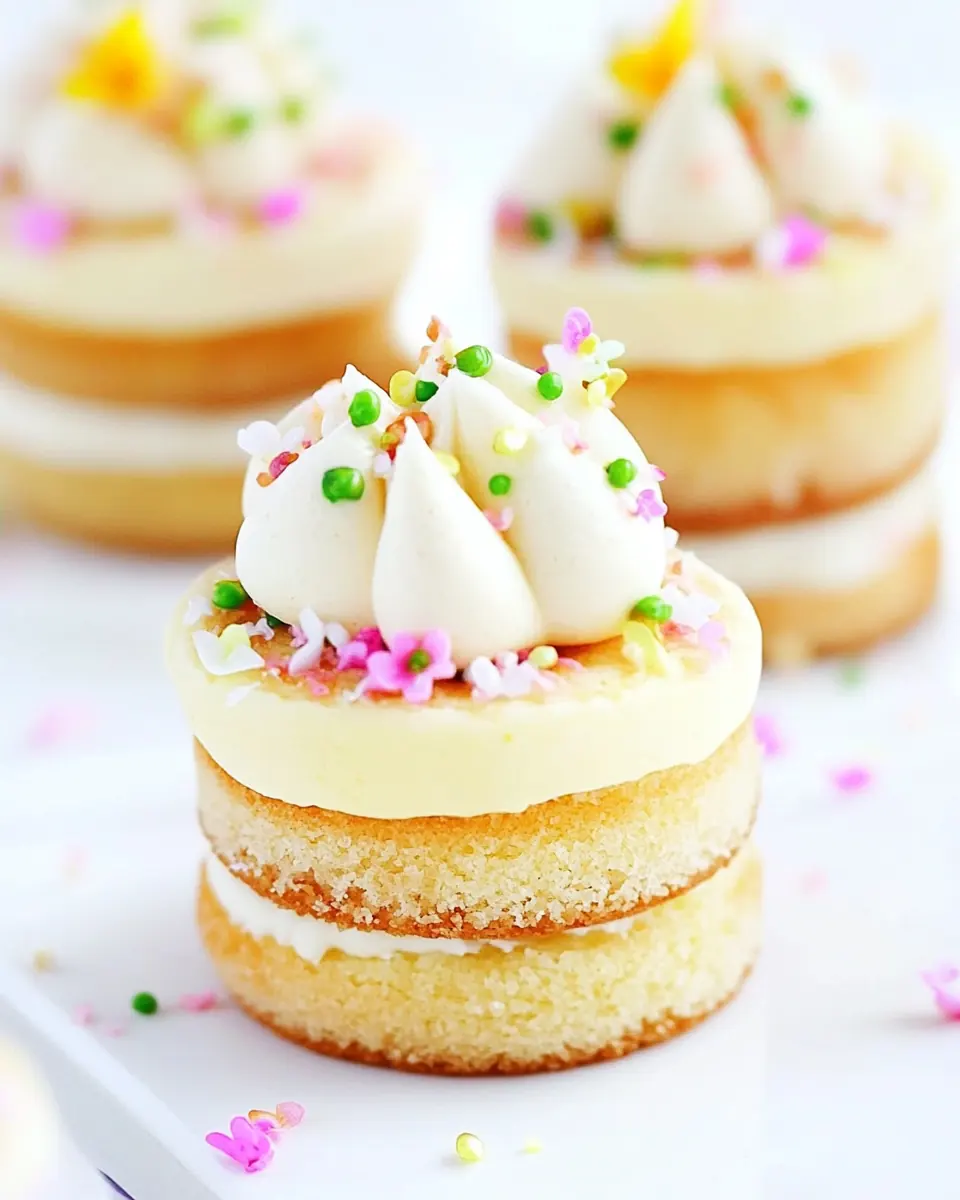
Pipe prepared frosting onto the cut surfaces of 12 of the mini cakes. Place another mini cake directly onto the frosting to create 12 mini layered cakes.: The clean, slightly sweet aroma of trimmed cake is a small reward, and leveling makes stacking and piping much easier. The trimmed scraps are a bonus, perfect for taste testing or remixing. A mistake is cutting too aggressively, which wastes cake and leaves a dense top, so slice carefully and save the pieces for another use.
Top with additional frosting and decorations such as edible Easter grass, pastel sprinkles and Campfire® EggSwirlers.: Piping a neat layer creates a cushion that holds the top layer in place and gives a uniform profile. Pressing the top gently brings the layers together without squeezing out the filling. If you press too hard, the filling will ooze out and the layers will flatten; aim for a gentle set and use consistent pressure when piping to keep each cake identical.
Top with additional frosting and decorations such as edible Easter grass, pastel sprinkles and Campfire® EggSwirlers.: The final decorations add color, texture, and a festive feel; the contrast between smooth frosting and crunchy sprinkles is delightful. Place decorations while the frosting is slightly tacky so they adhere, and step back to admire the presentation. One common mistake is decorating too early under warm conditions, which can cause melting or sliding, so work in a cool area for best results.