Spray a 6 quart or 8 quart slow cooker with spray cooking oil. Place the chuck roast into the slow cooker.: The air carries a faint scent of oil and raw beef at this point, and you should hear a small hiss if the cooker is warm, which tells you it will create a nonstick base for the roast. The reason for using a 6 quart or 8 quart cooker is to allow enough room for the roast to sit without crowding, so the juices can circulate around it. When you nestle the chuck beef roast into the cooker, you may notice a cold, dense weight, and that contrast helps you appreciate how the heat will slowly transform it. One common mistake is using a too small cooker, which can cause uneven cooking or prevent the roast from being adequately surrounded by liquid. If your roast has a thick fat cap, place it fat side up so the fats render down and baste the meat during cooking, enhancing flavor and mouthfeel.
Sprinkle the ranch and brown gravy seasoning over the top of the roast. Slice the butter into pieces. Place the butter pieces on top of the roast. Add the pepperoncini peppers around the roast. Pour the beef broth and the water around the edges of the roast.: At this step the aroma of dried herbs begins to surface, and the butter, once sliced and placed on top, glistens like tiny golden coins that will slowly melt. Layering the seasonings and butter on top encourages gradual flavor infusion, as the melting butter carries the seasoning down into the meat. The pepperoncini peppers contribute a bright, vinegary note that will seep into the cooking liquid, cutting through richness. Pouring the beef broth and water around the edges, rather than over the top, keeps the seasoning in place so it does not wash away, while still supplying moisture to produce a gentle steam. A typical error is stirring everything together immediately, which can cause clumping of the dry mixes; leave them layered so they dissolve slowly and evenly.
Cover the slow cooker and cook on low for 8-10 hours, or until the roast shreds easily. The roast needs to be at least 145 degrees to be safe to eat, but will taste most tender when registering over 190 degrees on a meat thermometer. See notes.: Once the lid is down, you will hear a barely audible simmer and notice a warm, enveloping steam scent as hours pass. This long, low heat is what converts the connective tissue into tender gelatin, producing the silky texture when shredded. I check for doneness by seeing how easily a fork separates the fibers, and by probing with a thermometer aimed for 190 to 195 degrees for a truly tender result. Avoid lifting the lid repeatedly, as that releases heat and stretches the cooking time. Another common pitfall is stopping early when the roast is only partially tender; patience at this stage yields the most rewarding texture.
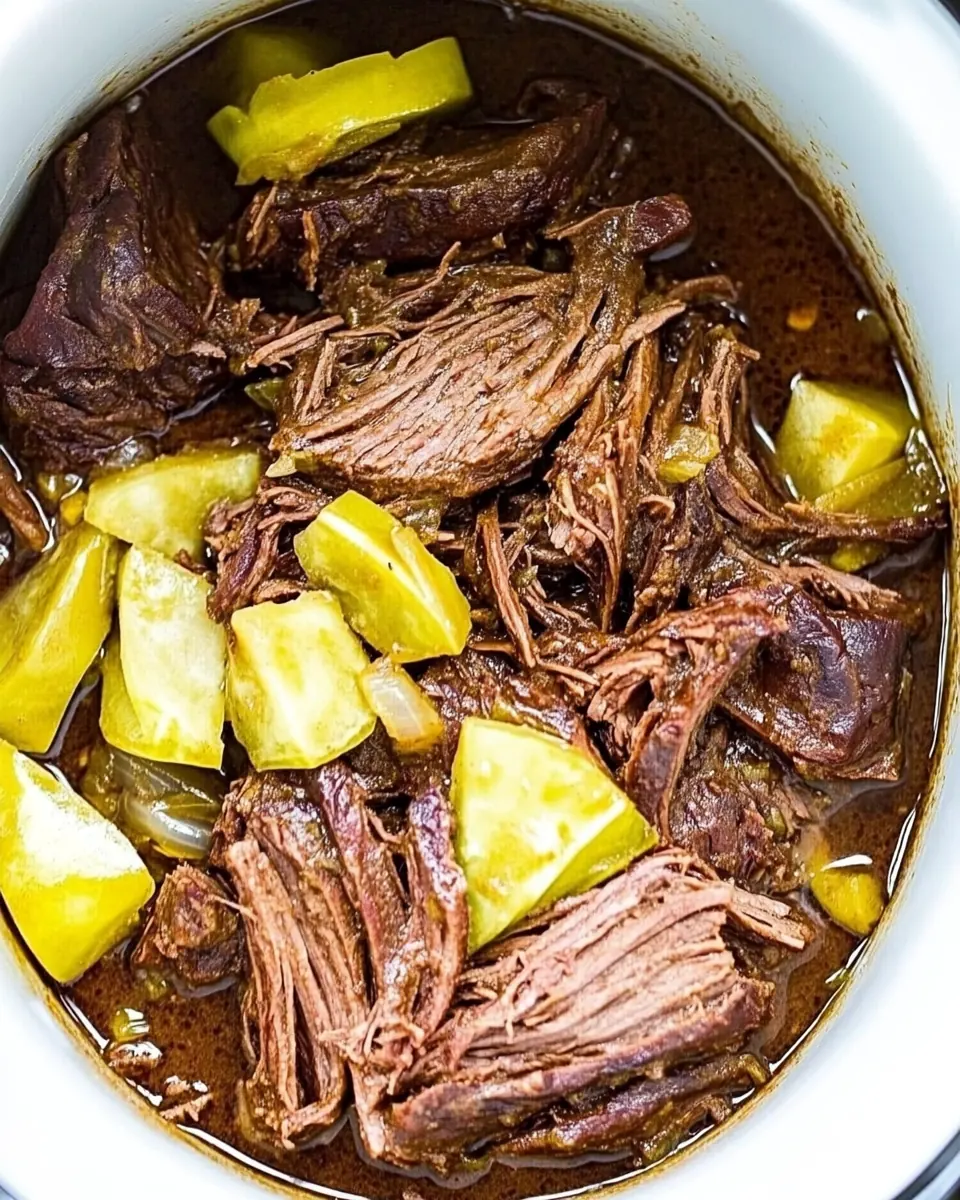
Shred the meat with two forks turned backward in the crock pot, allowing the meat to soak up the juices. Remove any large pieces of fat or chewy connective pieces as you shred.: As you shred, the wet, glossy strands will glisten and steam, releasing a savory perfume of rendered fat and seasoning. Shredding right in the crock pot lets the meat immediately absorb the sauce, making each strand flavorful and moist. Use two forks turned backward to create opposing tines that pull the meat apart gently, creating irregular, bite sized pieces which hold sauce better. While shredding, look for and discard any tough connective bits or very large chunks of fat that did not render, as they can distract from the tenderness. A mistake to avoid is over shredding into mush; aim for distinct strands so the texture remains pleasant.
Serve warm over your favorite mashed potatoes, over egg noodles or on a bun. Top with extra pepperoncini peppers if desired, then enjoy!: The final sensory reward is the steam and the interplay of soft starch with savory, saucy meat, where the glossy juices pool and mingle with the mashed potatoes or noodles. Each bite should deliver a contrast between the creamy base and the richly seasoned, tender shredded chuck beef roast , with the pepperoncini adding pops of bright acidity. If serving on a bun, lightly toast it so it holds up to the juices without becoming soggy. A common error is serving it too cold; always reheat gently until steaming so the sauce becomes syrupy again and coats the meat beautifully.