Go Back
New Potatoes in a Garlic Cream Sauce

New Potatoes in a Garlic Cream Sauce

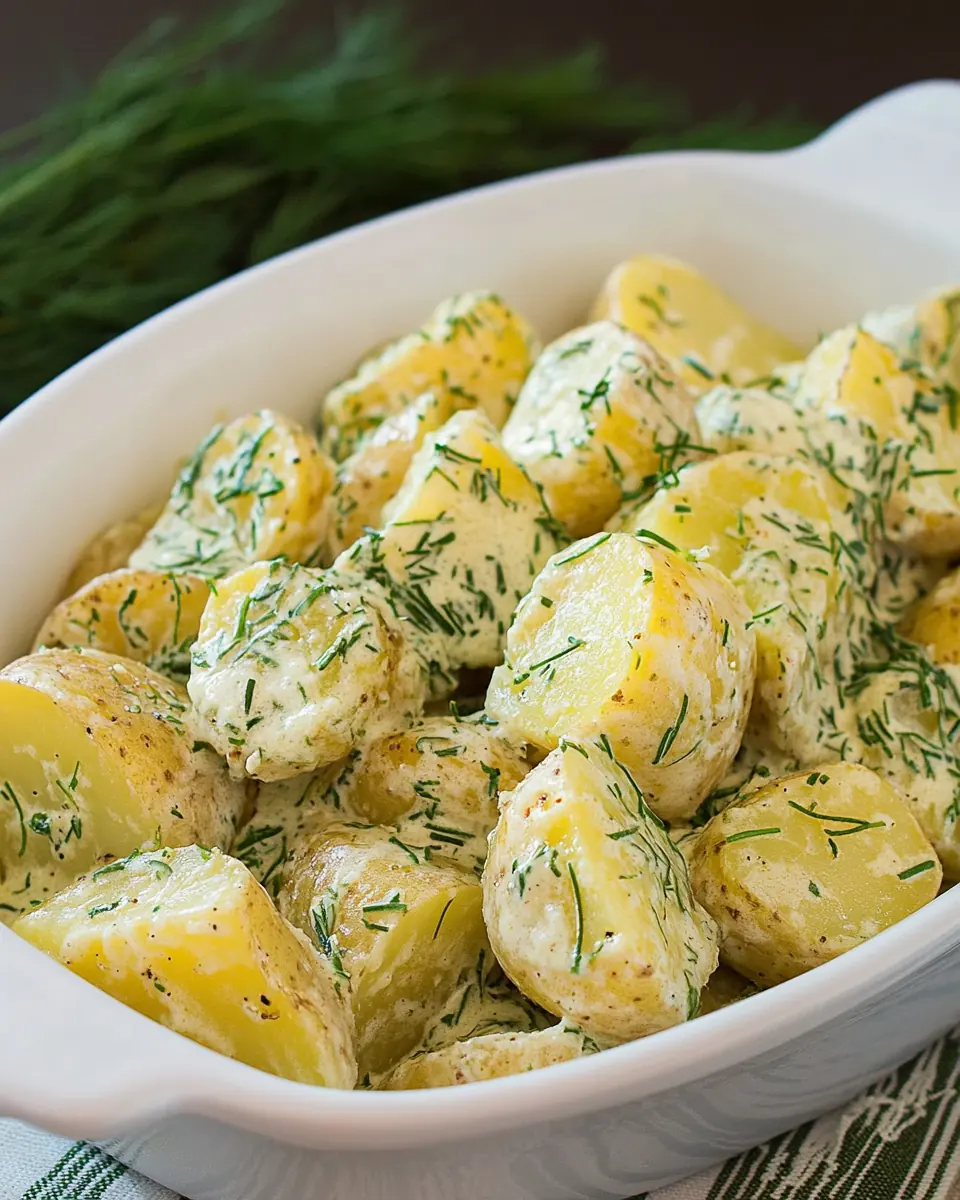
New Potatoes in a Garlic Cream Sauce is a creamy, herb bright side that features tender new potatoes coated in a garlicky cream and finished with fresh dill. This easy weeknight side is both comforting and elegant, perfect for casual dinners or holiday spreads, and comes together quickly for a reliable, crowd pleasing addition to any meal.
Prep Time 15 minutes
Cook Time 17 minutes
Total Time 32 minutes
Servings: 6 servings
Course: Side Dishes
Cuisine: American
Calories: 250

Ingredients
  

  • 2 lbs new potatoes Boil until tender and provide the starchy base for the dish; new potatoes add a creamy, earthy texture when cooked and hold their shape well, making them ideal for soaking up the garlic cream sauce. Slice or halve uniformly to ensure even cooking and absorb flavors from the sauce effectively.
  • 1/2 tbsp sea salt for boiling potatoes + 1/2 tsp more for seasoning the sauce Season the boiling water and the sauce to enhance overall flavor; sea salt used during boiling seasons the potatoes throughout, while the additional half teaspoon balances the cream sauce. Dissolve fully in hot water for even distribution and adjust to taste at the end.
  • 1 tbsp olive oil or butter Sauté or melt to create a flavorful fat for cooking the aromatics; olive oil gives a fruity, lighter profile while butter contributes richness and a silky mouthfeel. Use the chosen fat to sweat the onion and bloom the garlic, which forms the flavor foundation of the sauce.
  • 1/2 medium onion, finely diced Sweat until softened and sweet to build a savory base; finely diced onion releases natural sugars and creates depth in the cream sauce without overpowering the garlic. Cook gently until translucent to avoid browning, which keeps the sauce smooth and balanced.
  • 1 garlic clove, pressed Press and briefly sauté to release pungent, aromatic flavor; a single pressed garlic clove provides bright, savory notes that infuse the cream without becoming harsh. Add near the end of sautéing the onion to prevent burning and to maximize flavor extraction.
  • 3/4 cup heavy whipping cream Simmer to form a rich, velvety sauce; heavy whipping cream creates the luxurious body that coats the potatoes and carries the garlic and dill flavors. Reduce gently over low heat to thicken slightly, stirring to prevent scorching and achieve a smooth consistency.
  • 1/4 cup fresh dill, chopped Chop and finish to add fresh, herbaceous brightness; fresh dill imparts a delicate anise-like flavor that lifts the richness of the cream and complements the potatoes. Stir in at the end off heat to preserve color and fragrance for a fresh, fragrant finish.

Equipment

  • Pot
  • Skillet
  • Colander
  • Knife

Method
 

  1. How to cook new potatoes:: Listen for the gentle shimmer of simmering water and watch the surface ripple as you heat the pot. Putting new potatoes into cold water and bringing it up together ensures even cooking. A reliable sign they are done is when a fork slides in with little resistance and the surface looks plump, not collapsed. Avoid rapid boils that batter the skins and cause split, falling apart pieces.
  2. Scrub each potato clean with a scouring pad (or the abrasive side of a dish sponge). New potatoes have a very thin skin. You don't have to scrub all of it off, just get at least half of it off.: You will feel the roughness of the skin yield as you scrub, and smelling the fresh earthiness is normal. Removing excess dirt keeps the skins pleasant to eat while preserving that thin, tender texture. If you scrub too vigorously you may remove too much skin, losing texture and appearance.
  3. Leave bite-sized potatoes whole and cut larger ones in halves or quarters so they are about 1" thick pieces. Place potatoes in a pot and cover with cold water. Bring to a boil, add 1/2 Tbsp salt and boil for 15-20 minutes or until easily pierced with a fork. Drain potatoes.: The visual cue here is evenly sized pieces bobbing gently in the pot, and the aroma of starchy water as it heats. Cutting to uniform roughly 1 inch pieces ensures consistent tenderness. Overcooking leads to mushy interiors, while undercooking gives a chalky center; test early to avoid either.
  4. In a separate pan, add 1 Tbsp olive oil. Add finely diced onion and sauté over medium heat until golden and soft. Add 1 pressed garlic clove and sauté another minute, stirring constantly. Add 3/4 cup heavy whipping cream and 1/2 tsp salt, or add salt to taste, bring to a boil and let simmer an additional 2 minutes. Stir in 1/4 cup chopped fresh dill then remove from heat and pour sauce over potatoes. Toss potatoes in sauce until evenly coated. Cover with lid to keep warm until ready to serve.: Warmth should kiss the pan and the oil should shimmer lightly, signaling it is ready. This oil cushions the onion as it softens and promotes gentle browning for sweet, caramelized notes. Heating too hot at this point will burn the aromatics, creating bitter off notes.
  5. Add finely diced onion and sauté over medium heat until golden and soft: You will hear a soft sizzle and see the edges of the onion turning translucent, then pale gold. This transformation builds natural sweetness and depth in the sauce. Stir occasionally to ensure even coloring, and avoid high heat which can cause uneven charring.
  6. Add 1 pressed garlic clove and sauté another minute, stirring constantly: The scent should shift, becoming warm and pungent but not sharp, a fragrant lift to the pan. Keep stirring so the small garlic pieces do not stick and brown, which makes them bitter. If you see dark flecks form, remove the pan from heat to cool slightly before continuing.
  7. Add 3/4 cup heavy whipping cream and 1/2 tsp salt, or add salt to taste, bring to a boil and let simmer an additional 2 minutes: The cream will hiss slightly as it hits the pan and then smooth into a glossy sauce; small, gentle bubbles along the edge indicate a proper simmer. Simmering concentrates and rounds the flavors, but letting it boil hard can cause separation. Reduce heat if you see the sauce breaking or sputtering.
  8. Stir in 1/4 cup chopped fresh dill then remove from heat and pour sauce over potatoes: The bright green flecks of dill will release a fresh, herbaceous perfume as you stir them in. Adding herbs off heat preserves their volatile aromatics and keeps their color vibrant. If you cook them too long the dill will fade to a duller tone and lose aroma.
  9. Toss potatoes in sauce until evenly coated: You should see each new potato glistening, the sauce clinging to nooks and skin. Toss gently so pieces keep their shape and the sauce distributes evenly. Over handling can break the potatoes and make the dish look mashed rather than composed.
  10. Cover with lid to keep warm until ready to serve: A soft steam will rise when you lift the lid, keeping the dish tender and melding flavors. Holding it briefly like this helps the sauce settle onto the potatoes. Avoid leaving it covered for too long, which can make the skins soggy and dilute the fresh herb aroma.
Notes

  • Choose your fat Swap between olive oil and butter to control richness. Olive oil gives a lighter, slightly fruity base while butter adds a silky, toasted flavor. If you prefer a middle ground, use half oil and half butter. Keep the pan at medium heat to avoid burning the dairy.
  • Adjust creaminess Reduce or increase the amount of cream to change how glossy the sauce is. Less cream produces a thicker coating, while more creates a looser dressing for the potatoes. Simmer gently to concentrate without splitting the sauce.
  • Control garlic intensity Pressing the garlic releases more pungency than slicing; if you want a gentler note, mince or lightly smash instead. Add the garlic later in the sauté to keep it bright. Avoid dark browning which can introduce bitterness.
  • Herb swaps If you cannot find fresh dill, try substituting with a mild herb like chives for a green note, though the character will shift. Add the herb off heat to preserve aroma. Be careful with strong herbs which can overpower the delicate potato flavor.
  • Finish with acid A tiny squeeze of lemon juice or a splash of vinegar at the end can brighten the sauce, balancing the cream. Add sparingly and taste as you go, because a little goes a long way.
  • Make ahead You can cook the potatoes and sauce separately, then combine and gently reheat. When reheating, sauté in a pan to refresh the exterior texture rather than microwaving, which can soften skins too much.