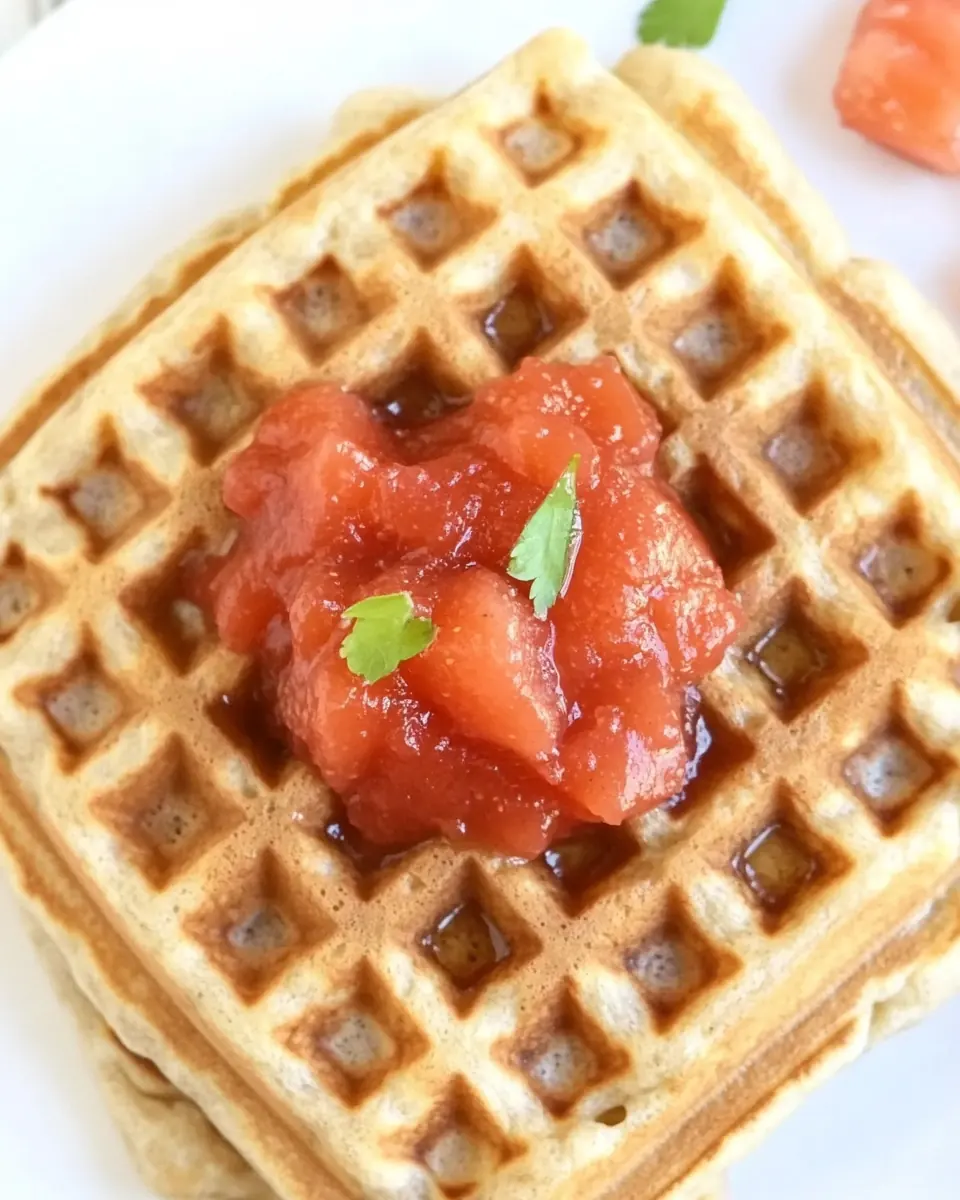
To make the Rhubarb Compote: Place the diced fruit in a medium saucepan with the sugar and water. Bring to a boil, reduce the heat to medium-low and simmer uncovered for 20 minutes, stirring occasionally, or until the fruit is soft and the mixture has thickened.: At the start you will hear the soft clink of fruit hitting the pan and then the steady bubbling as the mixture comes to a boil, releasing tart, green aromatics that brighten the kitchen. The sugar will dissolve and draw juices out of the rhubarb , transforming the texture from firm chunks to tender pieces suspended in syrup. Stir occasionally to prevent sticking along the bottom, especially as the heat concentrates the sugars and the mixture can cling and scorch. Why this matters, the slow reduction concentrates flavor and creates that glossy jam like coating you want on waffles, rather than a watery condiment. Troubleshooting tip, if the compote is too thin after twenty minutes, increase the heat slightly to reduce faster, but watch closely so it does not burn.
To make the Vanilla Cream: Place the chilled whipping cream and sugar in a medium-sized mixing bowl and beat on high until it begins to thicken. Add the vanilla paste and continue to beat until stiff peaks form. *See NOTE: Listen for the change from a vigorous boil to gentle simmering, a softer bubbling that signals you have reduced the heat correctly; this gentler simmer lets the fruit break down without evaporating all moisture at once. Visually, you will see the pieces become translucent and the syrup develop a sheen, coating the spoon when you lift it. The simmer also allows flavors to meld so the sugar balances the rhubarb acidity rather than overpowering it. Common mistake, covering the pan traps steam and prevents reduction, yielding a runny compote instead of a jam like finish.
To make the Oat & Buckwheat Waffles: Preheat your waffle iron. Combine the dry ingredients in a bowl. Set aside. In a large mixing bowl, whisk together the eggs, honey, vanilla paste, butter and coconut oil until combined. Whisk in the buttermilk. Work quickly to prevent the coconut oil from solidifying. Add the dry mixture to the wet mixture in two batches, whisking just until combined (do not over-mix). Let the batter sit for 10 minutes to hydrate the flour. If the mixture is too thick add a little more buttermilk or milk.: As you beat the chilled heavy whipping cream , you will hear a change in sound from liquid slapping to a denser, aerated swoosh as air integrates into the cream. The aroma will brighten slightly with the sugar dissolving. This initial thickening signals the transition to soft peaks, and stopping too soon will leave a floppy topping that weeps. Why this matters, because properly aerated cream adds lightness against the warm waffles and tart compote. Troubleshooting, warm bowls or utensils prevent the cream from whipping fully, so keep everything cold.
Follow the instructions on your waffle maker and cook until the waffles are golden brown. To maintain their outer crispiness, serve immediately. (While the remaining waffles are being cooked you can keep the finished ones, single layer, in the oven at 200 degrees F.): Now you will see glossy peaks that hold their shape, the surface capturing tiny vanilla flecks from the vanilla bean paste . The texture becomes dense and stable, with little movement when the whisk is lifted. This is the moment to stop, as overwhipping turns the cream grainy and eventually into butter. The reason for adding vanilla at this stage is to disperse flavor without reducing volume, ensuring each spoonful tastes floral and sweet. A frequent error is whipping past stiff peaks, so check frequently.
Serve the waffles whole or cut into segments topped with some rhubarb compote and a vanilla cream. If desired, garnish with a sprig of fresh mint. NOTE: Feel free to omit the rhubarb compote and cream. These are some of our favorite go-to waffles and they're also perfect served with your favorite syrup.: Preheating is audible as the appliance clicks and warms; a properly hot iron ensures immediate sizzle when batter hits the plates, producing crisp edges. Visually the plates should be uniformly hot, and a light test spray or a small dab of batter will steam and set quickly. Doing this ensures you do not get soggy waffles from a lukewarm surface. Mistake to avoid, adding batter to an underheated iron which yields flat, greasy waffles.
Combine the dry ingredients in a bowl Set aside: As you whisk the oat flour , buckwheat flour , baking powder , baking soda , salt , and cinnamon , you create an even distribution of leaveners so every portion of batter rises uniformly. You will notice the mixture lighten and the aroma of cinnamon disperse. This step ensures pockets of leavener do not create uneven lift, and failing to sift or combine well can make the waffles bubble unpredictably.
In a large mixing bowl whisk together the eggs honey vanilla paste butter and coconut oil until combined: The bowl will have a glossy sheen as the eggs emulsify with the melted butter and coconut oil , and the honey adds viscosity that helps suspend dry particles. Whisking creates a uniform matrix so that fat coats flour particles, which leads to a tender interior. If you rush and the fats are too hot, they can cook the eggs; let melted fats cool slightly first to prevent curdling.
Whisk in the buttermilk Work quickly to prevent the coconut oil from solidifying: Pouring in the room temperature buttermilk loosens the mixture and introduces acidity that will react with the baking soda , giving lift. You should hear a thinner, more fluid sound while whisking and see the batter become homogeneous. Because coconut oil can solidify as it cools, incorporate it quickly to avoid lumps. If the oil starts to congeal, a short warm bath of the bowl can help, but avoid overheating.
Add the dry mixture to the wet mixture in two batches whisking just until combined do not over mix: Adding in two stages allows you to integrate the flours without overworking the batter, preserving tenderness; you will see streaks disappear as you fold, and a few small lumps are fine. The goal is a cohesive batter that still breathes, because over mixing develops grainier texture and tougher gluten like structure. Letting the batter rest is key, and skipping the rest often results in denser waffles.
Let the batter sit for 10 minutes to hydrate the flour If the mixture is too thick add a little more buttermilk or milk: During this rest you will observe the batter thicken slightly as the oat flour absorbs liquid, creating a smoother mouthfeel. This pause improves texture and allows the flours to bloom, which yields lighter waffles. If the batter tightens too much, a splash of buttermilk loosens it, but be cautious to avoid a runny batter that will not set properly in the iron.
Follow the instructions on your waffle maker and cook until the waffles are golden brown: When batter meets the hot plates you should hear an energetic sizzle and soon see steam gently rising; the waffles will release when the exterior is set and a golden brown tone appears. Cooking to the right color ensures crispness and fully developed flavor from the Maillard reaction. Avoid opening the iron too early, which can tear the waffle and yield uneven cooking.
To maintain their outer crispiness serve immediately While the remaining waffles are being cooked you can keep the finished ones single layer in the oven at 200 degrees F: The oven method keeps waffles warm and helps preserve the crisp exterior by removing moisture quickly. The crispness will relax if you stack waffles, so a single layer on a rack or sheet keeps air circulating. A common error is to cover the waffles, which traps steam and softens the crust.
Serve the waffles whole or cut into segments topped with some rhubarb compote and a vanilla cream If desired garnish with a sprig of fresh mint: The final moment brings together temperature and texture, the warm waffle against cool whipped vanilla cream and tangy rhubarb creating contrast on the palate. Arrange portions so each plate gets a balance of waffle to compote to cream. Avoid drowning the waffles in compote, which will mask the nutty waffle notes.
NOTE Feel free to omit the rhubarb compote and cream These are some of our favorite go to waffles and they are also perfect served with your favorite syrup: This flexibility is part of the recipe charm; you will still get a deliciously textured waffle if you choose simplicity. If skipping the toppings, consider a thin brushing of melted butter and a light drizzle of syrup to highlight the grainy flavors. The mistake people make is expecting identical flavor without the compote, so adjust your expectations accordingly.