Preheat the oven to 350 degrees F. Set out a 9 X 5 loaf pan. Cut a strip of parchment paper 9 inches wide. Then fold it to fit down into the bottom and long edges of the pan. Spray or grease the pan and paper.: The oven warming fills the kitchen with heat and faint caramel notes, creating the right environment for even rise and browning; you should feel warmth from the oven door and see the interior glow when you open it. Preheating is crucial because a cold oven will delay rise and can produce a dense loaf. One common mistake is not allowing full preheat time, which leads to uneven texture.
Smash the bananas and measure out 1 1/2 cups.: The pan size governs final loaf height and baking time, and a proper 9 X 5 pan yields a classic shape with a tender center and nicely caramelized edges. Greasing and lining with parchment ensures easy release and clean slices. If you skip the parchment, the loaf may stick to the sides when cooling, making removal tricky.
Set out a large mixing bowl. Add the flour, oats, brown sugar, apple pie spice, salt, baking powder, and baking soda. Mix well. Then mix in the mashed banana, melted butter, eggs, milk, and vanilla extract. Mix until smooth.: The parchment creates a sling that lifts the loaf without damage, and as you press it into the pan the edges should snugly follow the pan sides. This small step prevents tearing and keeps slicing simple after cooling. Avoid folding the paper too tightly, which can create creases that imprint the loaf.
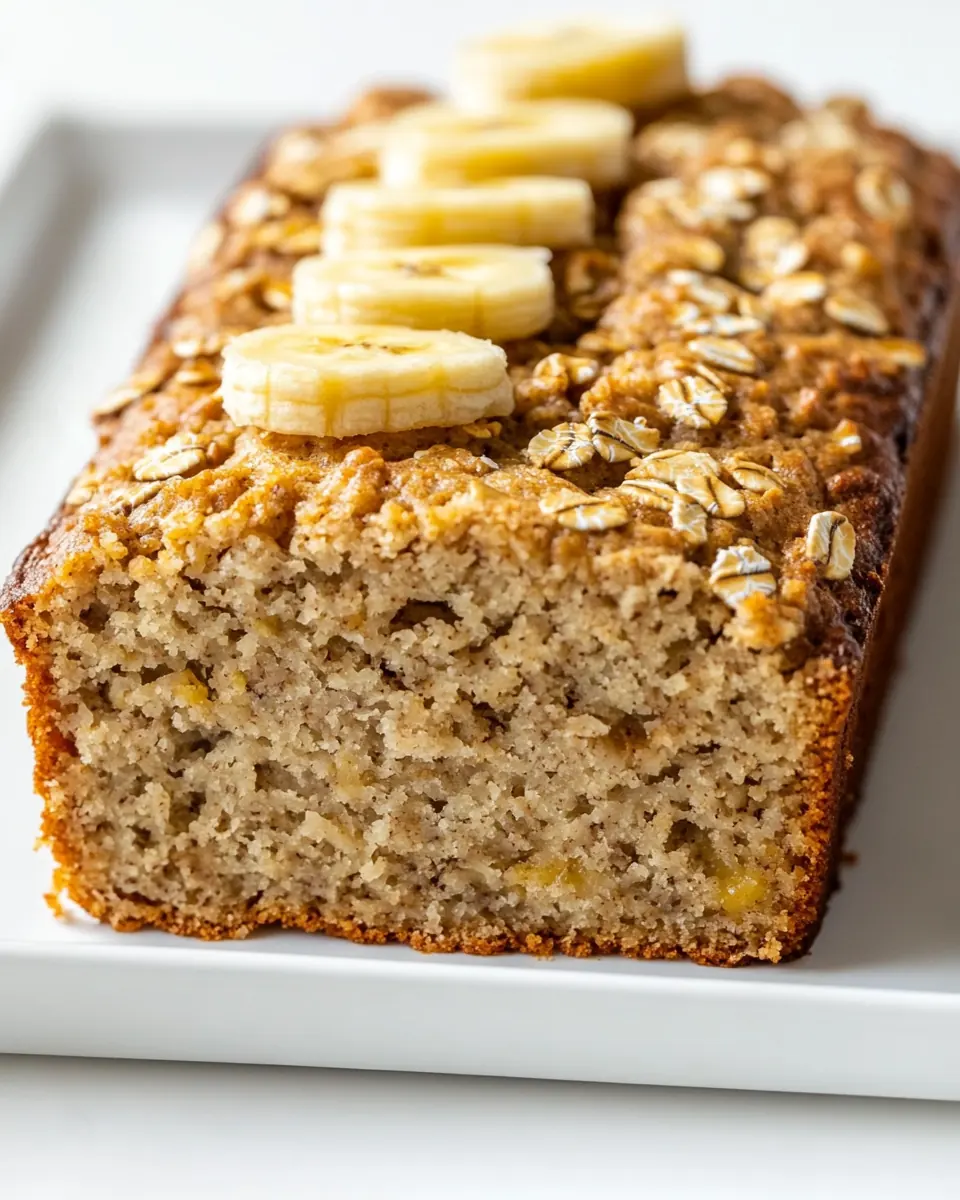
Pour or scoop the batter into the prepared pan. Sprinkle the top with extra oats if desired. Then bake for 45-60 minutes, until a toothpick inserted deep into the center comes out clean.: Folding the parchment ensures full coverage and a clean edge for lifting, and you will notice how the paper cushions the batter as it expands. Proper placement helps the crust form evenly along the sides. A frequent oversight is leaving gaps, which can cause sticking at the corners.
Allow the bread to rest in the pan for 15 minutes. Then lift it out by the edges of the parchment paper. Wait until the loaf is fully cooled to cut.: A light coating of oil where the parchment meets the pan prevents slippage and guarantees the loaf will glide out; you will hear a faint sizzle when the batter hits the pan if the butter is warm, which is reassuring. Greasing also encourages a slightly crisper outer edge. Using too much oil can cause pooling and greasy edges.
Smash the bananas and measure out 1 1/2 cups: Mashing until fairly smooth releases banana fragrance and moisture, and the aroma should be prominently sweet and almost caramel like. Measuring ensures the batter has predictable moisture; too much banana can make the loaf dense. A common mistake is under-mashing, which creates uneven pockets of banana and irregular texture.
Set out a large mixing bowl: Having a roomy bowl gives you freedom to mix without spilling, and it helps you combine dry ingredients thoroughly before the wet additions. The bowl should be large enough that you can whisk vigorously, which incorporates air and lightens the batter. Using a bowl that is too small makes mixing awkward and can lead to uneven incorporation.
Add the flour, oats, brown sugar, apple pie spice, salt, baking powder, and baking soda: When these dry elements come together you will notice a warmly spiced, grainy aroma from the oats and brown sugar; whisking them ensures even distribution so the leaveners activate uniformly. Even mixing prevents pockets of soda or powder, which can create odd tasting bits. Forgetting to sift or whisk can leave clumps that bake into dense spots.
Mix well: Thoroughly combining the dry ingredients gives the loaf structure and ensures the spice and leaveners are spread evenly, so the aroma stays consistent through each slice. A well mixed dry base supports a predictable rise in the oven. Overmixing at this stage is not a problem, but later overworking with wet ingredients can toughen the crumb.
Then mix in the mashed banana, melted butter, eggs, milk, and vanilla extract: As the wet ingredients meet the dry, the batter will loosen and emit a rich, sweet fragrance; fold gently to maintain tenderness while ensuring everything is homogenous. The melted butter and eggs add silkiness, while the milk adjusts the batter to a pourable thickness. A common mistake is beating vigorously, which can develop gluten and yield a tougher loaf.
Mix until smooth: Smooth batter means no streaks of flour, and it should pour slowly from a spoon, glossy and thick. This visual cue tells you the ingredients are harmonized and the loaf will rise evenly. If the batter seems too thick, a splash of milk can help, but avoid thinning it too much. Overmixing here will tighten the crumb, so stop as soon as smooth.
Pour or scoop the batter into the prepared pan: Filling the pan evenly allows the loaf to bake into a symmetrical dome and ensures consistent baking; you will see the batter settle and might tap the pan lightly to release trapped air bubbles. Evenness prevents one side from overbrowning. Overfilling can cause batter to spill and bake unevenly.
Sprinkle the top with extra oats if desired: The oats add a rustic finish and a hint of chew on the crust, and they toast during baking to give nutty accents. I often pat them gently so they adhere and do not blow off in the oven. Skip this only if you want a smooth top, as the oats can brown faster than the loaf interior.
Then bake for 45 to 60 minutes, until a toothpick inserted deep into the center comes out clean: As the loaf bakes you will notice a warm, spiced aroma and the top turning a deep golden brown; the toothpick test is the reliable cue that the interior is set. Ovens vary, so start checking at 45 minutes to avoid overbaking. A common misstep is assuming time on the recipe is exact rather than using visual and toothpick checks.
Allow the bread to rest in the pan for 15 minutes: Resting lets the crumb set so the loaf holds together when removed, and during this time steam redistributes making slicing cleaner later. You will feel the loaf firm up slightly as it cools in the pan. Rushing to remove it while very hot can cause the loaf to break apart.
Then lift it out by the edges of the parchment paper: Using the parchment sling preserves the loaf shape and makes it easy to transfer to a cooling rack; the bottom will have a gentle crust that you will want to protect. Lift carefully to avoid jostling and tearing. If you try to pry the loaf out without parchment, it may stick and crumble.
Wait until the loaf is fully cooled to cut: Cooling completes the bake, and the crumb firms to the right texture for slicing; cutting too early can produce gummy slices that fall apart. The loaf should be warm but not hot, and the fragrance will be most inviting at this stage. A mistake I see often is impatient slicing, which ruins the presentation and makes crumbs scatter.