In a deep skillet, cook the pasta until al dente (according to package instructions). Once cooked, drain the pasta and set it aside.: The kitchen will fill with a toasty wheat scent as the water boils and the pasta cooks; aim for a slightly firm core when you bite into the penne pasta because it will continue to soften when combined with the sauce. A clear visual cue is a plump tube with a tiny opaque dot at the center if you bite one open. Drain promptly to stop cooking, because leaving the pasta in hot water will turn it limp. A common mistake is overcooking, which results in mushy pasta that cannot hold sauce properly.
Add 1 tablespoon of olive oil to the pan and turn the heat to medium. Add the chicken breast, salt, pepper, and Italian seasoning. Stir to combine.: You will hear a gentle sizzle as the chicken hits the pan, and that sound signals flavor building through browning. The surface should start to show golden edges after a couple of minutes; this Maillard reaction adds savory complexity. Stirring helps coat each piece with the seasonings, ensuring uniform flavor. Avoid crowding the skillet, because overcrowding causes steaming rather than browning, which reduces the depth of taste.
Cook until the chicken is golden and no longer pink, about 5-7 minutes. Remove the cooked chicken from the pan and set aside.: As you cook, watch for a warm, roasted aroma and a visual change to opaque, firm flesh; these cues indicate doneness. The outer parts should be golden while the inside is fully cooked. Use a fork to test the thickest piece, and cut into one if you are unsure. One pitfall is relying solely on color at the surface; thicker pieces may need a little longer to finish through, so move pieces around to promote even cooking.
Add the remaining olive oil and the tomatoes. Reduce the heat to medium-low and simmer until the tomatoes pop and turn a darker color, about 5 minutes. Stir in the garlic and cook for another minute.: You will notice the tomatoes softening and releasing a sweet, tangy steam as they heat; when their skins begin to wrinkle or split, they are ready. The reduced heat preserves the bright tomato flavor while coaxing sweetness out slowly. When you add the garlic , the aroma becomes immediately fragrant and savory. Be mindful not to burn the garlic , which can happen fast and will impart bitterness, so lower the heat if it starts to brown too quickly.
Pour in the broth and pesto. Stir and simmer for 6-8 minutes, or until the chicken broth has reduced by half.: As the chicken broth reduces, it concentrates flavor and helps the pesto emulsify into a glossy sauce that clings to the pasta. You will see the liquid thicken and cling to the spoon, and the aroma will take on a herbaceous, savory complexity. Stirring periodically prevents sticking and helps the sauce develop evenly. A frequent error is rushing this stage, which can leave the sauce thin and underflavored, so allow gentle simmering to do the work.
Stir in the Parmesan cheese and let it melt.: Once the parmesan meets the warm sauce, it dissolves and creates a silky mouthfeel, enriching the texture. Look for the sauce to become slightly creamier and opaque as the cheese integrates. If the heat is too high, the cheese can separate into oily pockets, so lower the flame if you notice separation beginning. Stir gently to encourage a smooth emulsion.
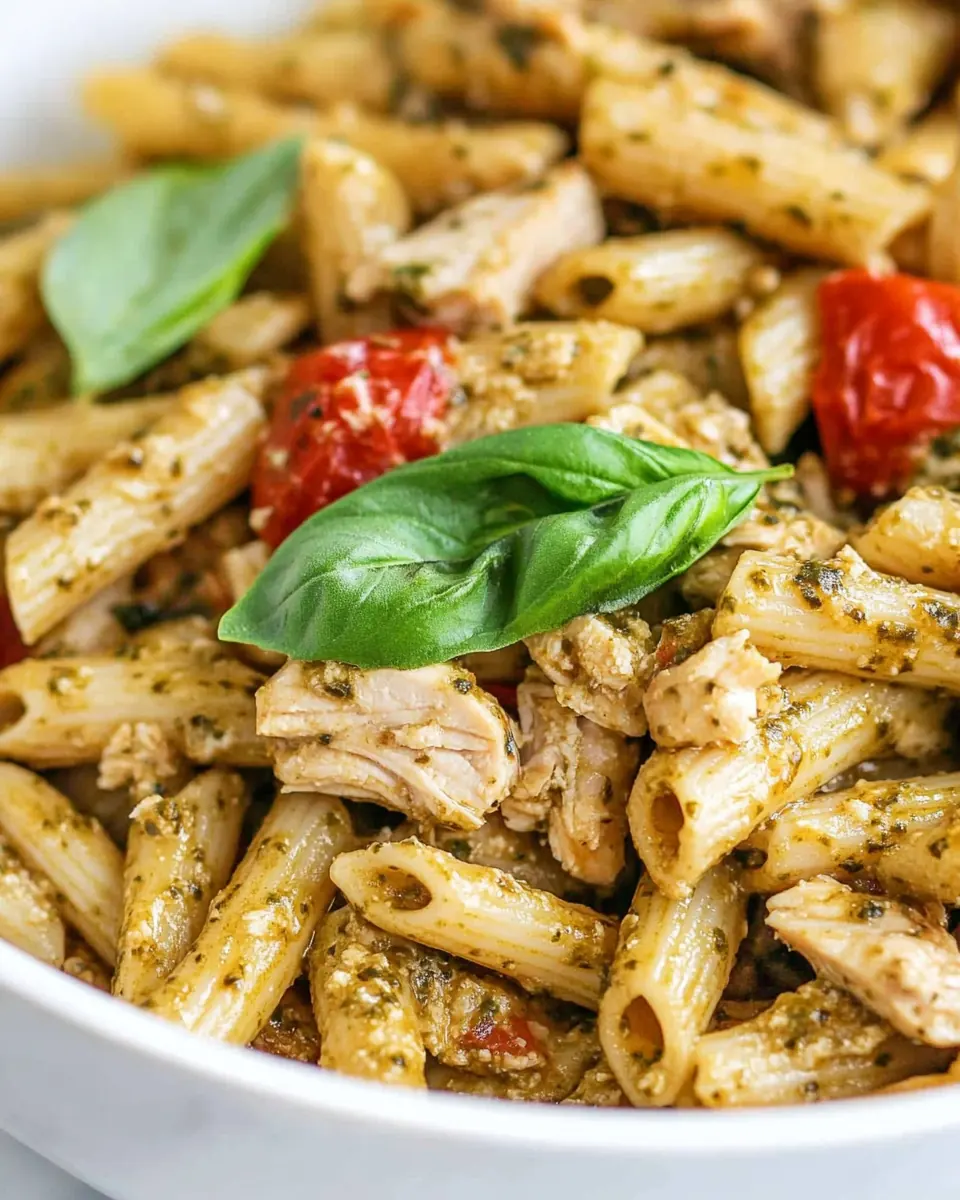
Return the chicken to the pan and stir to combine. Add the pasta and stir to combine. Serve with fresh basil and toasted baguette.: When the chicken rejoins the sauce, its juices mingle with the reduced broth and pesto , deepening the overall flavor. Tossing in the drained penne pasta allows it to absorb the sauce, creating a cohesive bite where every piece is coated. Visually, the dish should look glossy with flecks of green from the pesto and bright red from the cherry tomatoes . A simple troubleshooting point is to check seasoning after combining, because the parmesan and broth can change the salt level. Serve with torn fresh basil on top for a final fresh lift.