One Pot Chicken Pesto Pasta
One Pot Chicken Pesto Pasta is the kind of weeknight comfort that feels like a warm kitchen hug, and I still remember the first time I tossed everything together after a long day and realized dinner could be that effortless. Growing up, I loved meals that let me do more sitting and less babysitting at the stove, and this dish quickly became my go to when life was busy but I still wanted big flavor. The first bite, with the herby pesto and tender chicken, made me rethink how simple pantry staples can transform into something memorable.
That evening I served it straight from the skillet, and watching friends gather around, scraping the sauce with warm crusty bread, turned a routine dinner into a small celebration. Over time I adjusted the technique, learning tiny tricks about timing and texture, and now I reach for this recipe whenever I need something fast yet impressive. The way the parmesan melts into the sauce, coating the penne pasta in a silky sheen, is downright reassuring.
Every cook has a few reliable one pan dinners that always land well, and this One Pot Chicken Pesto Pasta sits near the top of my list. It’s flexible without losing its identity, so you can stay faithful to the simple method or make modest tweaks depending on what’s in your fridge. I love how it feels both homey and a little elevated, a dish you can make any night and still be proud to serve. That balance is exactly why it’s such a weekday favorite for me.
Recipe Snapshot
30 mins
10 mins
20 mins
Medium
450 kcal
Italian
Gluten-Free, Paleo
Dinner
Cast Iron Skillet (or another non stick skillet)
Why Try This One Pot Chicken Pesto Pasta
I love how fast it comes together
When I am short on time, I value recipes that move quickly without sacrificing taste. This One Pot Chicken Pesto Pasta cooks up in about the same time it takes to sort mail, and I appreciate that I can get dinner on the table in under half an hour. The minimal active time means I can check on other tasks, set the table, or relax while the flavors develop.
The flavor is concentrated and bright
I always notice how the pesto maintains a bright herbal punch, even after simmering with the chicken broth. The acid from the tomatoes balances the richness of the parmesan, creating layers of flavor in every forkful. It feels fresh, without being fussy, and that contrast is what keeps me making it again and again.
One pan means less cleanup
I cannot overstate how much I value the tidy up. Using a single deep skillet reduces dishes and keeps the flavors concentrated. I like that the pasta soaks up the sauce right in the pan, giving a more cohesive texture than mixing in a separate bowl. When I serve it, I often catch myself savoring the last spoonful straight from the pan, because it has such comforting continuity.
Flexible and forgiving
This recipe is welcoming to small improvisations. I have tweaked quantities, adjusted seasoning, and even bulked it up when guests stop by. The structure is forgiving enough that slight timing differences or ingredient swaps rarely break the dish. That kind of reliability encourages me to reach for it on busy nights or when I am feeding picky eaters.
Great for everyday and casual entertaining
I often bring this skillet to the table when friends stay for dinner. It looks inviting and feels communal, encouraging conversation and casual serving. It’s just the right mix of simple technique and satisfying flavor, which makes it a recipe I trust for both routine dinners and easy gatherings.
What Goes Into One Pot Chicken Pesto Pasta
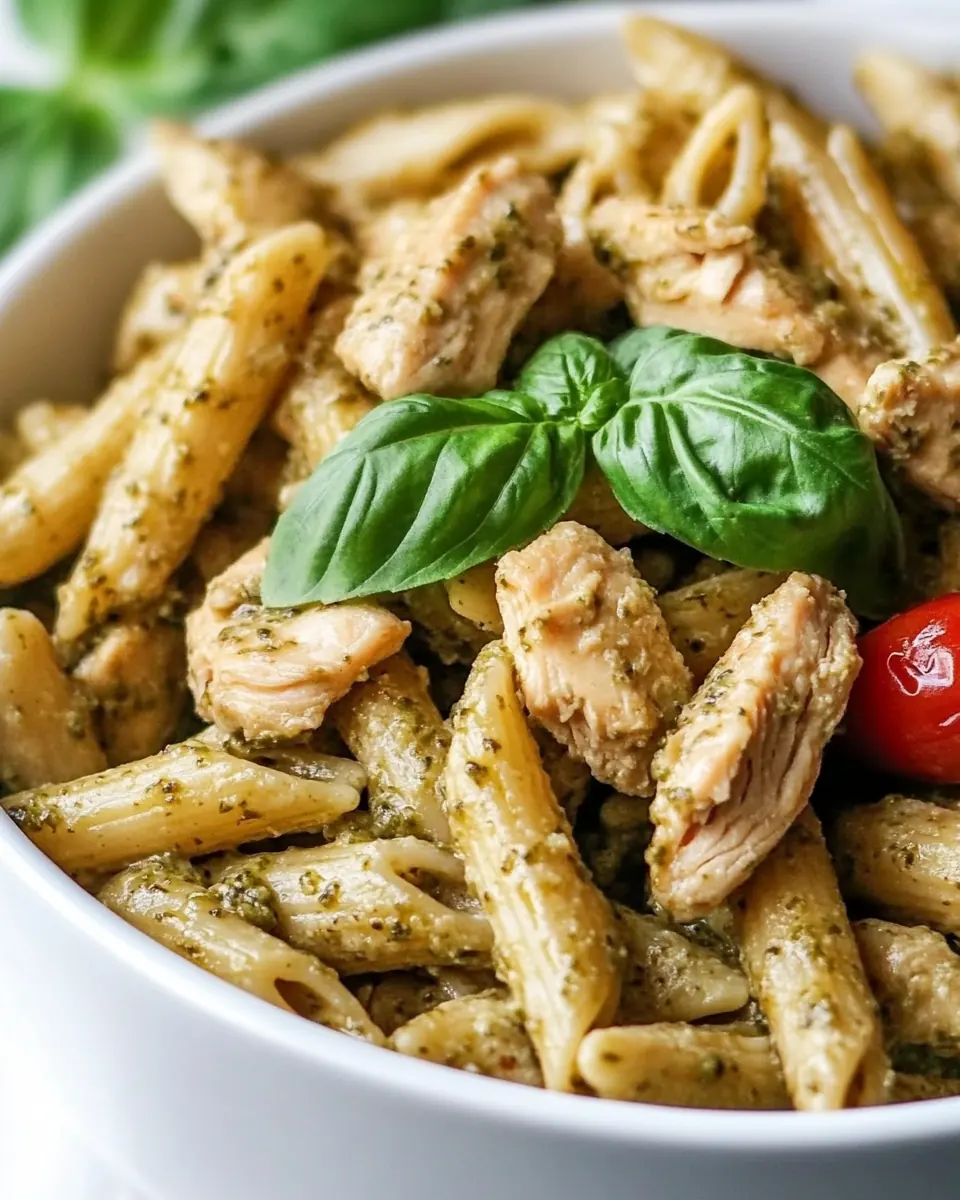
There is a simple philosophy behind these ingredients, they each play a clear role. The penne pasta provides tooth and structure, the chicken brings protein and savor, while the pesto and parmesan layer herbal and salty richness. The tomatoes and garlic add bright notes that keep the sauce from feeling heavy, and the chicken broth ties everything together, creating a silky coating for the pasta.
- 8 ounces dry penne pasta: Provide a sturdy pasta base that soaks up sauce and absorbs flavors; cook until al dente to maintain texture in the one-pot method. Measure precisely to keep pasta-to-sauce balance and prevent a mushy final dish.
- 2 tablespoons olive oil: Add a fruity, silky fat that helps brown chicken and bloom herbs and spices; warm gently to release flavor without smoking. Use as the cooking medium for aromatics so other ingredients carry richness.
- 1 pound boneless skinless chicken breasts: Offer lean protein that becomes the main savory component; slice or cube for even cooking in the single-pot preparation. Season and sear to develop a golden crust that contributes depth to the sauce.
- 1 teaspoon kosher salt: Season savory dishes with clean, bright salinity that enhances other flavors without overpowering them; distribute evenly for balanced seasoning. Adjust amount to taste, remembering residual salt in cheese and broth.
- 1 teaspoon ground black pepper: Provide sharp, warming heat and depth to seasonings; crack freshly for best aromatic impact. Use sparingly to elevate the overall savory profile without dominating delicate pesto and tomato notes.
- 1 teaspoon Italian seasoning: Introduce a fragrant herb blend that complements tomato, garlic, and basil flavors; sprinkle before or during cooking to infuse the dish. Choose a balanced mix to reinforce Italian flavor without adding extra salt.
- 1 cup cherry tomatoes: Bring bursts of juicy sweetness and acidity that cut through richness and add texture contrast; halve or leave whole depending on preference. Add near the end to retain shape and freshness while contributing fresh flavor.
- 3 cloves garlic: Supply pungent, aromatic depth that forms the backbone of savory sauces; mince or slice to distribute flavor quickly through the pot. Sauté briefly to mellow sharpness and develop a sweeter, more rounded garlic character.
- 1/2 cup low-sodium chicken broth: Contribute a low-sodium liquid that builds the sauce and helps cook the pasta in the pot; adjust quantity for desired sauciness. Use reduced-sodium broth to control overall salt while providing savory complexity.
- 1/2 cup basil pesto: Deliver concentrated herbaceous and nutty flavor that forms the primary sauce; stir through cooked pasta and chicken to evenly coat. Use a quality pesto for bright basil flavor and a creamy texture without extra effort.
- 1/2 cup freshly grated Parmesan cheese: Add a salty, umami-rich finishing element that rounds and enriches the sauce; grate fresh for best melting and integration. Sprinkle at the end to enhance creaminess and provide a nutty, savory note to each bite.
- fresh basil: Provide fresh, aromatic herb garnish that brightens and lifts the finished dish; tear leaves to release essential oils. Scatter over the plated pasta to add color, fragrance, and a final herbaceous accent.
Directions for One Pot Chicken Pesto Pasta
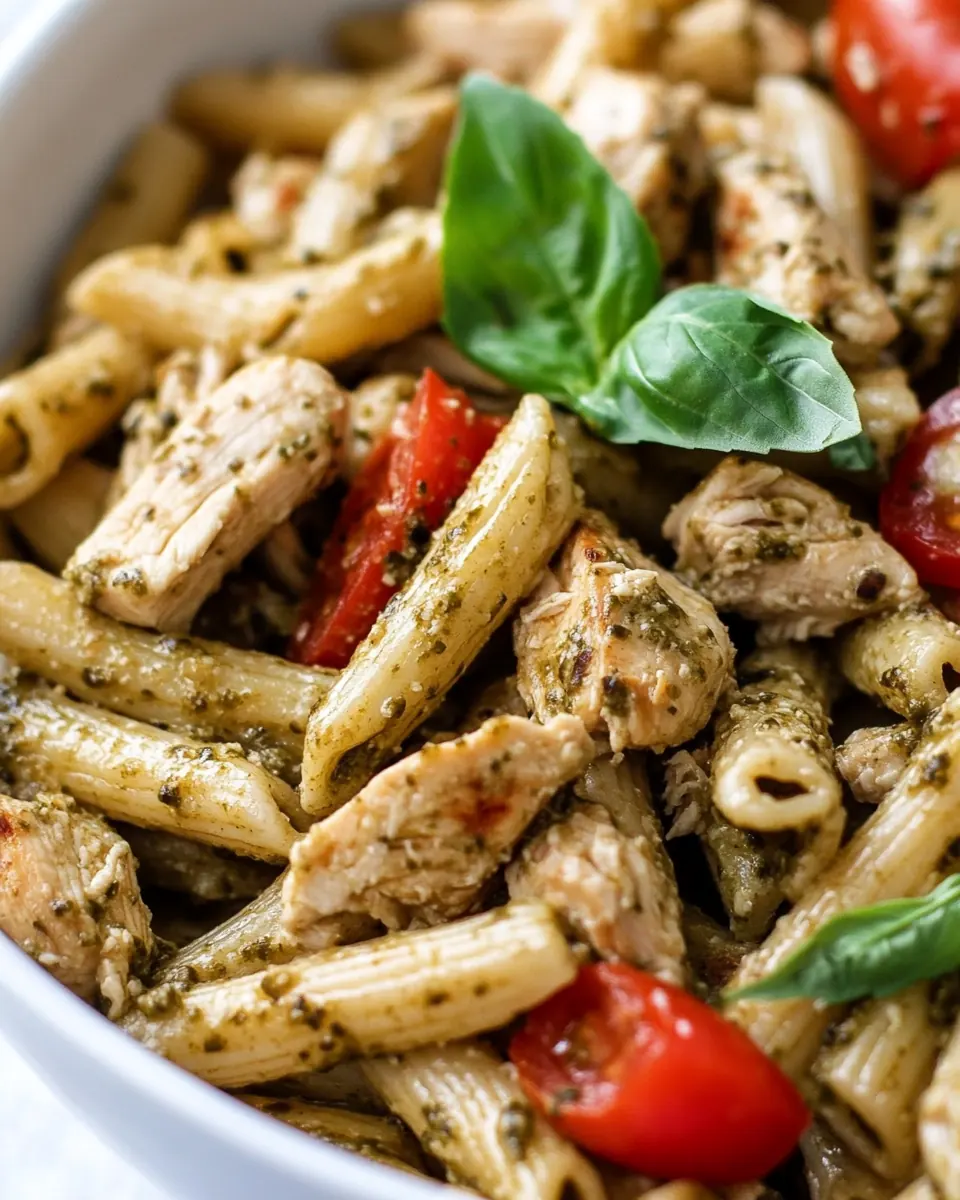
This recipe is straightforward yet rewarding, and I like to talk through the flow before you start so you know how the textures should evolve. Work in a few stages, paying attention to color and aroma, so each element contributes to a balanced finish. Keep tasting and adjust seasoning towards the end, especially after adding the parmesan and pesto.
- In a deep skillet, cook the pasta until al dente (according to package instructions). Once cooked, drain the pasta and set it aside.: The kitchen will fill with a toasty wheat scent as the water boils and the pasta cooks; aim for a slightly firm core when you bite into the penne pasta because it will continue to soften when combined with the sauce. A clear visual cue is a plump tube with a tiny opaque dot at the center if you bite one open. Drain promptly to stop cooking, because leaving the pasta in hot water will turn it limp. A common mistake is overcooking, which results in mushy pasta that cannot hold sauce properly.
- Add 1 tablespoon of olive oil to the pan and turn the heat to medium. Add the chicken breast, salt, pepper, and Italian seasoning. Stir to combine.: You will hear a gentle sizzle as the chicken hits the pan, and that sound signals flavor building through browning. The surface should start to show golden edges after a couple of minutes; this Maillard reaction adds savory complexity. Stirring helps coat each piece with the seasonings, ensuring uniform flavor. Avoid crowding the skillet, because overcrowding causes steaming rather than browning, which reduces the depth of taste.
- Cook until the chicken is golden and no longer pink, about 5-7 minutes. Remove the cooked chicken from the pan and set aside.: As you cook, watch for a warm, roasted aroma and a visual change to opaque, firm flesh; these cues indicate doneness. The outer parts should be golden while the inside is fully cooked. Use a fork to test the thickest piece, and cut into one if you are unsure. One pitfall is relying solely on color at the surface; thicker pieces may need a little longer to finish through, so move pieces around to promote even cooking.
- Add the remaining olive oil and the tomatoes. Reduce the heat to medium-low and simmer until the tomatoes pop and turn a darker color, about 5 minutes. Stir in the garlic and cook for another minute.: You will notice the tomatoes softening and releasing a sweet, tangy steam as they heat; when their skins begin to wrinkle or split, they are ready. The reduced heat preserves the bright tomato flavor while coaxing sweetness out slowly. When you add the garlic , the aroma becomes immediately fragrant and savory. Be mindful not to burn the garlic , which can happen fast and will impart bitterness, so lower the heat if it starts to brown too quickly.
- Pour in the broth and pesto. Stir and simmer for 6-8 minutes, or until the chicken broth has reduced by half.: As the chicken broth reduces, it concentrates flavor and helps the pesto emulsify into a glossy sauce that clings to the pasta. You will see the liquid thicken and cling to the spoon, and the aroma will take on a herbaceous, savory complexity. Stirring periodically prevents sticking and helps the sauce develop evenly. A frequent error is rushing this stage, which can leave the sauce thin and underflavored, so allow gentle simmering to do the work.
- Stir in the Parmesan cheese and let it melt.: Once the parmesan meets the warm sauce, it dissolves and creates a silky mouthfeel, enriching the texture. Look for the sauce to become slightly creamier and opaque as the cheese integrates. If the heat is too high, the cheese can separate into oily pockets, so lower the flame if you notice separation beginning. Stir gently to encourage a smooth emulsion.
- Return the chicken to the pan and stir to combine. Add the pasta and stir to combine. Serve with fresh basil and toasted baguette.: When the chicken rejoins the sauce, its juices mingle with the reduced broth and pesto , deepening the overall flavor. Tossing in the drained penne pasta allows it to absorb the sauce, creating a cohesive bite where every piece is coated. Visually, the dish should look glossy with flecks of green from the pesto and bright red from the cherry tomatoes . A simple troubleshooting point is to check seasoning after combining, because the parmesan and broth can change the salt level. Serve with torn fresh basil on top for a final fresh lift.
Tips and Tricks about One Pot Chicken Pesto Pasta
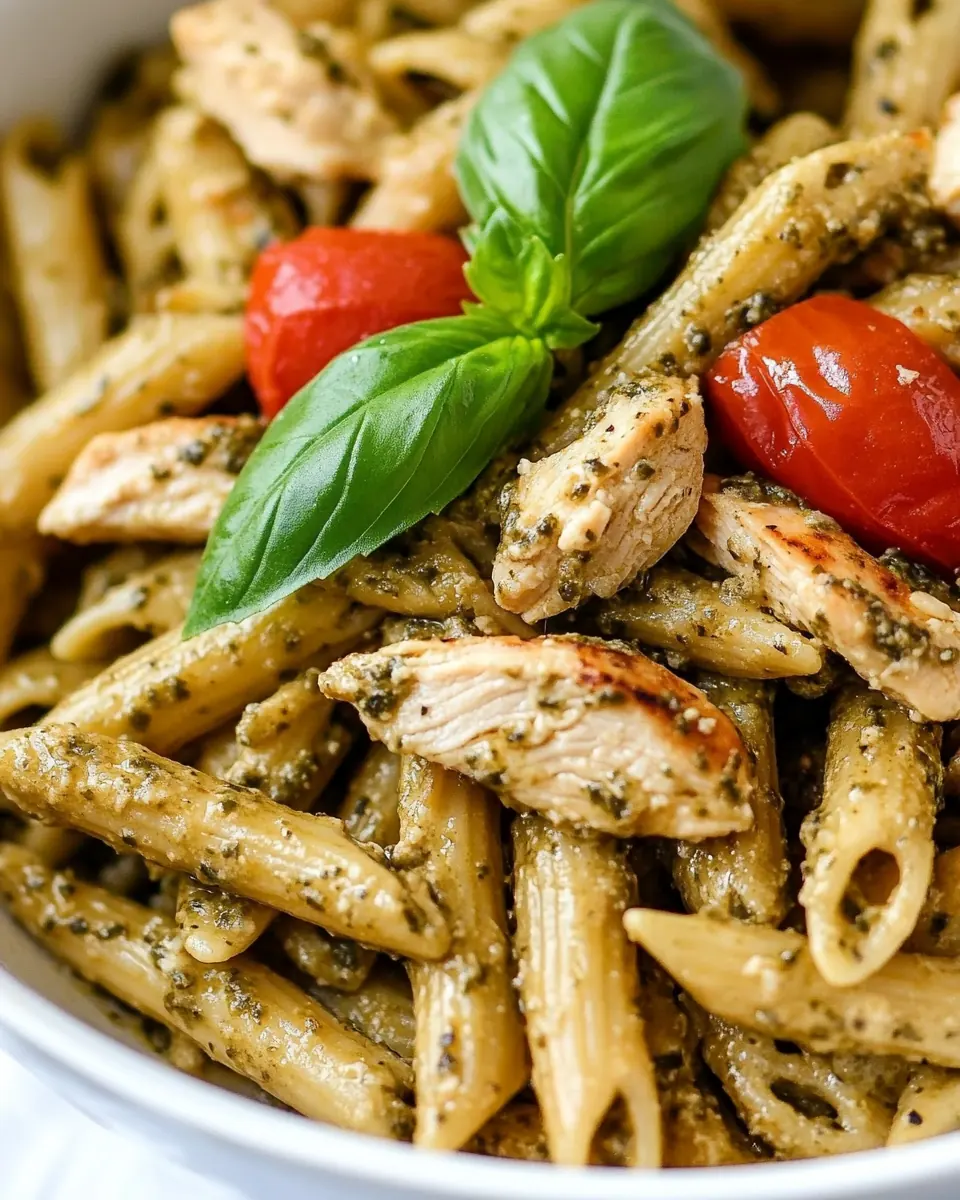
I like to think of tips as small shortcuts that keep the dish reliable and flavorful. These notes come from repeated practice and a few small recoveries, and they help you keep the texture and seasoning balanced. Use them to make this recipe consistently excellent, whether you are feeding family or guests.
- Choose the right skillet, a large deep skillet or a dutch oven helps contain the pasta and sauce, ensuring even cooking and minimal splatter.
- Control salt in stages, add a little at each step and taste before finishing, because the parmesan and broth will add saltiness as they reduce.
- Don’t overcook the pasta, aim for al dente so the penne pasta keeps some bite after it absorbs the sauce, avoiding a mushy final texture.
- Toast cherry tomatoes gently, let them pop slowly to concentrate sweetness without collapsing entirely, which adds a pleasing texture contrast.
- Keep some broth on hand, if the sauce thickens too much while combining, a splash of reserved broth or pasta water loosens and glossy-izes the sauce.
Perfect Matches for One Pot Chicken Pesto Pasta
This dish is versatile, and the right accompaniments elevate it for different occasions, whether a relaxed weeknight or a casual dinner with friends. Think about texture contrasts, complementary flavors, and small touches that make serving feel intentional, like a bright salad or warm bread. Below are ideas to pair, store, and present the dish attractively.
- Simple green salad, a crisp mixed greens salad with a light vinaigrette offers a refreshing contrast to the rich, herby pasta, making the meal feel balanced.
- Toasted baguette, warm, crunchy bread is ideal for mopping up the sauce and adds a satisfying crust contrast to the silky pasta.
- Occasion: easy weeknight dinner, this recipe is perfect for busy nights when you want something quick, nourishing, and crowd pleasing without fuss.
- Occasion: casual dinner with friends, serve it straight from the skillet for a communal, relaxed vibe that invites conversation and sharing.
- Storage tip, keep leftovers in an airtight container in the refrigerator for up to three days, and reheat gently with a splash of broth to revive the sauce.
- Seasonal pairing, this shines in summer when basil and cherry tomatoes are at their peak, offering the brightest, freshest flavor profile.
FAQ
Conclusion
This recipe stands out because it balances speed, freshness, and satisfying flavor in a single skillet, delivering tender chicken, al dente penne pasta, and bright pesto in one comforting dish. Give it a try on a busy weeknight when you want something quick but impressive, or bring it to a casual dinner where everyone can dig in straight from the pan. It’s an approachable, reliable recipe that rewards simple technique and thoughtful seasoning, and I hope it becomes one of your dependable go to meals.
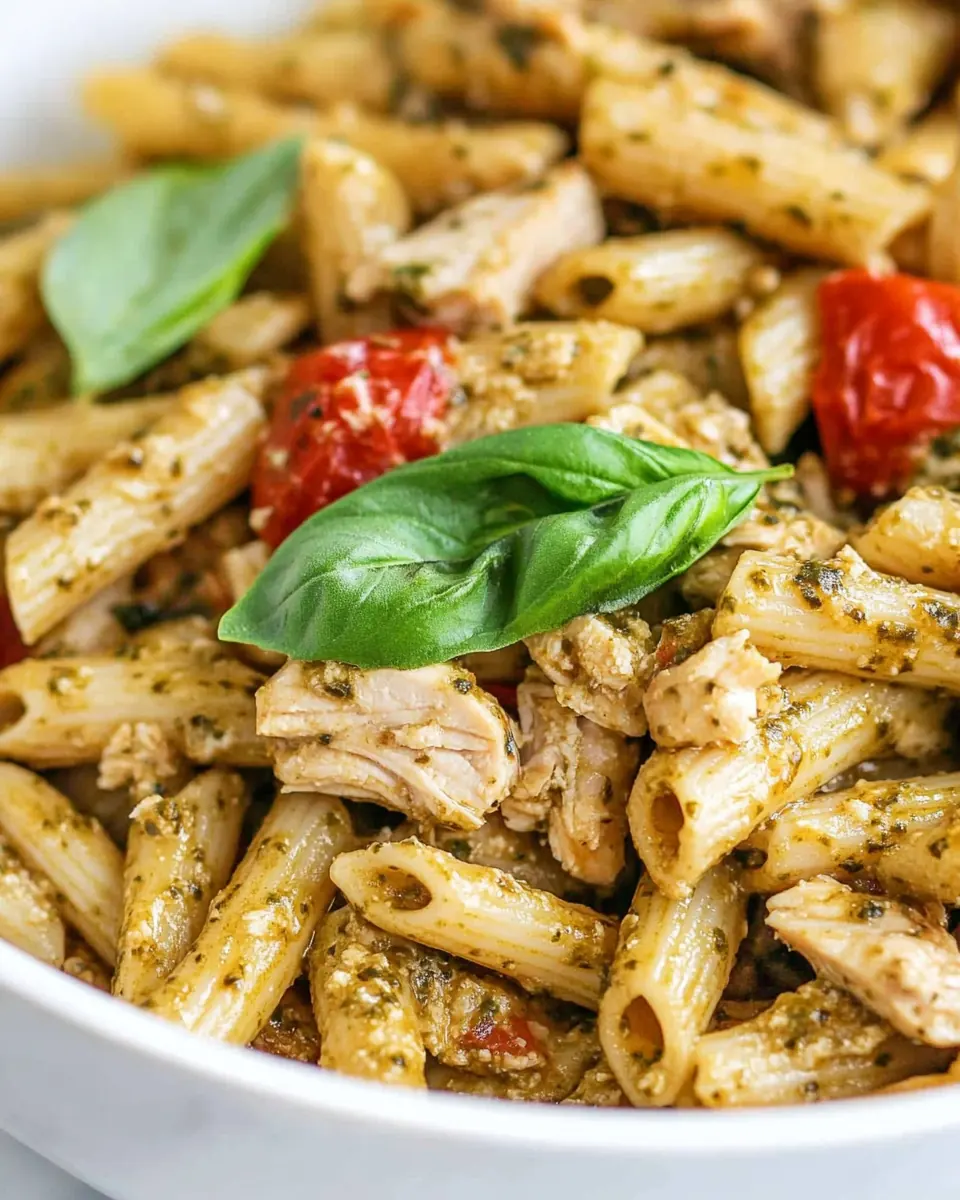
One Pot Chicken Pesto Pasta
Ingredients
Equipment
Method
- In a deep skillet, cook the pasta until al dente (according to package instructions). Once cooked, drain the pasta and set it aside.: The kitchen will fill with a toasty wheat scent as the water boils and the pasta cooks; aim for a slightly firm core when you bite into the penne pasta because it will continue to soften when combined with the sauce. A clear visual cue is a plump tube with a tiny opaque dot at the center if you bite one open. Drain promptly to stop cooking, because leaving the pasta in hot water will turn it limp. A common mistake is overcooking, which results in mushy pasta that cannot hold sauce properly.
- Add 1 tablespoon of olive oil to the pan and turn the heat to medium. Add the chicken breast, salt, pepper, and Italian seasoning. Stir to combine.: You will hear a gentle sizzle as the chicken hits the pan, and that sound signals flavor building through browning. The surface should start to show golden edges after a couple of minutes; this Maillard reaction adds savory complexity. Stirring helps coat each piece with the seasonings, ensuring uniform flavor. Avoid crowding the skillet, because overcrowding causes steaming rather than browning, which reduces the depth of taste.
- Cook until the chicken is golden and no longer pink, about 5-7 minutes. Remove the cooked chicken from the pan and set aside.: As you cook, watch for a warm, roasted aroma and a visual change to opaque, firm flesh; these cues indicate doneness. The outer parts should be golden while the inside is fully cooked. Use a fork to test the thickest piece, and cut into one if you are unsure. One pitfall is relying solely on color at the surface; thicker pieces may need a little longer to finish through, so move pieces around to promote even cooking.
- Add the remaining olive oil and the tomatoes. Reduce the heat to medium-low and simmer until the tomatoes pop and turn a darker color, about 5 minutes. Stir in the garlic and cook for another minute.: You will notice the tomatoes softening and releasing a sweet, tangy steam as they heat; when their skins begin to wrinkle or split, they are ready. The reduced heat preserves the bright tomato flavor while coaxing sweetness out slowly. When you add the garlic , the aroma becomes immediately fragrant and savory. Be mindful not to burn the garlic , which can happen fast and will impart bitterness, so lower the heat if it starts to brown too quickly.
- Pour in the broth and pesto. Stir and simmer for 6-8 minutes, or until the chicken broth has reduced by half.: As the chicken broth reduces, it concentrates flavor and helps the pesto emulsify into a glossy sauce that clings to the pasta. You will see the liquid thicken and cling to the spoon, and the aroma will take on a herbaceous, savory complexity. Stirring periodically prevents sticking and helps the sauce develop evenly. A frequent error is rushing this stage, which can leave the sauce thin and underflavored, so allow gentle simmering to do the work.
- Stir in the Parmesan cheese and let it melt.: Once the parmesan meets the warm sauce, it dissolves and creates a silky mouthfeel, enriching the texture. Look for the sauce to become slightly creamier and opaque as the cheese integrates. If the heat is too high, the cheese can separate into oily pockets, so lower the flame if you notice separation beginning. Stir gently to encourage a smooth emulsion.
- Return the chicken to the pan and stir to combine. Add the pasta and stir to combine. Serve with fresh basil and toasted baguette.: When the chicken rejoins the sauce, its juices mingle with the reduced broth and pesto , deepening the overall flavor. Tossing in the drained penne pasta allows it to absorb the sauce, creating a cohesive bite where every piece is coated. Visually, the dish should look glossy with flecks of green from the pesto and bright red from the cherry tomatoes . A simple troubleshooting point is to check seasoning after combining, because the parmesan and broth can change the salt level. Serve with torn fresh basil on top for a final fresh lift.
Notes
- Choose the right skillet, a large deep skillet or a dutch oven helps contain the pasta and sauce, ensuring even cooking and minimal splatter.
- Control salt in stages, add a little at each step and taste before finishing, because the parmesan and broth will add saltiness as they reduce.
- Don’t overcook the pasta, aim for al dente so the penne pasta keeps some bite after it absorbs the sauce, avoiding a mushy final texture.
- Toast cherry tomatoes gently, let them pop slowly to concentrate sweetness without collapsing entirely, which adds a pleasing texture contrast.
- Keep some broth on hand, if the sauce thickens too much while combining, a splash of reserved broth or pasta water loosens and glossy-izes the sauce.