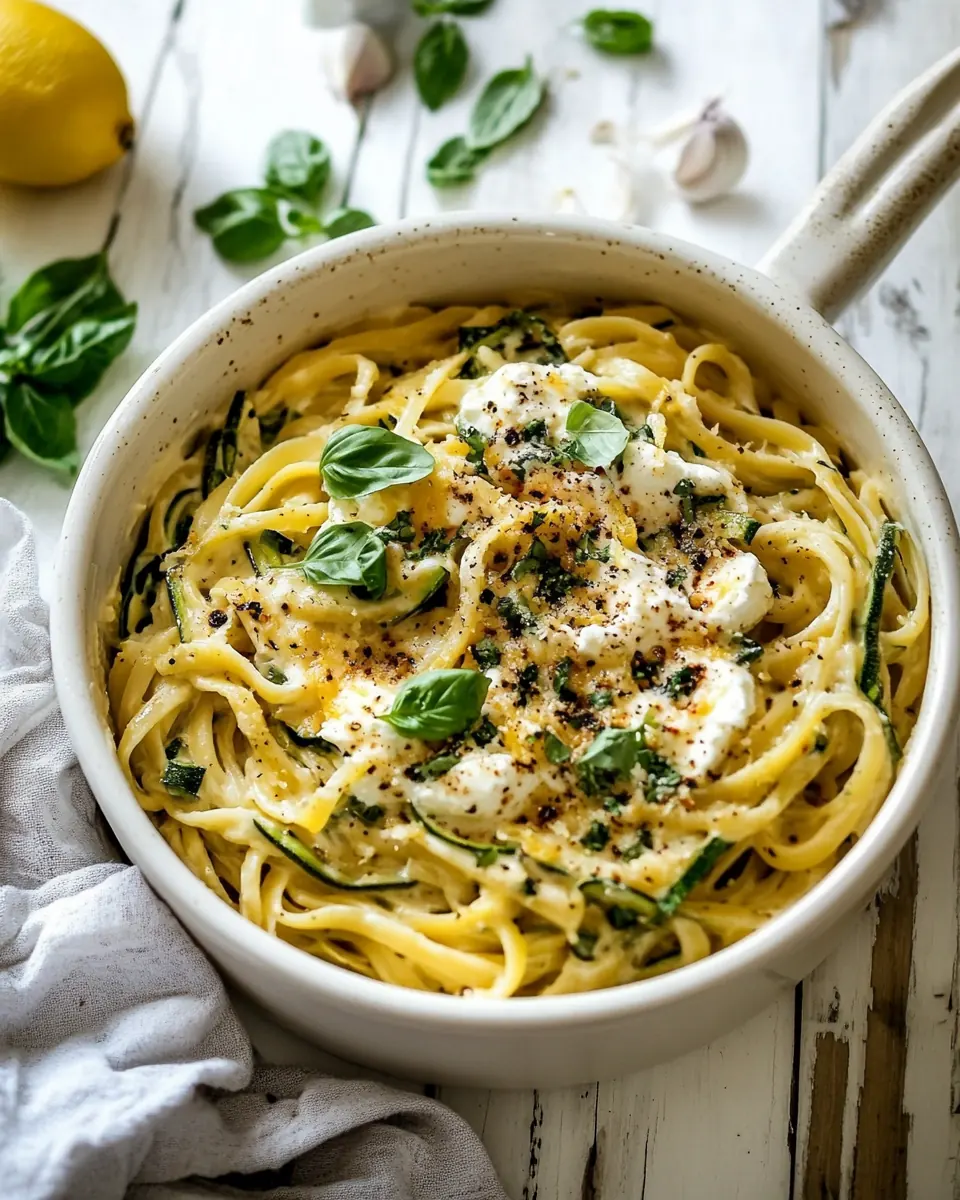
In a large pot set over medium heat, melt together the butter, shallot, garlic, thyme, lemon zest and a big pinch of red pepper flakes. Cook until the butter is browning and the garlic is fragrant, about 3 minutes. Stir in the pasta and toss to coat in the lemony butter. Stir in the zucchini and broth. Season with salt and pepper. Bring to a boil over high heat. Simmer 5-8 minutes until the pasta is al dente, stirring often. Stir in the ricotta, fontina, and basil. Cook another few minutes until very creamy and the basil is wilted. It should be creamy, but with just a touch of liquid. Divide the pasta among bowls and top with fresh thyme, basil, and chili flakes. Enjoy immediately!: The moment the butter melts you should smell a rich, nutty aroma that deepens as the shallot softens and the garlic releases its perfume. The sizzling should be steady but not aggressive, a gentle bubbling around the edges. Browning the butter slightly adds toasty notes that layer under the citrus of the lemon zest . Keep the heat moderate; if it starts to smoke you are overheating, which will make the garlic bitter. Stir often so the aromatics release evenly and do not stick to the pot.
Cook until the butter is browning and the garlic is fragrant, about 3 minutes: Listen for a soft sear and watch for small golden flecks forming in the butter . The aroma should change from sharp to sweet and toasty, signaling that the aromatics have softened and released their sugars. This brief browning concentrates flavor without burning. Avoid leaving it unattended because burnt garlic tastes acrid and can spoil the entire sauce.
Stir in the pasta and toss to coat in the lemony butter: As you add the pasta it will start to absorb fat and flavor, and you should see each piece glisten with the citrus scented butter . Tossing helps each noodle pick up aromatics so the flavor is consistent. If the pasta clumps together, use a fork to separate pieces before adding the liquid. This step matters because a well coated pasta will result in a more cohesive final sauce.
Stir in the zucchini and broth: When you add the grated zucchini and the warm broth , the pot will steam and release a fresh vegetal scent. The zucchini softens quickly and contributes moisture, which helps the pasta cook evenly and form a slightly creamy emulsion with the starch. Pour the broth gently so the pot temperature does not drop too much. If you add cold liquid the cooking time will increase and the texture may become uneven.
Season with salt and pepper: Seasoning early gives the pasta and zucchini time to absorb salt, enhancing the natural flavors. Taste the liquid briefly; it should be slightly seasoned but not overly salty because the cheeses will add salt later. Over salting at this stage is an easy mistake, so err on the side of restraint and adjust at the end.
Bring to a boil over high heat: You want a lively, rolling boil to jumpstart the pasta cooking, but keep an eye on the pot so it does not foam over. The sound will change to a steady roar and you will see vigorous bubbles breaking across the surface. Boiling ensures the pasta cooks rapidly and the starch is released into the cooking liquid for a silky sauce. If your heat is too low the pasta will cook unevenly.
Simmer 5 to 8 minutes until the pasta is al dente, stirring often: During this phase the kitchen fills with a comforting, savory steam and the pasta should feel tender but still slightly firm in the center. Stirring often prevents sticking and helps the pasta absorb the broth uniformly. Test a piece every minute toward the end of cooking to avoid overcooking, because soft, mushy noodles will not hold the sauce as well.
Stir in the ricotta, fontina, and basil: As you fold in the creamy ricotta and the melting fontina the sauce will go from brothy to velvety, with a slightly glossy sheen. The aroma will be herbaceous when the basil hits the warm pasta, and the texture should become thick enough to coat each piece. If the sauce seems too loose, cook a minute longer to let the starch tighten it up. Avoid overheating which can cause the ricotta to separate.
Cook another few minutes until very creamy and the basil is wilted: You want the mixture to come together into a cohesive, creamy sauce that clings to the pasta . The sound will be a gentle simmer and the steam will carry the combined scents of herbs, cheese, and citrus. Watch the consistency closely, because residual heat will continue to thicken the sauce as it rests. Overcooking here risks losing the fresh brightness of the basil .
It should be creamy, but with just a touch of liquid: The ideal finish retains a little glossy hint of broth so the dish does not feel dry on the plate. When you lift a fork the sauce should slowly drizzle back, coating the pasta . If it seems too thin, let it reduce a bit; if too thick, a splash of warm broth will loosen it. Not balancing this texture is a common pitfall, so adjust gently.
Divide the pasta among bowls and top with fresh thyme, basil, and chili flakes: The final garnish adds aromatic lift and a touch of heat, and the presentation pops with green herbs against the creamy noodles. Sprinkle toppings just before serving so the herbs stay bright and the chili flakes remain crunchy. Leaving garnishes on too long can cause herbs to wilt and lose their vibrancy.
Enjoy immediately: Serve while warm so the cheese is soft and the sauce feels freshly made, as cooling changes the texture. This dish is at its best right away, with the contrast of warm pasta and fresh herbs. Reheating is possible, but the texture will be slightly altered, so immediate enjoyment preserves the original charm.