Go Back
Orange Buffalo Grilled Chicken

Orange Buffalo Grilled Chicken

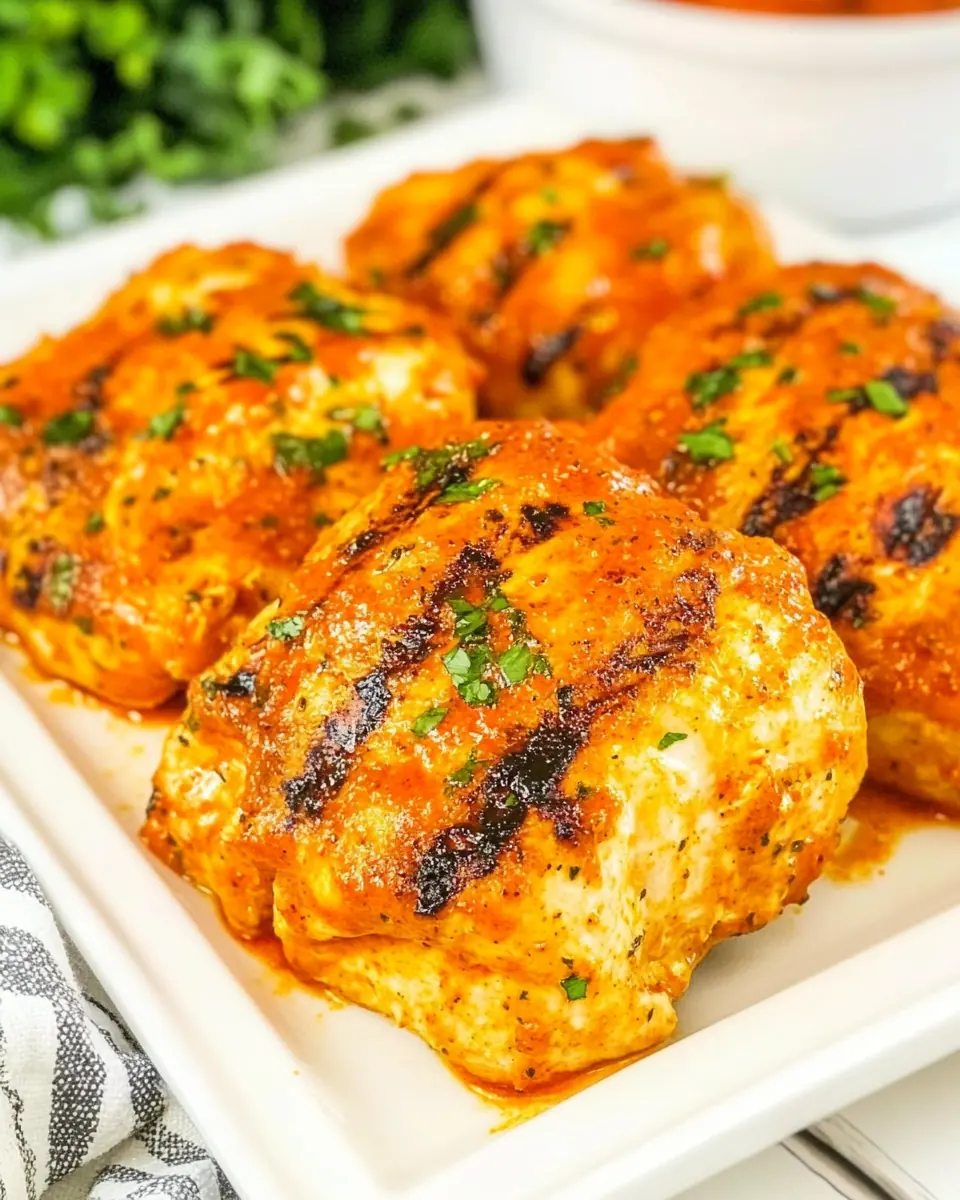
Orange Buffalo Grilled Chicken brings bright citrus and tangy buffalo heat to tender grilled chicken. This easy weeknight dinner is quick to prep and full of sticky, savory flavor, making it perfect for casual meals or backyard gatherings. The simple marinade uses pantry staples to create a bold, juicy result that is worth making again and again.
Prep Time 5 minutes
Cook Time 15 minutes
Total Time 20 minutes
Servings: 4 people
Course: Dinner
Cuisine: American
Calories: 350

Ingredients
  

  • 4 boneless skinless chicken breasts Provide lean protein and substantial texture, serving as the main component of the dish; slices cook quickly on the grill and absorb marinades well. Ensure even thickness for uniform cooking and rest briefly after grilling to retain juices.
  • 1 cup Frank’s hot sauce or wing sauce Contribute bold, vinegary heat and classic Buffalo flavor, acting as the primary spicy element in the sauce. Balance proportion with orange juice and oil to prevent overpowering the chicken while maintaining a tangy kick.
  • 1/4 cup orange juice Add bright citrus sweetness and acidity to balance the heat, thinning the sauce slightly for easier glazing. Use fresh juice for the best flavor and adjust amount to taste to enhance overall brightness.
  • 2 cloves garlic, minced Provide aromatic pungency and depth when minced, helping to build savory complexity in the marinade and sauce. Sauté briefly or mix directly into the sauce depending on desired raw or mellow garlic flavor.
  • 2 tbsp olive oil Supply rich mouthfeel and help emulsify the sauce, allowing it to cling to the chicken when grilled. Use extra-virgin for flavor, or standard olive oil for a neutral profile, and moderate heat to avoid smoke.
  • 2 tbsp Worcestershire sauce Introduce savory umami and subtle tang that deepens overall flavor and complements both the hot sauce and orange juice. Stir into the marinade to give a rounded, slightly sweet-savory backbone to the glaze.
  • salt and pepper, to taste Season to taste to enhance and balance flavors, drawing out natural juices and emphasizing the spicy-sweet interplay. Apply conservatively before grilling and adjust after tasting to avoid over-salting.

Equipment

  • Mixing Bowls
  • Grilling Tongs
  • Cast Iron Grill Pan
  • Charcoal Chimney Starter

Method
 

  1. In a medium bowl, whisk together hot sauce, orange juice, garlic, olive oil, Worcestershire sauce, salt, and pepper.: The aroma of garlic and citrus will hit you first, bright and savory, and you should see the marinade become homogeneous and slightly glossy. Whisking emulsifies the oil into the liquid, which helps the marinade cling to the chicken . If the mixture looks separated, keep whisking until smooth, because an uneven marinade will not coat consistently. A common misstep is skimping on whisking, which leaves pockets of oil and can lead to uneven flavor distribution.
  2. Place chicken in a resealable plastic bag.: When you slide the pieces into the bag, they should lie flat and not crowd each other. This position allows the marinade to coat all surfaces. Press out excess air before sealing so the bag lays flat in the refrigerator, enabling better contact. Avoid using a container that is too large, because the marinade may pool away from the meat and you will not get an even soak.
  3. Pour over chicken and marinate in the refrigerator a few hours to overnight.: You will notice the meat take on a glossy sheen and a faint orange hue as it marinates. Chilling both keeps the chicken safe and allows the flavors to penetrate. Marinating for at least a few hours yields more flavor, while overnight gives the deepest infusion. Do not exceed overnight often, as the acid in the orange juice can begin to change the texture and make the surface mushy.
  4. Remove chicken from marinade and cook until it reaches an internal temperature of 165ºF.: As the chicken hits the hot grill or pan, you should hear a satisfying sizzle and smell the caramelizing sugars from the orange and sauce. Cook until the internal temperature reads 165ºF at the thickest part, which ensures safe doneness while keeping the meat juicy. Let the cooked pieces rest briefly so juices redistribute. A common error is flipping too often, which prevents proper browning and can make the exterior less crisp. Watch for a confident char and glossy glaze as indicators of readiness.
Notes

  • Use the marinade on different cuts, you can apply this mixture to thighs, tenders, wings, or drumsticks. Dark meat may need longer cook times and will benefit from the extra fat content, which yields deeper flavor. Adjust timing so each cut reaches 165ºF, and remember bone in pieces will cook slower than boneless pieces.
  • Pound breasts for even cooking, gently pound thicker parts to even thickness so the chicken cooks uniformly. This prevents a dry thin edge and an undercooked thick center. Place the breast between plastic wrap and use a flat mallet, working carefully to avoid tearing the meat.
  • Oven or skillet options, if you do not have a grill, sear the chicken in a hot skillet for a few minutes per side then finish in a 400ºF oven until 165ºF. This method replicates the Maillard browning while ensuring even doneness, and it is ideal when weather or location prevents outdoor grilling.
  • Freezing guidance, you can freeze the chicken raw in the marinade or cooked. For raw freezing, seal in a freezer bag and thaw overnight in the refrigerator before cooking. For cooked, cool completely before freezing to prevent ice crystals that damage texture on reheating.
  • Control the heat, different wing sauces have varying heat levels. Start with the recipe amounts, then adjust to taste. If you need to tame the heat, add a touch more orange juice or a small spoon of olive oil to smooth the profile without diluting the core buffalo character.