In a large mixing bowl cream together butter, brown sugar, and granulated sugar until smooth with an electric mixer.: Warm, sweet aromas will develop as the sugars and butter transform into a pale, fluffy mixture. You'll hear the mixer hum and see the mixture lighten in color and texture, which is a sign air has been incorporated, improving tenderness. Use a paddle attachment if you have one for the creaming stage, scraping the bowl sides so everything blends evenly. A common mistake is under creaming, which can yield dense cookies. If the mixture looks grainy, keep mixing a bit longer until silky.
Crack the eggs and place eggs in a medium bowl, then beat with a fork. Add egg, vanilla and orange zest to the butter mixture and mix with an electric mixer until combined.: As you add the beaten eggs , the mixture will look glossy and slightly looser, signaling good emulsification. The orange zest will release a fragrant burst as it joins, and the vanilla will round the flavors. You should stop mixing when streaks disappear to avoid over emulsifying. A trap here is adding cold eggs, which can cause the butter to seize; use room temperature eggs for smooth blending.
In a large mixing bowl combine flour, baking soda, cream of tartar and salt, then mix well: Mixing the dry ingredients evenly ensures consistent rise and texture. You'll notice the pale flour turn uniform as the leaveners and salt disperse, which prevents pockets of bitterness or uneven leavening. Whisk gently to avoid dust clouds, and be careful not to compress the flour. If you see clumps, break them up; lumps lead to uneven crumbs.
Add the flour mixture to the wet ingredients half at a time. Mix until just combined and a dough forms with no loose flour. Mix in the dried cranberries until just combined.: As the flour disappears into the batter, you'll sense the dough thicken and pull away from the bowl. Stop mixing once there are no streaks of loose flour, since over mixing can develop gluten and make cookies tough. Fold in the dried cranberries gently so they stay distributed and do not bleed color into the dough. A common error is over folding which crushes the cranberries and darkens the dough.
Chill cookie dough in the refrigerator for 30 minutes. Preheat the oven to 350 degrees. Line baking sheets with parchment paper.: Chilling firms the dough so cookies hold shape and develop defined edges while baking; aroma concentrates as the butter solidifies. Preheating the oven to 350 degrees gives the right balance of spread to set. Lining pans prevents sticking and promotes even bottom browning. Skipping the chill often causes the cookies to spread too thin.
Scoop about two tablespoons of dough into each ball and roll lightly with your hands, then place on a parchment lined pan. Add 4-5 dried cranberries to the top of each cookie.: As you roll the dough, you will feel it soften slightly from your hands, forming smooth spheres that bake into even domes. Placing them on parchment keeps bottoms from over browning, and pressing extra cranberries on top creates an attractive finish and immediate bursts of tartness. Avoid packing the dough too tightly, which can prevent proper lift.
Bake the cookie dough for 8-10 minutes until gooey. Remove the cookies to a wire cooling rack.: You will notice edges turning lightly golden while centers remain soft and glossy, a cue that guarantees a tender interior. The kitchen will fill with warm citrus and caramelized sugar notes. Transfer to a wire rack so air circulates, preventing soggy bottoms. A mistake here is leaving cookies too long on the hot tray, which continues cooking and can over crisp the centers.
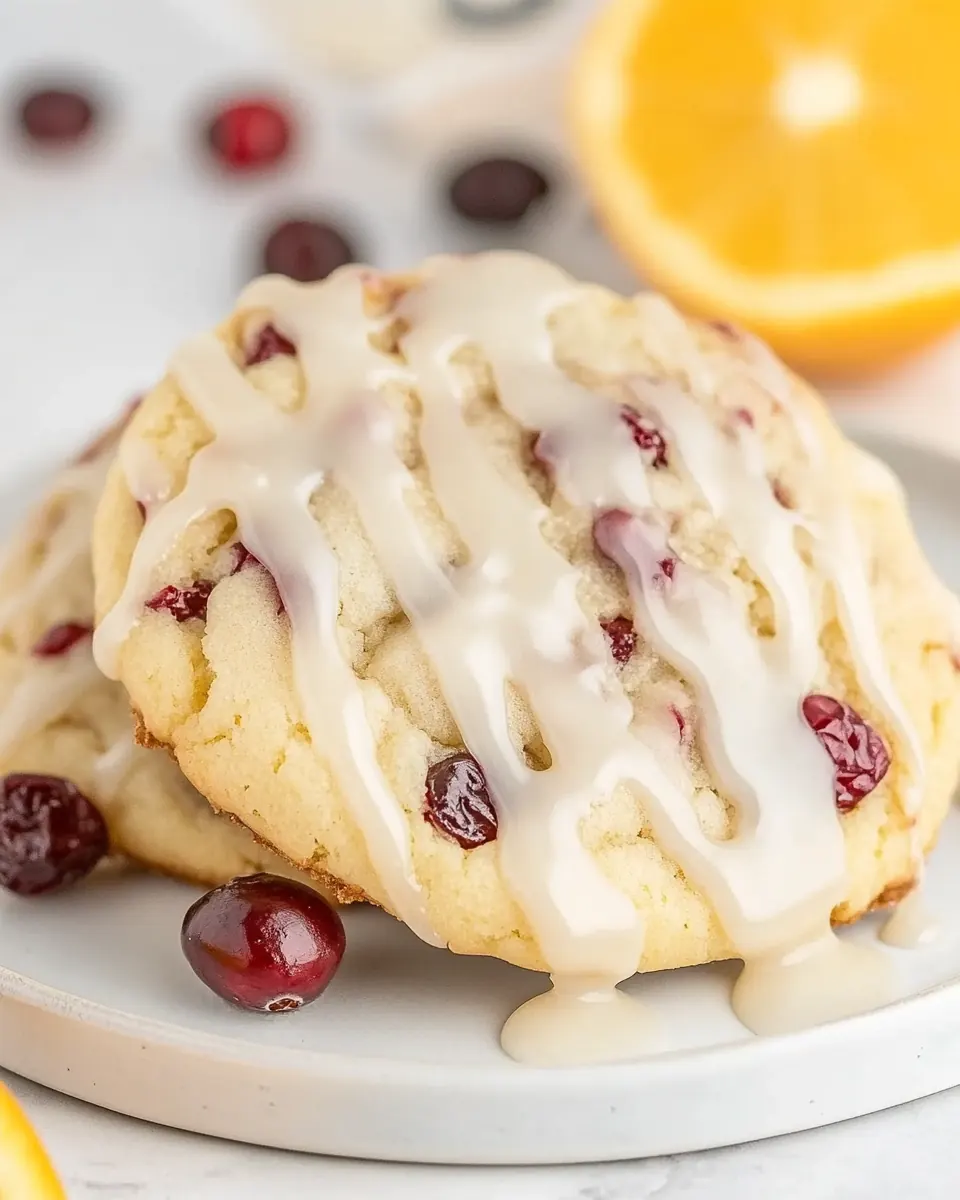
Once the cookies are cool to the touch on the cooling rack, slide a piece of parchment paper under the wire rack. In a medium sized bowl, whisk together powdered sugar, orange juice and milk. Use a spoon to make drizzles of glaze over each cookie. Let the glaze firm up, then enjoy!: The glaze should look glossy as you whisk powdered sugar with fresh orange juice and milk , releasing a citrus perfume that brightens each cookie. Drizzling creates elegant ribbons that set to a slightly crisp shell while keeping the interior soft. If the glaze is too thin it will run off; if too thick it will clump. A common pitfall is glazing cookies that are still warm which causes the glaze to melt and become runny.