Add the olive oil to a large skillet or medium pot over medium heat. Add the onion and salt, and stir to coat. Cook for 4 minutes.: The pan should offer a gentle hiss as the olive oil warms and the grated onion hits the surface, releasing a sweet, savory fragrance. You will notice the onion soften and become translucent rather than brown, a cue that it is sweating and imparting flavor into the oil. This gentle cooking prevents sharp, raw onion notes and builds a mild aromatic base. If the onion starts to brown or crisp, the heat is too high, which can introduce bitter flavors; simply lower the temperature and stir to even out the cooking. A wooden spoon gives you tactile feedback as the mixture loosens in the pan, and having the salt present helps draw moisture out of the onion for a silkier finish.
Add the broth, cover, and bring to a simmer.: When you pour in the warm broth , listen for the soft increase in bubbling as the liquid warms through. Covering the pot traps steam, helping the orzo cook more evenly once it is added, and it also concentrates the savory aroma. A light simmer is the right target, not a rolling boil, because too violent of a boil can agitate the orzo and make the texture uneven. Using reduced sodium broth gives you control over final seasoning; taste the cooking liquid after a few minutes so you can judge whether to add more salt later.
Add the orzo and cook for 12-14 minutes, stirring occasionally, or until the liquid is almost absorbed and the pasta is tender. (It's okay if there is some liquid left when the pasta is tender as it will continue to be absorbed by the pasta.): As the orzo simmers, it will swell and surrender starch into the broth, thickening the cooking liquid into a creamy coating. You will see the grains soften and the mixture reduce; stirring occasionally encourages even cooking and prevents the pasta from settling and sticking. The pot should smell nutty and comforting as the orzo approaches tenderness. Be mindful not to over stir which can break the grains apart; gentle, intermittent movement is best. If the liquid disappears too quickly before the orzo is tender, keep a splash of warm broth handy to loosen the pan and continue cooking without drying out the dish.
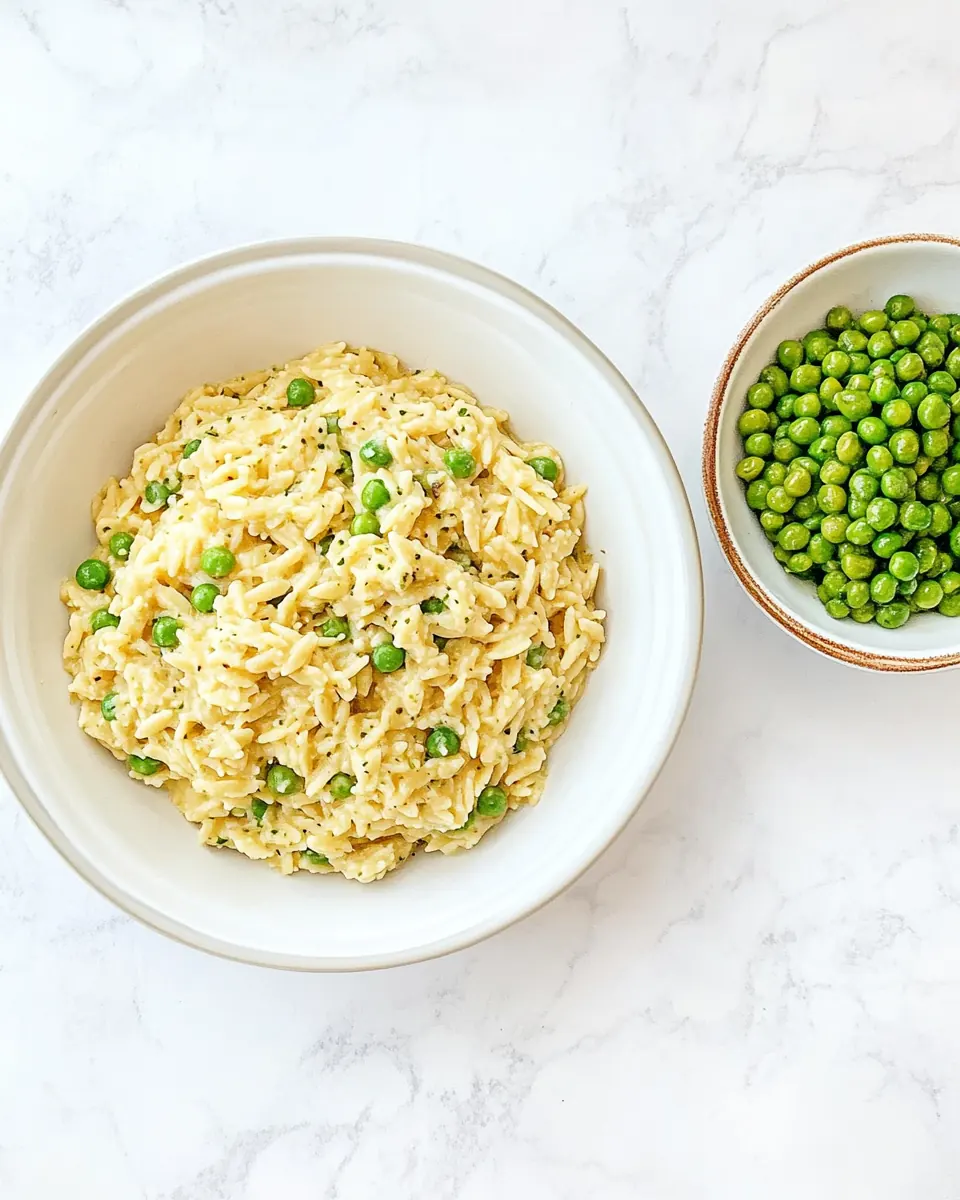
Stir in the Parmesan, cream, butter, and peas; add lemon juice and zest, if using. Let sit for about 5 minutes to thicken, if needed. Serve warm.: Once you fold in the cold and room temperature finishes, you will notice the texture deepen into a glossy, saucy consistency as the Parmesan melts and the butter emulsifies with the cream . The peas will warm through and pop with fresh sweetness, providing a lively contrast. The aroma becomes richer and slightly tangy if you used lemon , which brightens the fats and cheese. Letting the pot rest allows the grains to absorb a touch more liquid, creating a cohesive, clingy finish. A common error is adding hot dairy to an aggressively boiling pan, which risks breaking the sauce; gently combine off heat or over very low heat for the smoothest result.
Serve warm.: The final bowl should be warm to the touch and glossy, with visible little pearls of orzo coated in a silky sauce and pops of green from the peas . Serve immediately while the texture is at its peak, and consider a final grating of Parmesan at the table for an extra savory lift. If you must hold it briefly, cover it so it retains steam, and stir gently before serving to revive the creamy finish. Overholding can lead to the dish tightening, so short rests are best to preserve the intended mouthfeel.