In a 2-quart saucepan combine the steel cut oats, water, milk, and salt. Bring the liquid to a boil over high heat on the stove top.: The first sensory cue is the cool, milky scent as the ingredients meet, a quiet promise of comfort. When you stir them together, notice the grainy texture of the steel cut oats suspended in liquid, and take a moment to make sure no dry pockets remain stuck to the bottom. This even distribution prevents hotspots during heating, which can cause sticking. One common mistake is adding cold liquid to a hot pan later, which can shock the oats and lead to uneven cooking.
Once the liquid is boiling, set a timer for 2 minutes. The boiling liquid may start to rise up towards the top of your saucepan, if this happens lower the heat until the liquid lowers. Stir often so the oats won't stick to the bottom of the pan.: As the mixture comes to a boil you will hear the liquid shift from a gentle simmer to an eager bubbling, and the odor will become more pronounced, a faint toasty note as the oats warm. Watch for the surface to dome slightly, an early warning that it may rise, and be ready to lower the heat. The why here is all about activating the oats so they begin to absorb liquid quickly. A typical error is leaving the heat too high and allowing the pot to foam over, so stay attentive.
When the timer goes off, remove the pan from the heat and set it aside to cool for 20 minutes. (This way, you won't add boiling-hot oats to glass jars and risk them breaking.) The oats will continue absorbing the liquid as they cool.: During these two minutes the boil should be lively but controlled. You may hear a steady rolling sound and see small vigorous bubbles across the surface. Stir frequently to keep the oats from settling and sticking, scraping the bottom with a wooden spoon so no bits burn. This short high heat burst helps the oats start softening; if you skip stirring, you risk scorched flavor and uneven tenderness.
Once the oats have cooled, transfer them to individual storage jars with lids. One cup of dry oats makes 3 hearty servings cooked. Store the oats overnight in the fridge to continue softening.: The moment you pull the pan off the flame is marked by a drop in audible bubbling and a release of steam that smells nutty and warm. Letting it cool prevents thermal shock when transferring to jars, and importantly it allows continued gentle absorption of liquid, deepening creaminess without direct heat. A frequent slip up is trying to rush this cooldown by moving hot oats into glass too soon, which can crack jars, so patience here protects both texture and kitchenware.
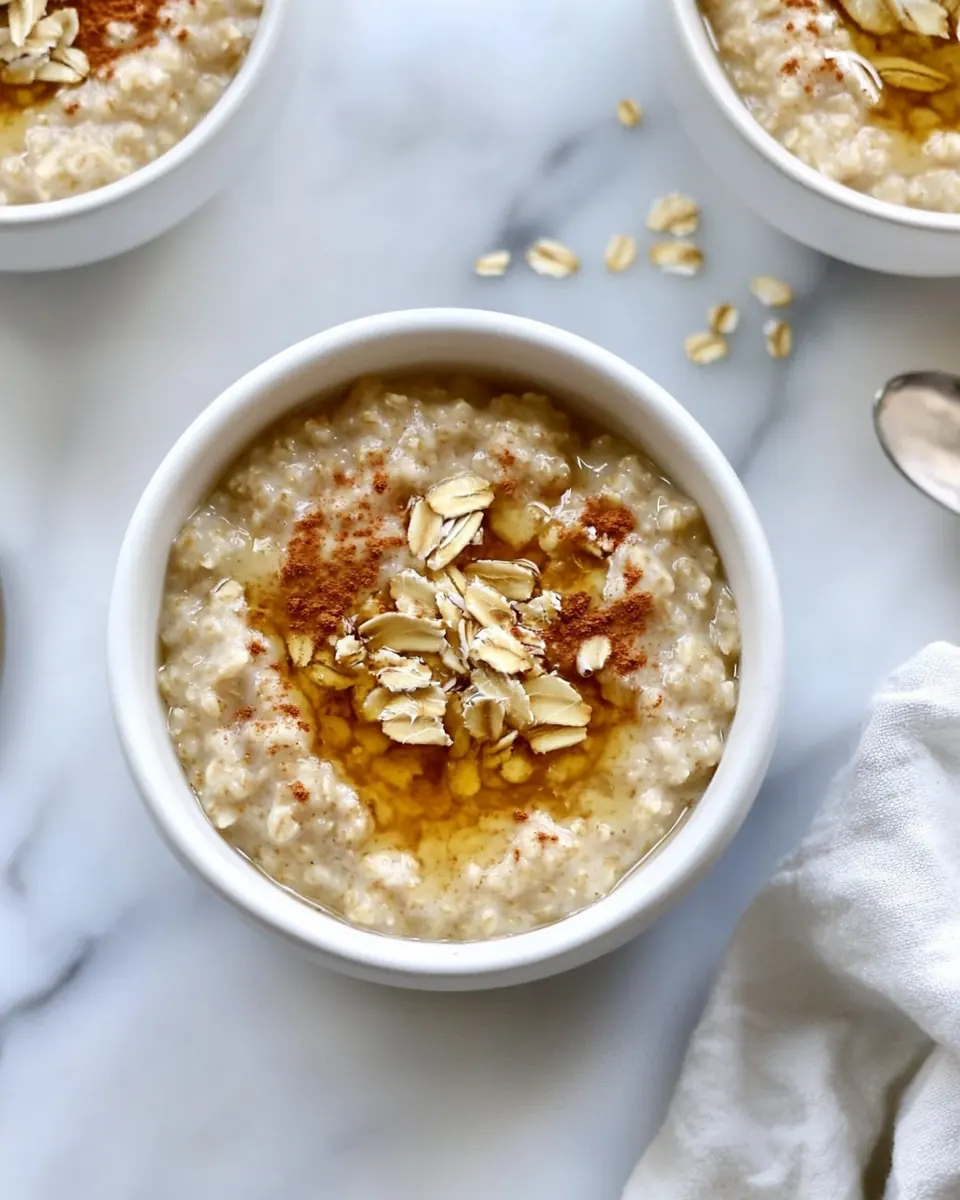
When you're ready to eat, grab a jar of oats from the fridge and add your favorite toppings. These can be enjoyed warm or cold. Heat them up on the stovetop with an extra splash of milk, or microwave in a heat-safe bowl for 60 to 90 seconds. Oats will keep well in the fridge for up to 5 days.: The cooled oats will feel slightly thickened and glossy, a tactile sign that they have absorbed much of the liquid. As you spoon them into jars, note the density and aim for even portions; one cup dry yields three hearty servings. Sealing them while still warm is tempting, but fully cooled oats prevent condensation that can make the top watery. People sometimes pack jars too tightly, which leaves no room for gentle expansion, so leave a small headspace.
Store the oats overnight in the fridge to continue softening: In the refrigerator the oats complete their transformation, the texture mellowing into a creamy, cohesive bowl. You may notice a faint change in aroma as the flavors meld, and the oats will thicken more as they chill. This step is why the recipe is called overnight oats, because time does much of the work. A common oversight is storing jars at the wrong temperature or leaving them too long, so keep them refrigerated and use within recommended days to maintain quality.
When you are ready to eat, grab a jar of oats from the fridge and add your favorite toppings: The final sensory moment is yours to orchestrate, whether you warm the oats and watch steam rise, or enjoy them chilled with crisp toppings for contrast. If heating, add a splash of extra milk to loosen the texture and warm gently so the oats soften without overcooking. People sometimes overheat which can make the texture gluey, so heat briefly and stir to restore creaminess. These oats will keep well in the fridge for up to 5 days, and that longevity is part of their everyday appeal.