Cut off the ends of the zucchini and then cut each one in half. For each half, slice it into sticks, about 3 to 4-inches long and 1/2 to 3/4-inches wide.: When you slice the zucchini , you should feel a clean, slightly firm resistance from the skin giving way to a moist but not mushy interior. The exposed faces will glisten with a mild fresh squash scent, and uniform sticks ensure even baking. If pieces are uneven, some will overcook while others remain underdone, so take your time here. A common mistake is slicing too thick or too thin, which changes the cooking time dramatically.
Place the zucchini sticks onto a baking tray in rows, close to each other but not overlapping. Sprinkle them with salt and paprika.: As you arrange the sticks, notice how the surface of each piece looks slightly moist, and to get the best result you want them touching edge to edge without piling. This tight layout encourages the Parmesan cheese to melt and adhere across neighboring sticks, creating a pleasing crust. If you spread them too far apart the cheese will not bridge between pieces, losing some of the texture cohesion. Avoid crowding them into a single heap, which prevents hot air circulation and leads to steaming rather than roasting.
Dip a pastry brush into the oil and gently brush the zucchini pieces with oil.: The moment you dust on the salt and paprika , you’ll see the onyx of the spice and the tiny crystals of salt resting on the surface, which helps to draw out subtle moisture and layer flavor. The paprika adds a warm red tone that becomes more pronounced as the dish bakes. Over seasoning at this step can create an unbalanced finish, so stick to the measured amounts for the intended flavor profile.
Now, sprinkle the bread crumbs and Parmesan cheese over the zucchini.: Brushing the olive oil should feel deliberate and even, coating each stick with a thin sheen rather than soaking it. The oil changes the surface from matte to glossy, and that sheen will turn golden under heat. If you pour the oil, some pieces will become saturated and limp, which prevents crisping. One trap is using too much oil which leads to soggy centers instead of a crunchy exterior.
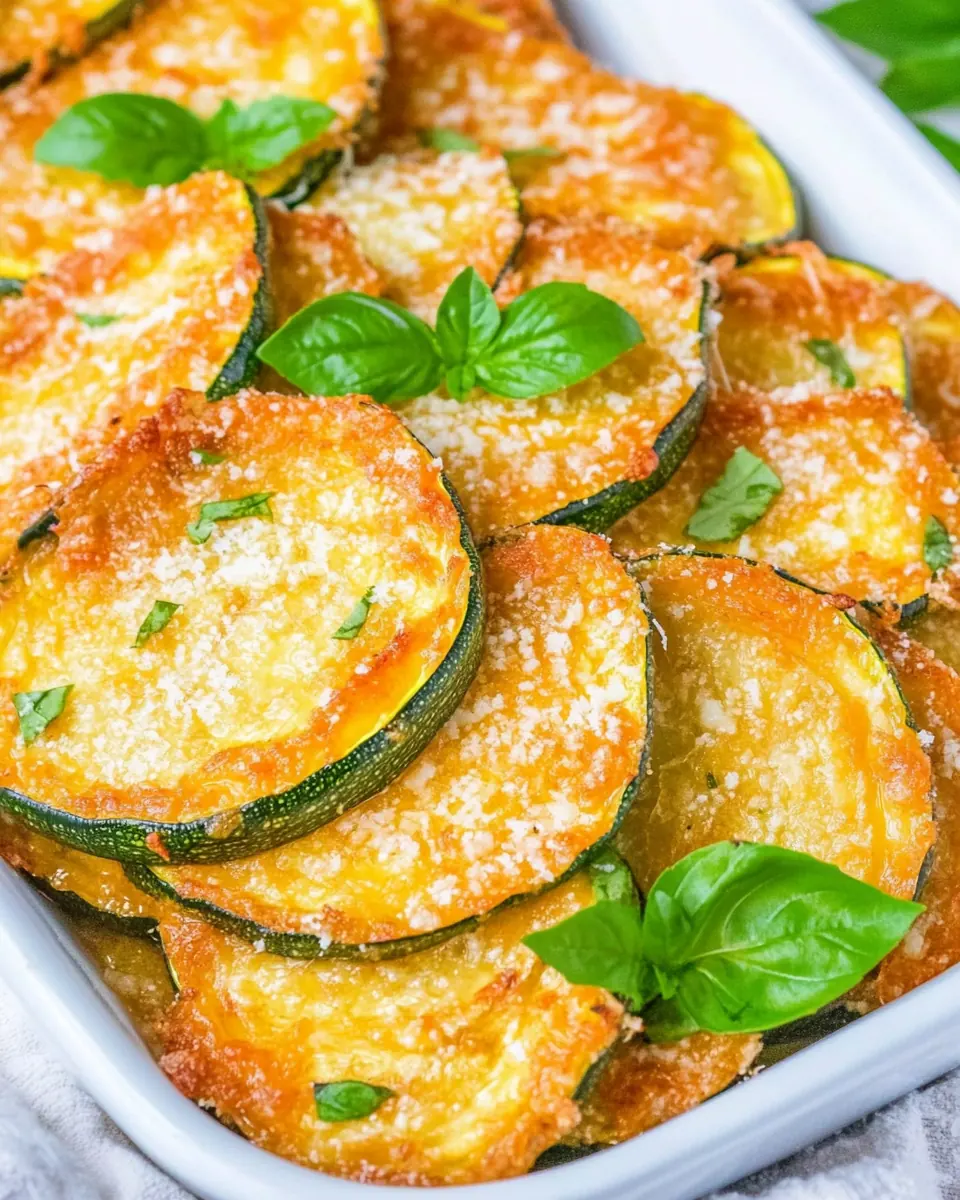
Bake at 400°F for 30 minutes. Then, garnish the Parmesan Zucchini with chopped chives or parsley, and serve.: As the crumbs and Parmesan cheese land, they create a textured blanket that clings to the oiled surface. You’ll notice the mixture sits on top of the sticks, and as it bakes it will toast and fuse to form a crust. The aroma transitions from raw to toasty, and the visual cue is a pale tan turning to a deeper golden brown. A common error is uneven distribution, so aim for consistent coverage to avoid some sticks being undercoated.
Bake at 400°F for 30 minutes: In the oven, listen for a low steady whisper of baking as moisture leaves the zucchini and the crumbs begin to crisp. The scent evolves from fresh squash to warm, nutty Parmesan cheese and baked bread notes. Visually watch for the breadcrumbs to shift from pale to golden and for the edges of the zucchini to show a slightly deeper color. If you pull them too early the crust will be pale and soft, while leaving them too long will dry the pieces out. A good rule is to check at the 25 minute mark to confirm even browning.
Then, garnish the Parmesan Zucchini with chopped chives or parsley, and serve: Once out of the oven, the contrast between hot, crisp edges and warm, tender centers is immediate. The finishing herbs add a bright, green note and a fresh fragrance that lifts the savory crust. Serve right away to maintain the crunch. A mistake to avoid is letting them sit too long, because steam will condense and soften the exterior, reducing the crisp texture you worked for.